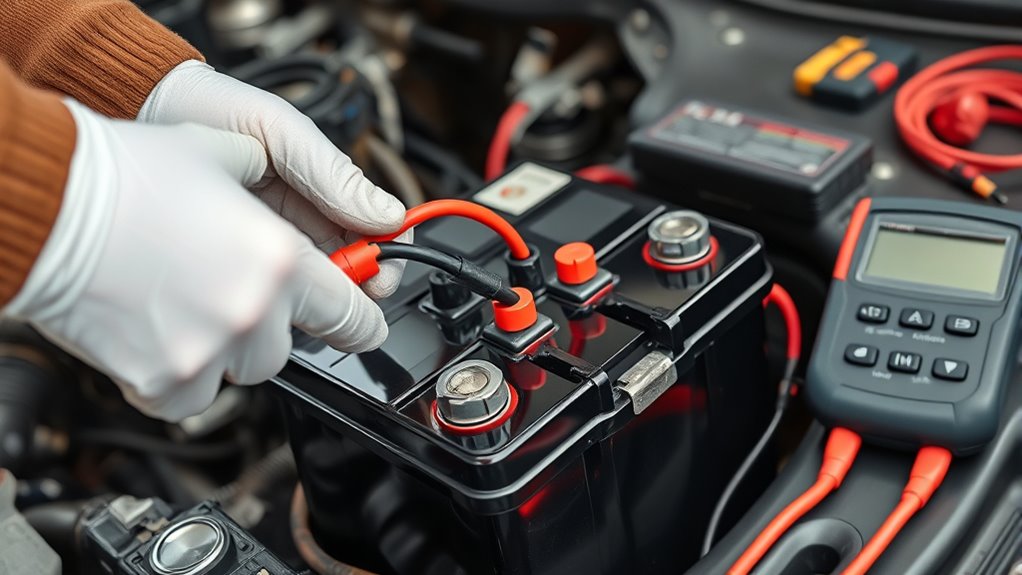

To test your car battery, first check for corrosion around the terminals and clean them with baking soda and a wire brush. Use a multimeter set to DC volts; a healthy battery should read around 12.6 volts or higher. For a more accurate assessment, perform a load test at an auto parts store. To replace it, disconnect the negative terminal first, remove the old battery carefully, then secure the new one and reconnect the terminals. Keep reading to learn more tips for maintaining your battery’s health.
Key Takeaways
- Visually inspect terminals for corrosion, damage, or loose connections; clean with baking soda and a wire brush if needed.
- Use a multimeter set to DC volts to check if the battery reads around 12.6 volts or higher.
- Perform a load test to evaluate if the battery maintains voltage under simulated starting conditions.
- Disconnect the negative terminal first, remove the old battery carefully, then reconnect the terminals securely during replacement.
- Regularly monitor battery health, inspect for corrosion, and ensure proper terminal connections to maintain reliable performance.

Your car’s battery is essential for starting the engine and powering electrical systems, so knowing how to test and replace it can save you time and trouble. When your battery shows signs of weakness, it’s often due to issues like battery corrosion or problems within the charging system. Battery corrosion appears as a white, powdery substance around the battery terminals, which can hinder electrical connections and cause starting problems. Before testing, inspect the terminals for corrosion—if you see buildup, it’s a good idea to clean it off with a mixture of baking soda and water, along with a wire brush or terminal cleaner. Ensuring clean terminals helps in accurate testing and prevents false readings.
To test your battery, start with a visual inspection. Check for corrosion, loose connections, or any visible damage. If the terminals are corroded, cleaning them thoroughly can often restore proper function, but if the battery is still weak after cleaning, testing with a multimeter is your next step. Set the multimeter to DC volts and connect the red lead to the positive terminal and the black to the negative. A healthy, fully charged battery should read around 12.6 volts or higher. If it dips below 12.4 volts, your battery may be undercharged or failing. Keep in mind that a low reading might also point to issues in the charging system, such as a faulty alternator, which isn’t charging the battery properly.
Another way to test your battery’s condition is to perform a load test. Some auto parts stores offer free testing, or you can use a portable load tester if you have one. This test simulates the electrical load of starting your vehicle, giving a more accurate picture of the battery’s health. If your battery cannot sustain the load or the test shows a voltage drop below recommended levels, it’s time to replace it. Remember, a failing battery combined with a weak charging system can lead to repeated failures, so it’s wise to have both checked if problems persist. Additionally, understanding the battery’s capacity can help you evaluate how much charge it can hold over time. Replacing your battery involves disconnecting the negative terminal first to prevent sparks, followed by the positive. Remove the old battery carefully—batteries are heavy—and place the new one in the tray. Reconnect the terminals, positive first, then negative, making sure connections are tight and free of corrosion. After installation, start your engine and verify the voltage again; it should be around 13.7 to 14.7 volts if the charging system is working correctly. Regular inspections and testing can help you catch potential issues early, ensuring your vehicle starts reliably and your electrical systems stay powered.
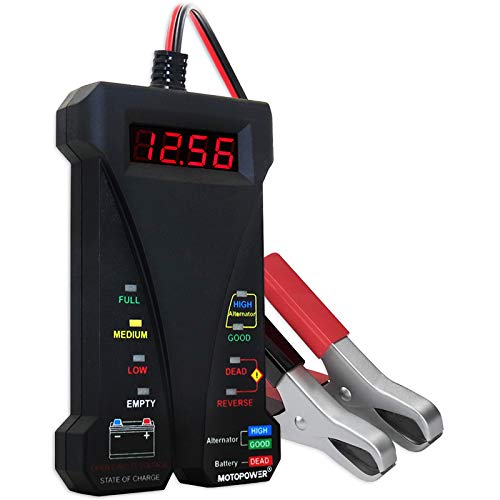
MOTOPOWER MP0514A 12V Digital Car Battery Tester Voltmeter and Charging System Analyzer with LCD Display and LED Indication – Black Rubber Paint
Effortless Operation – Boasting a “plug-and-test” design, there's no need for complex set-up procedures. Just connect it to…
As an affiliate, we earn on qualifying purchases.
As an affiliate, we earn on qualifying purchases.
Frequently Asked Questions
Can I Test My Battery Without Tools?
You can’t accurately test your battery without tools, but you can perform basic battery maintenance checks. Look for signs like dim headlights or slow engine cranking, which indicate potential issues. To assess your battery’s health properly, use a multimeter or visit a mechanic for testing methods. Regular maintenance and monitoring of your battery’s performance help prevent unexpected failures and extend its lifespan.
How Can I Tell if My Alternator Is Failing?
You can tell if your alternator is failing by watching for warning signs like dimming headlights, flickering dashboard lights, or strange noises. If your battery has charging issues, such as frequent dead cells or needing a jump start, it’s a sign your alternator might be the culprit. These signs indicate your alternator isn’t properly charging your battery, so get it tested and repaired promptly to avoid breakdowns.
Is It Safe to Jump-Start a Dead Battery?
Jump-starting a dead car battery is like giving a tired runner a quick boost; it can be safe if you follow proper car battery safety. Make sure both vehicles are off, and connect the jumper cables correctly to avoid jump start risks. Always wear safety glasses and gloves. If done properly, it’s generally safe, but improper jump-starting can cause sparks or damage. Proceed carefully, and consider professional help if unsure.
How Long Does a Typical Car Battery Last?
A typical car battery lasts about three to five years, depending on your driving habits and climate. You should monitor its performance and expect to replace it around the four-year mark to avoid unexpected breakdowns. Regular testing can help determine the remaining battery lifespan, so you won’t be caught off guard. Planning for replacement based on this frequency guarantees your vehicle stays reliable and avoids inconvenient failures.
Are There Eco-Friendly Options for Replacement Batteries?
You can choose eco-friendly replacement batteries, like those made with recycled materials. For example, some companies now produce lead-acid batteries with recycled lead and plastics, reducing environmental impact. Recycling options are widely available, making disposal easier and greener. These eco-friendly batteries often last as long as traditional ones and help lessen pollution. When replacing your battery, look for options labeled as environmentally conscious to support sustainability.
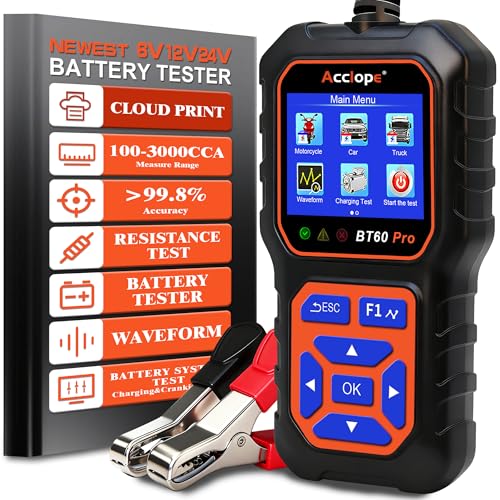
Acclope BT60 PRO Car Battery Tester 6V/12V/24V, 2–120Ah, 100–3000 CCA, Alternator & Starter/Charging System Analyzer, Automotive Load Test, QR Cloud Report (No App), for Car Truck Motorcycle Marine/RV
【Wide Battery Compatibility】 The ACCLOPE BT60 PRO supports 6V, 12V, and 24V batteries, including lead-acid, AGM, GEL, EFB,…
As an affiliate, we earn on qualifying purchases.
As an affiliate, we earn on qualifying purchases.
Conclusion
Now that you know how to test and replace your car battery, you might wonder if it’s really that simple. The truth is, many believe batteries last forever, but data shows most only endure 3-5 years. Don’t let a sudden breakdown catch you off guard—regular testing can prevent it. Treat your car’s battery like your own health: proactive care keeps everything running smoothly. After all, trusting in prevention is the key to peace of mind on the road.

TKDMR Battery Terminal Cleaners (2 pcs),12 pcs Battery Terminal Anti-Corrosion Fiber Washers (6 Red & 6 Green) for Car Marine Battery
Quantity: comes with 10 pieces battery anti-corrosion washers(5 red & 5 green) and 2pcs Battery Terminal Cleaning Brush.
As an affiliate, we earn on qualifying purchases.
As an affiliate, we earn on qualifying purchases.

EZRED BMK1914 5-Piece Battery Maintenance Kit
BATTERY MAINTENANCE KIT: This kit includes every tool that you'll need to service or change a battery in…
As an affiliate, we earn on qualifying purchases.
As an affiliate, we earn on qualifying purchases.