To bleed your brake lines, start by safely lifting your vehicle and locating the bleeder valves on each brake caliper. Attach a clear hose to the valve, open it slightly, and have someone press the brake pedal slowly and firmly. Keep the pedal pressed while you tighten the valve to prevent air from re-entering. Repeat this process until no air bubbles appear in the fluid. If you’re interested in detailed steps, there’s more to learn below.
Key Takeaways
- Gather proper tools, including a clear hose, wrench, brake fluid, and a container, and ensure vehicle safety before starting.
- Fill the brake fluid reservoir with the correct type of brake fluid specified in the owner’s manual.
- Attach a clear hose to the bleeder valve, submerge it in a container, and loosen the valve slightly.
- Have a helper press the brake pedal slowly while you tighten the bleeder valve to release trapped air.
- Continue the process until the fluid flows steadily without air bubbles, then tighten all valves and check pedal firmness.
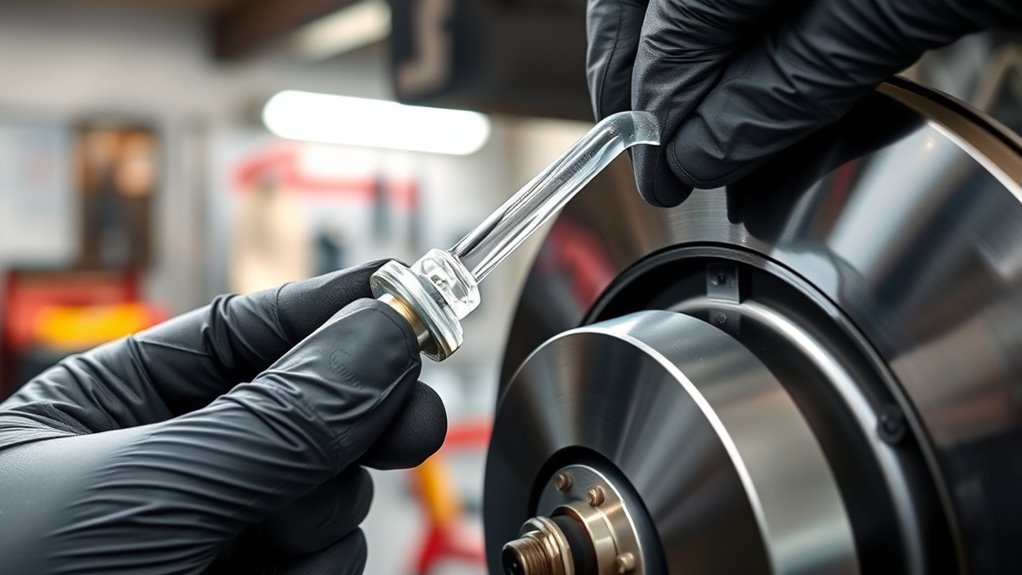
If your brake pedal feels soft or spongy, it’s a sign that air may have entered your brake lines. This air can compromise braking performance, making it essential to bleed your brakes properly. Before you start, it’s a good idea to familiarize yourself with the different brake fluid types suitable for your vehicle, such as DOT 3, DOT 4, or DOT 5. Using the correct brake fluid is vital because mixing incompatible types can cause damage or reduce braking efficiency. Always check your owner’s manual to confirm which brake fluid your car requires. Once you have the right fluid, gather the necessary bleeding tools—these typically include a clear hose, a wrench to loosen bleeder valves, a container for old fluid, and a brake bleeder kit if you’re using one. Some kits come with a pump or a one-man bleeding system to streamline the process.
Start by lifting your vehicle safely and removing the wheels if necessary for easier access. Locate the brake bleeder valves on each caliper or wheel cylinder. To begin bleeding, fill the brake fluid reservoir with fresh, correct brake fluid. Keep an eye on the level throughout the process; low fluid can introduce more air into the system. Attach a clear hose to the bleeder valve and submerge the other end into a container with a small amount of brake fluid to prevent air from being drawn back into the system. With your wrench, loosen the bleeder valve slightly. Have a helper press the brake pedal slowly and firmly; as they do, you’ll see brake fluid and air bubbles flow through the hose into the container. Once the pedal reaches the floor, tighten the bleeder valve before they release the pedal. Repeat this process—pedal, loosen, tighten, and refill the reservoir—until you see a steady stream of brake fluid with no air bubbles.
Additionally, understanding the contrast ratio of your projector can help ensure you get sharp, detailed images, especially in dark scenes, which is crucial for an immersive home cinema experience. Using bleeding tools can make this process much easier, especially if you opt for a one-man bleeding kit that allows you to control the flow of fluid without needing a second person. Be patient and systematic, moving from one wheel to another, usually starting with the wheel farthest from the master cylinder. Continually check the brake fluid reservoir and keep it topped off to prevent introducing new air into the lines. Once you’re done, make sure all bleeder valves are tightly closed, and test your brake pedal for firmness. A firm pedal indicates that your brake lines are effectively bled and air-free, restoring your braking power and safety.

CHUMXINY Brake Bleed Kit for SHIMANO, TEKTRO Hydraulic Disc Brakes, Including High Performance Mineral Brake Fluid (120ml)
- Includes Mineral Brake Fluid: Two 60ml bottles of mineral oil
- Complete Bleed Kit: Gloves, fasteners, adapters, funnel, injectors
- Universal Compatibility: Suitable for brake models from 2000 to 2021
As an affiliate, we earn on qualifying purchases.
As an affiliate, we earn on qualifying purchases.
Frequently Asked Questions
Can I Bleed Brake Lines Without a Partner?
Yes, you can bleed brake lines without a partner by using brake bleeding tools designed for single-person use. These tools create a vacuum or pressure to draw out air and old brake fluid, regardless of brake fluid types you’re using. Make sure to guarantee to follow the instructions carefully, and choose the right brake bleeding tools for your vehicle. This method assures safe, efficient brake maintenance even when you’re working alone.
How Often Should I Bleed My Brake Lines?
You should bleed your brake lines every 2-3 years or when you notice spongy brakes or decreased stopping power. Think of it as giving your car’s heartbeat a tune-up, preventing rust or air from clogging the flow. During this process, consider brake hose replacement if hoses are cracked. Also, a brake fluid flushing helps clear out old, contaminated fluid, ensuring your brake system stays responsive and safe.
What Signs Indicate Brake Fluid Contamination?
If you notice spongy brakes, a strange smell, or brake fluid that looks dark or gritty during brake fluid testing, these are signs of contamination. You should also watch for decreased braking performance or unusual noises. To prevent contamination, regularly check and replace your brake fluid as recommended, and keep your brake system clean. Promptly addressing these signs helps ensure safe braking and maintains contamination prevention.
Is Special Equipment Needed to Bleed Brakes?
Did you know that over 80% of brake system failures are due to improper bleeding? You don’t need special equipment to bleed brakes, but having the right tools makes the job easier. Depending on your vehicle, you’ll use specific bleeding techniques for different brake fluid types like DOT 3, DOT 4, or DOT 5. A simple brake bleeder kit or a clear hose and wrench are usually enough to get the job done effectively.
Can I Use Any Brake Fluid Brand?
You shouldn’t use any brake fluid brand; instead, stick to the recommended brake fluid types for your vehicle. Different brake fluids, like DOT 3, DOT 4, or DOT 5.1, have specific fluid compatibility, and mixing them can cause brake system issues. Always check your vehicle’s owner’s manual or the existing brake fluid to make certain you select the correct type. Using compatible brake fluid ensures proper performance and safety.
Conclusion
Now that you’ve bled your brake lines, your car’s stopping power is sharper than ever—almost like hitting the brakes on a lightning bolt! Remember, keeping your brake system in top shape isn’t just maintenance; it’s the difference between a smooth stop and a dangerous delay. So, don’t wait for warning signs—regularly check and bleed your brakes. Your safety depends on it, and trust me, your future self will thank you every time you hit the pedal!