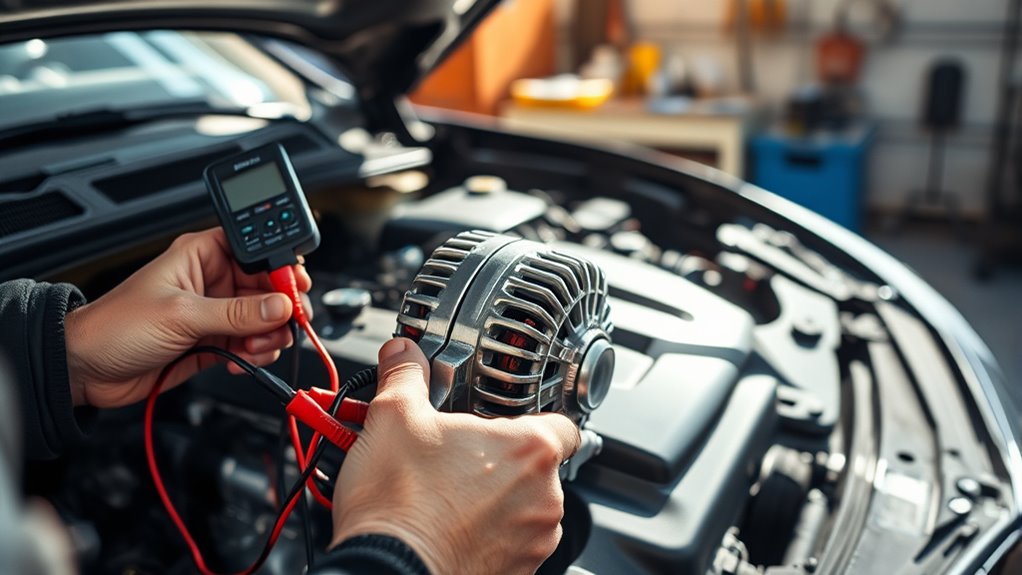

To test your alternator at home, start your vehicle and use a digital multimeter set to DC volts to check the battery voltage—look for readings around 13.8 to 14.4 volts, which are normal. Observe the dashboard for warning lights like a battery or “ALT” indicator; if they stay on or flicker, it’s a concern. Try turning on electrical accessories to see if voltage drops; significant changes point to potential issues. Keep going to learn more about effective quick tests.

Get business pricing on garage and car supplies
- Business-only prices and quantity discounts
- Tax-exempt purchasing
- Multiple users, one account, clear invoices
Key Takeaways
- Use a digital multimeter to measure the battery voltage with the engine off; 12.6V indicates a full charge.
- Start the engine and check voltage; 13.8–14.4V suggests your alternator is charging properly.
- Turn on electrical accessories like headlights and observe if voltage remains steady within the normal range.
- Look for dashboard warning lights related to the charging system; if lit, further testing is needed.
- Remember at-home tests are preliminary; seek professional diagnosis if readings indicate potential alternator issues.
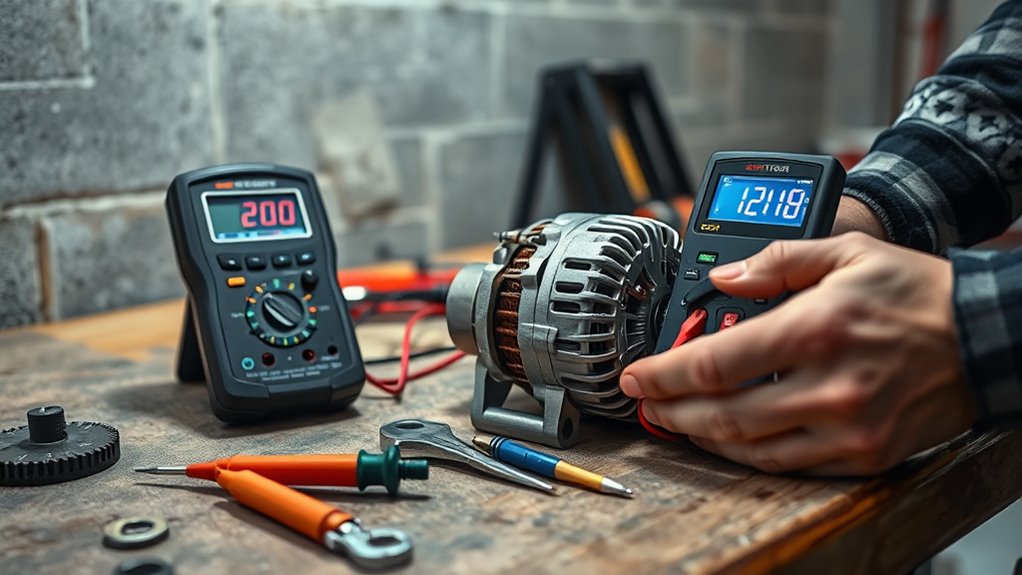
Your car’s alternator is essential for keeping your battery charged and powering your electrical systems, so knowing how to test it at home can save you time and money. The first step is to pay attention to your vehicle’s battery voltage, which provides a quick snapshot of how well your alternator is functioning. To do this, you’ll need a digital multimeter. Start your engine and set the multimeter to measure DC voltage. Place the red probe on the positive terminal of your battery and the black probe on the negative terminal. A healthy, charging system should show a voltage reading between 13.8 and 14.4 volts. If your voltage is considerably lower, around 12.5 volts or less, your alternator might not be charging the battery properly, indicating a potential issue.
Next, observe the indicator lights on your dashboard. Most vehicles have a warning light, often shaped like a battery or labeled “ALT” or “CHG,” which illuminates if there’s a problem with the charging system. When you start your car, this light should turn off within a few seconds. If it stays on or flickers, it’s a clear sign that your alternator isn’t functioning correctly. Don’t ignore this warning — it’s your vehicle’s way of alerting you to a potential problem that could leave you stranded.
While these initial checks are simple, they’re quite effective for a quick assessment. If your battery voltage is low or your indicator light is on, it’s time to dig a little deeper. Turn on your headlights and other electrical accessories, then check the voltage again. If the voltage drops markedly or remains below the normal range, it indicates that your alternator isn’t providing enough charge when the electrical load increases. Conversely, if the voltage jumps above 15 volts, it could mean your voltage regulator is faulty, causing overcharging and potential damage.
Keep in mind that these at-home tests aren’t definitive diagnoses but serve as useful indicators of your alternator’s health. If you notice any irregularities, it’s best to have a professional perform a more detailed test. Regularly monitoring your battery voltage and indicator lights can help you catch alternator issues early, preventing unexpected breakdowns. By doing so, you’ll keep your vehicle running smoothly and avoid costly repairs down the line. Remember, a little proactive troubleshooting goes a long way in maintaining your car’s electrical system.
digital multimeter for car testing
As an affiliate, we earn on qualifying purchases.
As an affiliate, we earn on qualifying purchases.
Frequently Asked Questions
How Often Should I Test My Alternator?
You should test your alternator every six months or if you notice issues like dimming lights, slow engine starts, or a dead battery. Regular testing helps you monitor your battery health and keep your electrical system in check. If you experience these signs, it’s a good idea to verify your alternator promptly to prevent unexpected breakdowns and ensure your vehicle runs smoothly.
Can I Test My Alternator Without Tools?
You can’t accurately test your alternator without tools, but you can check your battery voltage with a multimeter or voltmeter. If your dashboard warning light is on or your battery voltage drops below 12.6 volts, it’s a sign your alternator might be failing. Relying solely on visual cues isn’t enough, so using proper tools guarantees you get a precise reading and can identify issues early.
What Are Signs of a Failing Alternator?
If your alternator is failing, you’ll notice a battery warning light on your dashboard and electrical issues like dimming headlights or weak power windows. Your car may struggle to start or stall unexpectedly. You might also hear strange noises from the engine area. These signs indicate your alternator isn’t charging the battery properly, so it’s essential to get it checked soon to avoid getting stranded with a dead battery.
Is It Safe to Test My Alternator Myself?
Yes, it’s generally safe to test your alternator yourself if you follow proper precautions. Before testing, check your battery health and make certain your vehicle is off. Use a multimeter to measure voltage across the battery terminals; a healthy charging system should read around 13.8 to 14.4 volts when running. Always wear safety gloves and eye protection, and disconnect electronic devices to avoid damage. If unsure, consult a professional.
How Long Does an Alternator Test Take?
It doesn’t take long to test your alternator—usually around 10 to 15 minutes. First, check the battery voltage with the engine off; it should be around 12.6 volts. Then, start the engine and measure again; it should read above 13.8 volts. Confirm the belt condition is good, as a loose or worn belt can affect results. Quick and straightforward, but don’t rush the process.
Conclusion
Now that you know how to test your alternator at home, you can save time and money by catching issues early. Imagine you notice your headlights dimming occasionally — a quick test reveals your alternator’s failing. By catching it early, you prevent a breakdown and costly repairs. Regular checks keep your vehicle running smoothly, so don’t hesitate to perform simple tests like these. Stay proactive, and your car will thank you for it.
Evergreen bestsellers Picks
bestsellers
As an affiliate, we earn on qualifying purchases.