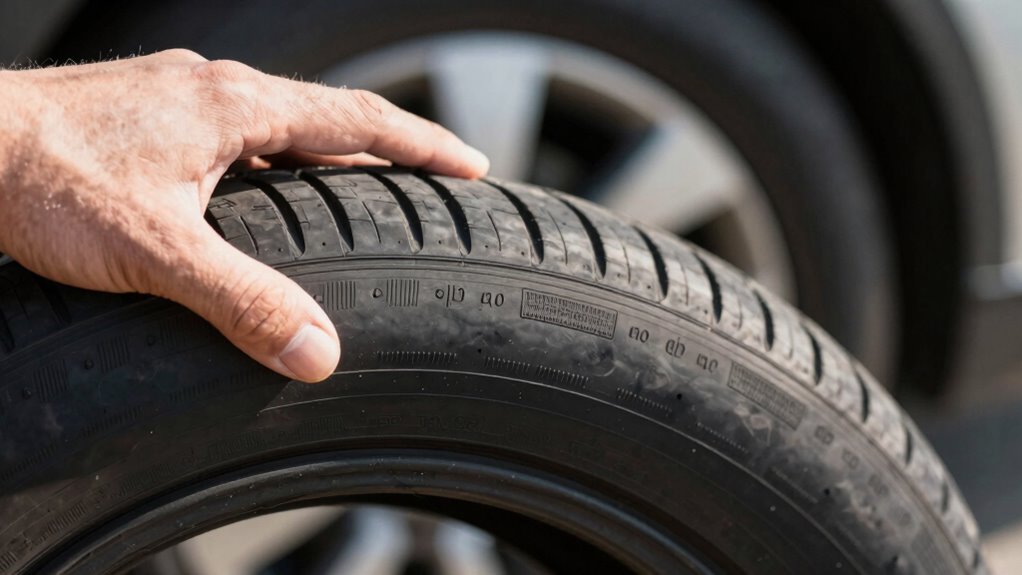
To check if your new tires are truly fresh, locate the four-digit code on the tire’s sidewall, usually near the DOT or size markings. The first two digits show the week, and the last two indicate the year of manufacture. For example, 2319 means the 23rd week of 2019. Always verify this code before installation to confirm your tires haven’t sat too long, and if you keep going, you’ll discover more key tips to stay safe.
Key Takeaways
- Locate the four-digit DOT code on the tire sidewall near pressure or tread markings.
- Interpret the code: first two digits indicate the week, last two indicate the year of manufacture.
- Check for signs of deterioration such as cracks, bulges, or uneven wear before installation.
- Ensure tires are less than six years old by verifying the manufacturing date.
- Confirm all tires meet safety standards and are suitable for your vehicle before installation.

AMTIFO OBD2 Scanner with Battery Tester – Check Engine Light & Emissions Readiness, Plug & Play, Battery Health, Real-Time Date, Car Code Reader, Support All OBD II Vehicles
Comprehensive Vehicle Diagnostics – Car code reader supports nine OBDII/EOOBD protocols, providing complete diagnostics for all car types….
As an affiliate, we earn on qualifying purchases.
As an affiliate, we earn on qualifying purchases.
Why Tire Date Codes Matter and How to Read Them
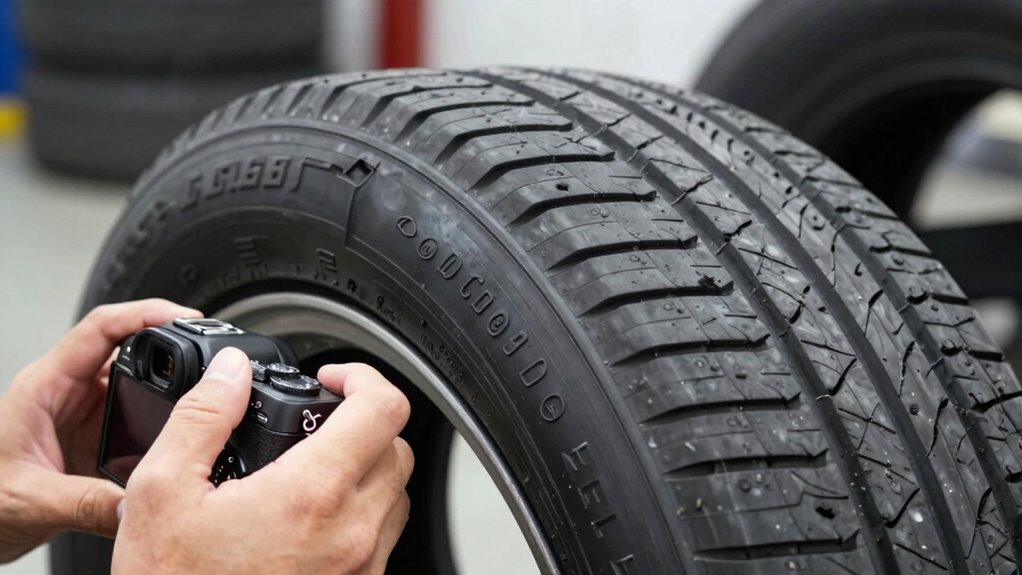
Understanding tire date codes is essential because they reveal the age of your tires, which directly impacts safety and performance. During tire manufacturing, companies assign date codes to indicate when the tire was produced, helping you determine its freshness. The significance of this code lies in its ability to warn you about potential deterioration over time, even if the tread appears new. Aging tires can develop cracks, lose elasticity, and become unsafe. By reading the date code, you can identify if your tires are nearing or past the recommended lifespan, usually around six years. This knowledge allows you to make informed decisions about whether to keep, replace, or service your tires, ensuring your safety on the road. Being aware of tire aging is crucial because aging tires can pose serious safety risks if not properly monitored. Knowing the tire manufacturing date keeps you ahead of potential hazards, such as blowouts or tread separation, that can occur with older tires. Regularly inspecting your tires for signs of deterioration and understanding tire durability further enhances your safety. Additionally, understanding tire materials and construction can help you assess how different tires might age over time and what to look for when inspecting them.

STEELMAN Tire Repair Technician Tool Kit, 5 Inspection Tools Including Valve Core Remover, Tread Depth Gauge, Aid Gauge, and Tire Crayon
Personal organizer for tire inspection tools
As an affiliate, we earn on qualifying purchases.
As an affiliate, we earn on qualifying purchases.
Where to Find the Tire Manufacturing Date on Your Sidewall
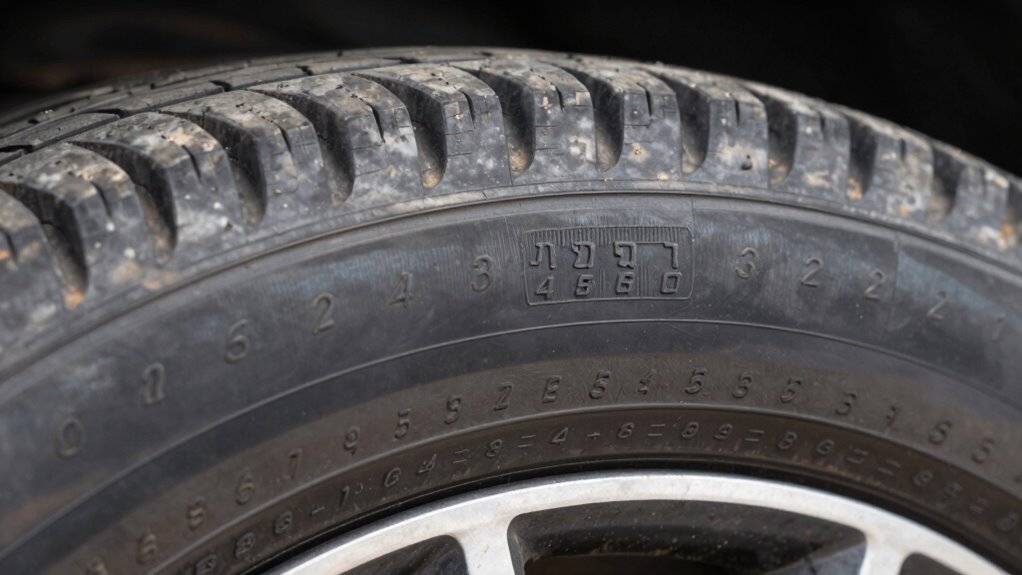
You can find the tire manufacturing date directly on the sidewall of your tire, usually molded into the rubber. Look for a four-digit code, often near the tire pressure or tread depth markings. This code indicates the week and year your tire was made. To visualize, imagine the sidewall as a 3×3 grid:
| Tire Pressure | Manufacturing Date | Tread Depth |
|---|---|---|
| 35 psi | 2519 | 10/32 inch |
| Speed Rating | Sidewall Markings | DOT Code |
| Manufacturer | Additional Info | Model Name |
This date helps you determine if your tires are nearing the end of their life, regardless of tread depth. Always check this before installing or replacing tires. Additionally, understanding tire age can help prevent safety issues related to aging rubber. Recognizing the significance of manufacturing dates ensures you make informed decisions about tire safety and longevity. Proper knowledge of indonesian decor masks can also inspire you to incorporate cultural elements into your space for added aesthetic appeal. Being aware of manufacturing date codes allows you to better assess the safety and reliability of your tires over time.

Sealair2k Automobile Tire Mobility Kit by Aircom, Emergency Tire Puncture Repair, 5903707591084, Direct OEM Replacement for Many luxury and Major Vehicle Manufacturers Tire puncture Kits.
non-toxic
As an affiliate, we earn on qualifying purchases.
As an affiliate, we earn on qualifying purchases.
How to Read the Week and Year From Your Tire’s Date Code
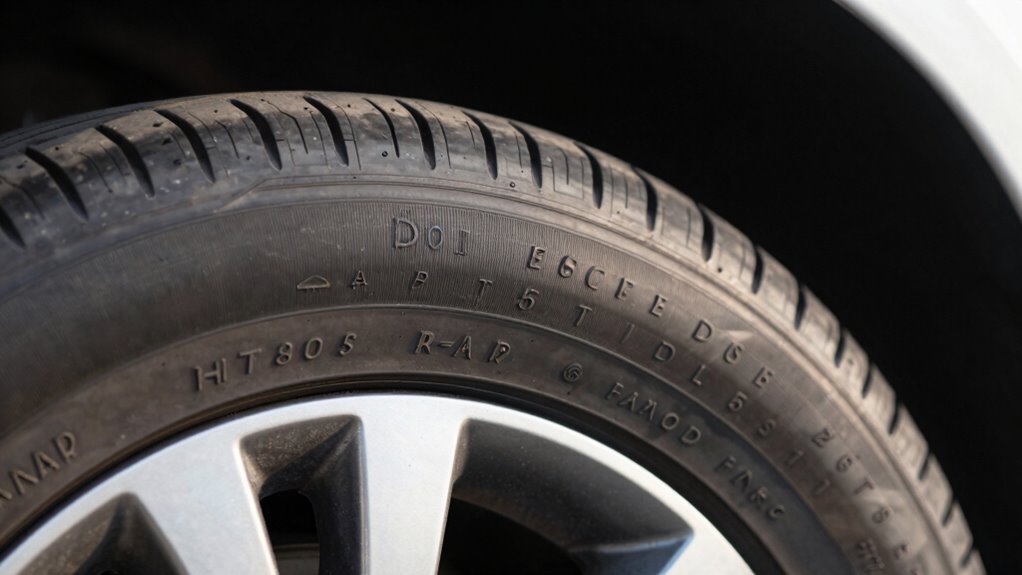
The four-digit date code on your tire reveals exactly when it was manufactured, helping you gauge its age. During tire manufacturing, this code indicates the week and year of production. The first two digits show the week number (01 to 52), while the last two represent the year. For example, a code reading “2319” means your tire was made in the 23rd week of 2019. Proper date code interpretation is vital for evaluating tire freshness, especially since tires can degrade over time even if unused. Keep in mind, tires older than six years may pose safety risks, regardless of tread wear. By understanding how to read the week and year from your tire’s date code, you ensure you’re installing safe, reliable tires. Additionally, understanding time zones can help you schedule inspections and replacements at the most convenient times. Knowing the manufacture date can also help you identify if a tire was stored improperly or has been sitting unused for too long, which could affect its performance. Recognizing the tire aging process is essential for maintaining safety standards and avoiding premature tire failure. Proper storage conditions can further assist in assessing a tire’s current condition and longevity, ensuring optimal performance over its lifespan.

LUMITECO 12'' Dual Head Tire Pressure Gauge, Heavy Duty Truck Tire Gauge Range 10-150PSI 1-10Bar for Tire Pressure Checker, Straight-On Tire Air Gauge Extended Tube for Semi Truck, RV, Car, Motorcycle
【EXTENDED REACH DUAL HEAD】LUMITECO 12" pencil-style pressure gauge is designed with the Integrated Straight foot air chuck and…
As an affiliate, we earn on qualifying purchases.
As an affiliate, we earn on qualifying purchases.
What Do All the Symbols and Numbers on Your Tire Mean?
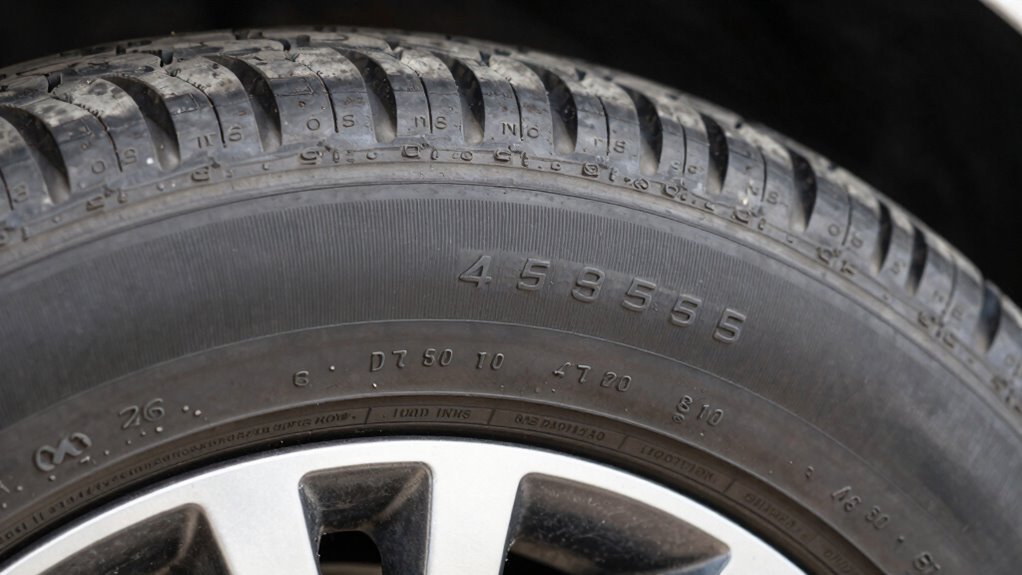
When examining your tire, you’ll notice a series of symbols, numbers, and letters stamped onto its sidewall. These are the tire symbols and manufacturing markings that provide crucial information about your tire’s specifications and origin. The numbers often include the tire size, such as width, aspect ratio, and diameter, while the symbols can indicate tire type, construction, and speed ratings. You might also see a DOT code, which reveals manufacturing details like plant code and production date. Understanding these markings helps you verify compatibility, safety standards, and age. Recognizing what each symbol and number means ensures you’re making informed decisions when maintaining, replacing, or purchasing new tires. Always consult your tire’s sidewall markings for accurate, essential details about your tire’s identity. Interpreting tire markings is key to ensuring proper fit and safety. Additionally, being aware of tire age can help prevent accidents caused by aging rubber. Knowing how to read tire date codes allows you to determine the age of your tires and decide if they need replacement, even if they appear to have sufficient tread.
How Old Are Your Tires? Signs You Need to Replace Them

Tires don’t last forever, and knowing their age is essential for safety. Over time, rubber deteriorates, even if the tread appears fine, increasing the risk of blowouts or accidents. Look for signs like cracks in the sidewall, uneven wear, or bulges, which indicate it’s time to replace your tires. Old tires pose significant vintage tire risks, especially if they’re decades old, as rubber becomes brittle and less effective. When replacing old tires, consider proper tire disposal to prevent environmental harm. Don’t ignore the age of your tires, even if they seem okay. Regularly check the DOT code for manufacturing dates. Replacing tires at the right time keeps you safe on the road and avoids the dangers associated with vintage tires.
Common Mistakes When Reading Tire Date Codes: and How to Avoid Them

Misreading tire date codes can lead you to overlook how old your tires truly are, posing safety risks. One common mistake is confusing the codes, especially when tires have been stored or mounted for a long time. This can cause you to install tires that are past their prime, risking blowouts or tread separation. Additionally, focusing solely on the date without considering tire rotation history or tread depth can be misleading. Even a relatively new-looking tire may have excessive wear or uneven tread, compromising safety. Always double-check the date code carefully, and don’t forget to evaluate tread depth and recent tire rotation history. Recognizing tire age is essential for maintaining safe driving conditions, and being aware of vehicle maintenance best practices can help you stay proactive. Moreover, understanding how tire manufacturing date influences tire longevity can inform better purchasing decisions.
How to Make Sure Your New Tires Are Truly Fresh and Safe
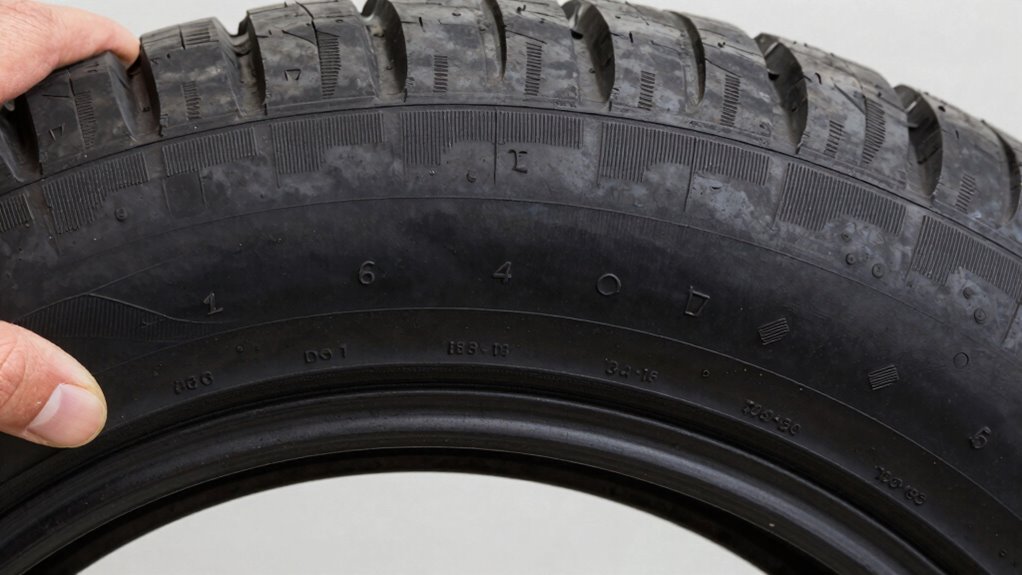
To guarantee your new tires are truly fresh and safe, start by understanding tire codes and how to identify their age. Knowing how to read these codes helps you verify that the tires haven’t sat on the shelf too long. This way, you can confidently select tires that are reliable and ready for safe driving.
Understanding Tire Codes
Are you confident that your new tires are truly fresh and safe? Understanding tire codes is essential. Look for the DOT code stamped on the sidewall, which reveals the manufacturing date. The last four digits indicate the week and year of production, like 2319 for the 23rd week of 2019. This helps you verify the tire’s age before installation. Proper tire maintenance begins with ensuring your tires are recent and in good condition. Additionally, check that your wheel alignment is correct, as misalignment can cause uneven wear, even on new tires. Knowing how to interpret tire codes empowers you to make informed decisions, preventing premature tire failure and ensuring ideal safety on the road. Always prioritize recent tires and proper maintenance for the best driving experience.
Identifying Tire Age
Knowing how to identify the age of your tires guarantees you’re not unknowingly installing outdated rubber. To ensure freshness and safety, examine the Tire Date Code carefully. Proper tire storage can affect the condition and longevity of your tires, so look for signs of deterioration. Verify that your tires meet current manufacturing standards, which emphasize safety and durability. Check the four-digit DOT code, with the last four digits indicating the week and year of manufacture. Be cautious if tires are over six years old, even if unused.
- Confirm the date code on all tires before installation
- Inspect for cracks, bulges, or unusual wear patterns
- Verify the tires’ storage history for exposure to elements
- Choose tires from reputable manufacturers adhering to standards
- Replace tires older than six years regardless of appearance
Frequently Asked Questions
Can Tire Date Codes Help Identify Counterfeit Tires?
Yes, tire date codes can help with counterfeit detection and verifying tire authenticity. By checking the date code, you can verify the tires are recent and genuine, not old or suspiciously manufactured. Counterfeit tires often lack consistent, correct date codes or have unusual markings. Always compare the date code with official manufacturer details to confirm authenticity, reducing the risk of installing fake or substandard tires on your vehicle.
Do All Tires Display Date Codes in the Same Location?
Not all tires display date codes in the same location, so don’t assume they’re all in the same spot. During tire storage, manufacturers embed date codes into the sidewall, part of their manufacturing process, but placement varies by brand and model. To find yours, look closely at the sidewall for a four-digit code, typically near the DOT label. This helps make certain your tires are fresh and safe, no matter where you check.
How Often Do Tire Manufacturing Dates Change?
Tire manufacturing dates change with each production batch, typically every few days or weeks, depending on demand. This reflects the tire lifespan and the manufacturing process, which guarantees fresh tires are available. Knowing these dates helps you assess how recent the tire is, preventing potential issues from aging tires. Regularly checking the manufacturing date allows you to prioritize newer tires for safety and peak performance.
Are Older Tires More Dangerous Than New Tires?
Yes, older tires pose greater safety concerns due to tire aging. Over time, rubber and other materials break down, increasing the risk of blowouts or tread separation. Even if they look fine, tires can become unsafe after a few years, especially if stored improperly. To stay safe, regularly check the manufacturing date and replace tires that are over six to ten years old, regardless of tread wear.
Can Weather Affect the Accuracy of Reading Tire Date Codes?
Weather impact can affect the accuracy of reading tire date codes, especially if your tires are exposed to extreme climate considerations. Excessive heat, cold, or moisture can cause the rubber and ink on the tire sidewall to fade or degrade, making it harder to read the date codes clearly. To guarantee accurate readings, check your tires in a dry, shaded area and avoid extreme weather conditions that might compromise visibility.
Conclusion
Always check your tire’s date code before installing new tires. For example, if you find a tire manufactured five years ago, it might still have plenty of tread but could be unsafe due to rubber aging. By understanding and verifying these codes, you guarantee your safety and maximize your tires’ lifespan. Don’t assume new tires are fresh—always confirm their age to make informed, confident decisions on the road.