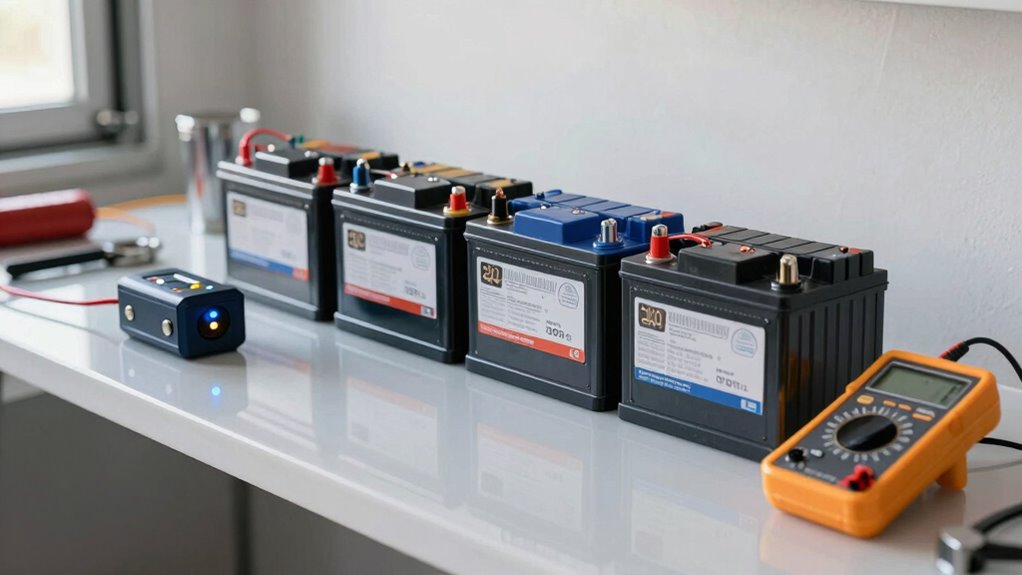

A battery maintainer keeps your vehicle’s or equipment’s battery from dying by delivering a steady, controlled charge that monitors and adjusts based on the battery’s needs. It prevents overcharging, reduces corrosion, and extends battery life, ensuring quick starts when you need them most. By properly connecting and choosing the right maintainer, you can avoid costly replacements. Learn how to safely set up and troubleshoot your maintainer to keep your batteries healthy and reliable.
Open a free Amazon Business account
Business pricing, bulk buying and tax-exempt orders.
As an affiliate, we earn on qualifying purchases.
Key Takeaways
- Battery maintainers provide a controlled, steady charge that prevents deep discharges during storage, avoiding dead batteries.
- They monitor battery voltage and adjust current output to keep batteries fully charged without overcharging.
- Using a maintainer reduces the risk of corrosion and sulfation, common causes of dead batteries after long periods of inactivity.
- Proper connection and regular inspection ensure the maintainer effectively preserves battery health during storage.
- Choosing the right maintainer compatible with your battery type and size maximizes storage life and prevents battery failure.
As an affiliate, we earn on qualifying purchases.
What Is a Battery Maintainer and How Does It Keep Your Battery Charged?
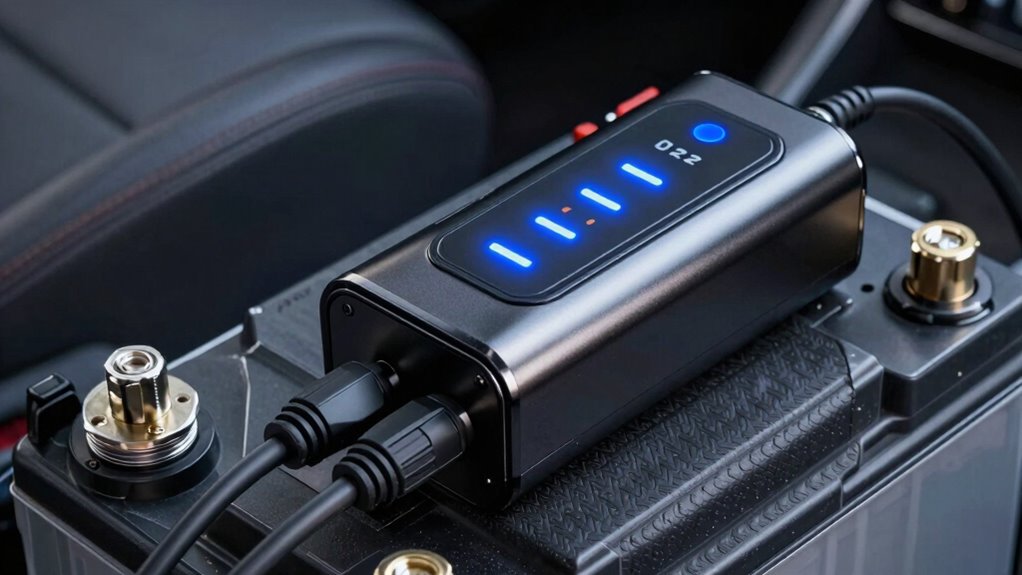
A battery maintainer is a device designed to keep your vehicle’s battery fully charged without overcharging it. It monitors your battery’s state and supplies just enough current to maintain ideal battery capacity. Unlike regular chargers, a maintainer adjusts its output based on the battery’s needs, preventing damage from excessive charging. This process extends the battery’s lifespan by reducing the number of unnecessary charging cycles. Over time, frequent charging and discharging can degrade your battery’s performance, but a maintainer minimizes this wear by providing a steady, controlled charge. Additionally, battery chemistry influences how effectively a maintainer can manage charging levels, ensuring compatibility and safety. The effectiveness of a maintainer also depends on proper maintenance practices, which help optimize its function and longevity. Proper battery storage during periods of inactivity can further enhance battery life and performance. By maintaining proper battery health, it ensures your vehicle starts reliably and stays ready for use, especially during periods of infrequent driving. Essential DIY tools and safety tips can help ensure proper handling and installation of these devices. Additionally, choosing the right battery maintainer for your specific vehicle and usage pattern can optimize performance and prolong your battery’s life.
What Are the Benefits of Using a Battery Maintainer for Your Vehicle and Equipment?

Using a battery maintainer offers several advantages for your vehicle and equipment. First, it helps extend battery longevity by preventing deep discharges that damage batteries over time. Second, it reduces overall costs by decreasing the need for frequent replacements and emergency repairs. Third, it keeps your vehicle ready to start, avoiding frustrating dead batteries during critical moments. Fourth, it minimizes maintenance efforts by automatically adjusting charge levels, ensuring ideal performance. Additionally, incorporating advanced nanotech fabrication principles could lead to more efficient and durable charging solutions in the future. This transparency is essential for understanding affiliate marketing practices that may influence product recommendations. Moreover, a steady charge helps prevent free floating conditions that can cause batteries to degrade prematurely. Understanding how battery chemistry impacts performance can further optimize maintenance strategies. For example, proper maintenance can also prevent issues related to corrosion, which is a common cause of battery failure. Overall, investing in a battery maintainer makes your vehicle more reliable and economical, giving you peace of mind and saving you money in the long run.
How Do You Choose the Right Battery Maintainer for Your Needs?

Choosing the right battery maintainer depends on your specific vehicle or equipment requirements, as well as your usage habits. To make an informed decision, consider battery compatibility and power source options. Confirm the maintainer matches your battery’s size, voltage, and type. Some maintainers are compatible with lead-acid, AGM, or lithium batteries, so check specifications carefully. Additionally, evaluate the power source options—whether it’s AC power, solar, or a combination—that fit your setup. Here’s a quick comparison:
| Feature | Details |
|---|---|
| Battery Compatibility | Match with your battery type and size |
| Power Source Options | AC, solar, or hybrid options available |
| Automatic Shut-off | Prevent overcharging |
| Charge Rate | Slow or fast charging depending on needs |
| Portability | Size and weight for easy storage and transport |
Considering the electrical load requirements can help ensure your maintainer provides adequate power without overloading. When selecting a maintainer, also think about the long-term durability to ensure it withstands environmental conditions and usage over time.
How Do You Properly Connect and Use a Battery Maintainer Safely?
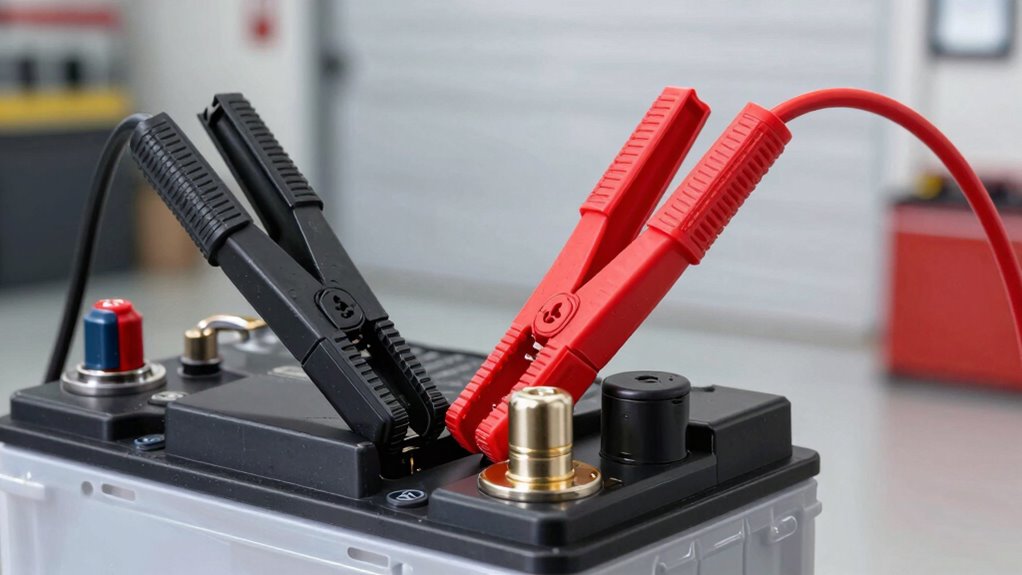
Before connecting your battery maintainer, it’s essential to read the manufacturer’s instructions carefully to guarantee proper setup and safety. Follow these connection tips to uphold charging safety:
Always read manufacturer instructions carefully before connecting your battery maintainer for safe, proper charging.
- Always connect the positive (red) clamp to the positive terminal first.
- Next, attach the negative (black) clamp to a grounded, unpainted metal surface away from the battery.
- Double-check that all connections are secure and correct before switching on the maintainer.
- Turn on the maintainer and monitor it during operation, avoiding overcharging.
- Ensure you are familiar with the safe connection procedures to prevent accidents and damage. Properly maintaining your battery can extend its lifespan and ensure reliable performance. Additionally, understanding the correct connection sequence helps prevent sparks or shorts. Following proper battery safety protocols is crucial for preventing electrical hazards. Regular inspection of your battery terminals can also help identify corrosion or loose connections early, ensuring safe operation.
This process helps prevent sparks or shorts, safeguarding safe operation. Remember, proper connection techniques are key to safe charging safety and ideal battery maintenance. Always disconnect in reverse order when finished.
What Are Common Troubleshooting Tips for Battery Maintainers?

Even when following proper connection steps, battery maintainers can sometimes encounter issues that prevent ideal performance. Voltage fluctuations can cause inconsistent charging, so check that your power source provides stable voltage. If the maintainer isn’t functioning correctly, inspect the connection stability; loose or corroded cables can disrupt the flow of electricity. Make sure the clamps are securely attached to clean, bare metal on the battery terminals. If your maintainer displays error codes or fails to start, consult the user manual for troubleshooting guidance. Additionally, verify that the maintainer is appropriate for your battery type and that it’s not overloaded. Regularly inspecting connections and ensuring a steady power supply can help prevent issues and keep your battery maintained effectively.
Frequently Asked Questions
Can a Battery Maintainer Be Used on All Vehicle Types?
Yes, you can use a battery maintainer on most vehicle types, but you need to check battery compatibility and voltage considerations first. Confirm the maintainer matches your vehicle’s battery type and voltage, whether it’s 6V or 12V. Using the right maintainer prevents damage and keeps your battery healthy. Always read the manufacturer’s instructions to verify compatibility and voltage requirements for safe and effective use on your vehicle.
How Long Should I Leave a Battery Maintainer Connected?
You should leave a battery maintainer connected until the battery is fully charged, which usually takes a few hours, and then follow the manufacturer’s recommended charging duration. Once charged, you can keep it connected for ongoing maintenance, typically checking and reattaching every few weeks. This maintenance frequency guarantees your battery stays healthy, preventing dead batteries and prolonging its lifespan without overcharging or damaging it.
Are There Any Safety Precautions for Indoor Use?
Think of your battery maintainer as a gentle guardian. For indoor safety, guarantee proper ventilation precautions by placing it in a well-ventilated area, away from flammable materials. Keep it on a stable surface, and avoid covering vents or openings. Never leave it unattended for long periods, especially if it heats up. Following these steps keeps your home safe while your battery stays healthy, like a trusted friend watching over your gear.
What Indicators Show a Battery Maintainer Is Working Correctly?
You can tell a battery maintainer is working correctly by checking its indicator lights. When charging, the lights typically change color or turn on to show the charging status—green for fully charged, red or blinking for charging, and no light if it’s off. Make sure the indicator lights match the maintainer’s instructions, so you know your battery is receiving proper care and preventing it from going dead.
How Often Should I Perform Maintenance on My Battery Maintainer?
You should perform maintenance on your battery maintainer every three to six months, depending on your charging schedule and usage. Regular checks ensure it functions properly and prevents battery damage. Keep an eye on indicator lights, and clean connections as needed. Consistently maintaining your charger helps extend your battery’s life and keeps it ready when you need it most. Adjust your maintenance frequency based on your climate and storage conditions.
Conclusion
Using a battery maintainer can extend your battery’s life by up to 70%, saving you money and hassle. It’s a simple yet effective trick to prevent dead batteries, especially during long storage periods. By choosing the right maintainer and following proper connection steps, you guarantee safety and peak performance. Remember, regular maintenance can substantially reduce unexpected failures, helping you start confidently every time. Keep your batteries healthy and ready with this smart, storage-saving solution.
NFL season / tailgating Picks
team gear
As an affiliate, we earn on qualifying purchases.