To prepare your vehicle for winter driving, check your tire tread by looking for the wear indicators—raised bars in the grooves—that signal it’s time to replace them. Also, measure your tire pressure with a reliable gauge, ensuring it’s at your car’s recommended PSI, especially as cold weather can lower pressure. Maintaining proper tread and pressure improves traction and safety on icy roads; keep going to learn more tips for winter tire care.
Key Takeaways
- Use tread wear indicators to visually assess if tire tread depth is sufficient for winter conditions.
- Check tire pressure regularly, especially in cold weather, to ensure proper inflation as per vehicle specifications.
- Ensure tires are not underinflated or overinflated, as both affect traction and safety on snow and ice.
- Rotate tires periodically to promote even wear, maintaining optimal grip for winter driving.
- Replace tires when tread reaches wear indicators or shows uneven wear patterns for maximum safety.

As winter approaches, guaranteeing your tires are ready for icy and snowy roads is essential for safe driving. Properly checking your tire tread and pressure helps prevent accidents and keeps your vehicle performing at its best in harsh conditions. One of the first steps is inspecting the tread depth, which directly impacts traction on slick surfaces. To do this, you can use tread wear indicators—small raised bars molded into the tread grooves. When the tread wears down to level with these indicators, it’s time to replace your tires. This simple check can alert you early if your tires are becoming unsafe, especially since worn tires lose grip, increasing the risk of slipping on ice and snow.
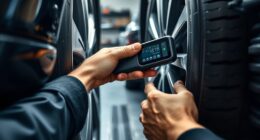
Alongside tread depth, maintaining correct tire pressure is equally vital. Cold weather causes air inside your tires to contract, reducing pressure and leading to underinflation. Underinflated tires not only decrease fuel efficiency but also increase the likelihood of tire damage and blowouts. You should check your tire pressure at least once a month and before long trips. Use a reliable pressure gauge and compare the readings to your vehicle’s recommended PSI, which is usually listed in the owner’s manual or on a sticker inside the driver’s door. If your tires are underinflated, add air until they reach the proper level. Overinflated tires, though less common in winter, can reduce traction and cause a harsher ride, so avoid overinflating.
Regular tire rotation is another key step in preparing for winter driving. Rotating your tires every 5,000 to 8,000 miles ensures even tread wear, which is vital for maintaining consistent traction on slippery surfaces. Uneven wear patterns can compromise your vehicle’s grip, especially on snow and ice. When you rotate your tires, you help distribute the wear more evenly across all four, prolonging their lifespan and improving overall handling. If you notice uneven tread wear or that your tires are nearing the tread wear indicators, consider replacing them sooner rather than later. Properly maintained tires will respond better to winter conditions, providing the grip and control you need. Additionally, understanding the importance of tire industry transformations can help you stay informed about the latest advancements in tire technology that enhance winter safety.
Frequently Asked Questions
How Often Should I Check My Tire Pressure During Winter?
You should check your tire pressure at least once a month during winter to ensure ideal tire maintenance and seasonal readiness. Cold temperatures cause air to contract, lowering pressure, so frequent checks help prevent underinflation. Before long drives or severe weather, verify your tire pressure to stay safe on icy roads. Regularly inspecting your tires keeps them in top shape, improves fuel efficiency, and reduces the risk of accidents during winter conditions.
What Are the Best Tools for Measuring Tire Tread Depth?
Did you know that over 20% of drivers don’t regularly check their tire tread? To measure tread depth, use a reliable tread depth gauge, which provides precise readings. Look for gauges with clear markings and easy-to-read scales. These tools help identify uneven tire wear patterns early, ensuring your tires are safe for winter driving. Invest in a quality tread depth gauge to keep your tires in top shape and stay safe on icy roads.
Can Incorrect Tire Pressure Affect Fuel Efficiency?
Yes, incorrect tire pressure can substantially affect your fuel efficiency. When your tires are under-inflated or over-inflated, your engine has to work harder to move the vehicle, leading to higher fuel consumption. Maintaining proper inflation guarantees ideal contact with the road, reduces rolling resistance, and improves fuel economy. Regularly check and adjust your tire pressure to maximize fuel efficiency and guarantee safe winter driving conditions.
How Do Cold Temperatures Impact Tire Pressure?
Cold temperatures cause your tire pressure to drop because the air inside contracts, reducing pressure. Tire material and rubber brittleness become concerns in low temperatures, making tires more prone to cracking if they’re not properly maintained. You should check your tire pressure regularly, especially in winter, to make certain your tires stay properly inflated. Properly inflated tires improve safety, fuel efficiency, and tire longevity during cold weather conditions.
When Should I Replace Winter Tires Based on Tread Wear?
You should replace your winter tires when the tread depth reaches 4/32 inch, as determined by tread pattern analysis. Regularly perform tire rotation to guarantee even wear, which helps you spot uneven tread wear early. If the tread becomes too worn, your tires won’t grip the road effectively, especially in winter conditions. Don’t wait until they’re bald—replace them promptly to stay safe and maintain ideal traction.
Conclusion
By regularly checking your tire tread and pressure, you ensure safer winter driving. Some believe that modern tires are built to withstand harsh conditions without extra attention, but studies show proper maintenance greatly reduces accidents. Don’t assume your tires are fine—trust the evidence and check them often. A simple routine can make all the difference. Keep your tires in top shape, and you’ll navigate winter roads with confidence and safety.