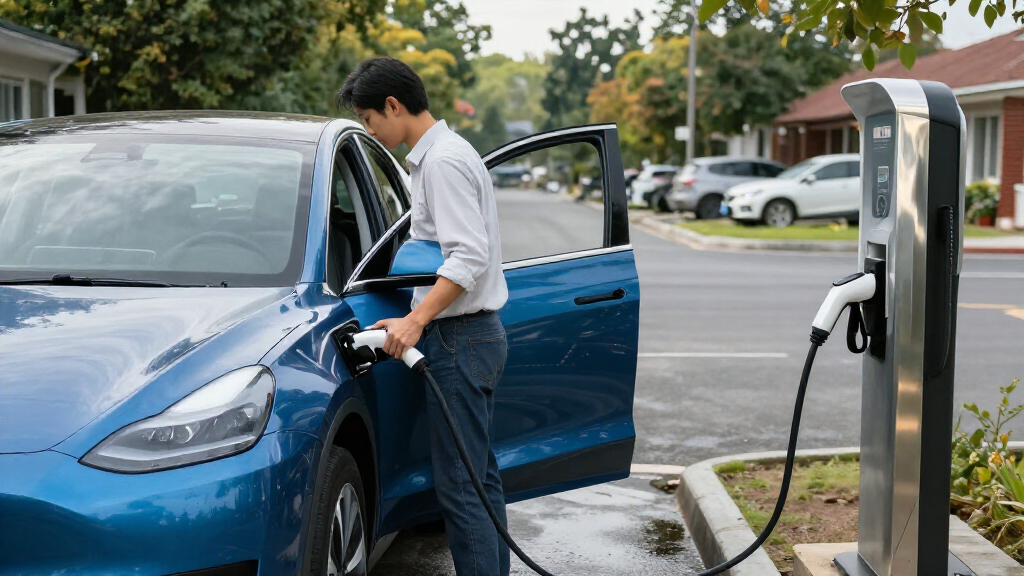

The best electric vehicle charging stations balance charging speed, installation fit, and everyday usability. I’d put the Emporia Pro on the shortlist for its 48-amp output and PowerSmart features, while the Grizzl-E 40A suits buyers who want a straightforward plug-in setup and the Autel MaxiCharger 80A serves homes built for very high charging capacity. The main tradeoffs are hardwired versus plug-in installation, J1772 versus NACS compatibility, and whether a higher amp rating is useful with your vehicle and home circuit. A portable charger can offer flexibility, but it generally serves a different role from a permanently installed home station. Continue reading for the full breakdown and a guide to matching a charger to your electrical setup.

Get business pricing on garage and car supplies
- Business-only prices and quantity discounts
- Tax-exempt purchasing
- Multiple users, one account, clear invoices
Complete the kit


Key Takeaways
48 amps is a practical high-power tier across this lineup: Emporia Pro, Emporia’s hardwired Wi-Fi model, and IYILO all target buyers with suitable 240V circuits.
Plug-in models trade some installation commitment for flexibility. The Grizzl-E, ChargePoint HomeFlex, EVIQO 40A, and Lectron Nexus use NEMA 14-50 plugs, though the outlet and circuit still need to support the charger.
Hardwired does not automatically mean faster for every driver. The Autel 50A and 80A models and the Emporia 48A hardwired model need compatible electrical capacity, and a vehicle may not accept their full output.
Connector choice matters before amp rating. Most listed chargers use J1772, while the EVIQO EVIPOWER-2 uses NACS; buyers should verify their vehicle’s port and any adapter requirements.
Portable choices prioritize flexibility over home-station power. The bokman and EVDANCE offer Level 1/Level 2 use, but their listed 16A and 12A/16A configurations differ from the 40A–80A fixed-installation options.


| electric vehicle charging station | Cable length | Connector |
|---|---|---|
| Grizzl-E Level 2 40A EV Charge | 24 ft | — |
| bokman Portable Level 1 and Le | 20 ft | J1772 |
| EVDANCE Portable Level 1 and L | 25 ft | J1772 |
| DEWALT Level 2 EV Charger | 25 ft | SAE J1772 |
| Autel Home EV Charger up to 50 | 25 ft | J1772 |
| Autel MaxiCharger AC Home 50A | 25 ft | J1772 |
| Autel MaxiCharger Level 2 EV C | 25 ft | SAE J1772 |
| IYILO Level 2 EV Charger | — | — |
| Autel MaxiCharger Level 2 EV C | 25 ft | — |
| EVIQO Level 2 EV Charger | 25 ft | — |
| ChargePoint HomeFlex Level 2 E | 23 feet | J1772 |
| Emporia Pro Level 2 EV Charger | 25 ft | SAE J1772 |
| Emporia Level 2 WiFi EV Charge | 25 ft | SAE J1772 |
| Lectron Nexus Level 2 J1772 EV | 23 ft | J1772 |
| EVIQO EVIPOWER-2 Level 2 NACS | 25 ft | NACS |
More Details on Our Top Picks
Grizzl-E Level 2 40A EV Charger, NEMA 14-50 Plug, Avalanche Edition
The Grizzl-E 40A suits drivers who want substantial Level 2 output without committing to a hardwired installation. Its NEMA 14-50 plug and four current settings let buyers match charging to their circuit, while the 24-foot cable gives useful reach around a typical parking spot. Compared with the DEWALT 40A, it forgoes app controls and the longer cable, but offers a straightforward portable setup and a stated charging rate of 28–30 miles per hour at 40A. Indoor/outdoor design, built-in GFCI, and power-outage recovery add practical protection and convenience. The tradeoff is that it still needs a properly rated 240V outlet and circuit, and at 16.79 pounds it is less appealing to move often.
Pros:- Adjustable 16A, 24A, 32A, and 40A settings help match the charger to circuit capacity.
- 24-foot cable provides flexible reach from the outlet to the vehicle.
- Built-in GFCI and multiple electrical protections support indoor or outdoor use.
- Power-outage recovery can resume charging without manual intervention.
Cons:- Requires a compatible NEMA 14-50 outlet and an appropriately rated circuit.
- At 16.79 pounds, it is heavy for frequent travel or repositioning.
- No Wi-Fi, Bluetooth, or app-based scheduling is listed.
Best for: Drivers with a compatible NEMA 14-50 outlet who want adjustable 40A charging and may need to take the unit with them.
Not ideal for: Buyers without a suitable 240V outlet, or anyone seeking app scheduling, a lightweight travel charger, or hardwired installation.
- Charging level:Level 2
- Voltage:240V
- Maximum current:40A
- Amperage settings:16A, 24A, 32A, 40A
- Plug type:NEMA 14-50
- Cable length:24 ft
- Maximum wattage:10 kW
- Weight:16.79 lb
- Certifications:UL, Energy Star
Our verdict“Choose the Grizzl-E if you have a suitable 14-50 outlet and want a robust, adjustable 40A charger without smart-app features.”
bokman Portable Level 1 and Level 2 EV Charger, 16A, 20 ft, NEMA 6-20P with 5-15 Adapter
The bokman 16A is the most adaptable choice here for drivers who may need to charge from either a household outlet or a 240V connection. Its included NEMA 5-15 adapter supports Level 1 charging, while a NEMA 6-20 outlet enables its faster, though still modest, 16A Level 2 mode. Five current settings and a 1–12-hour delay timer give buyers more control than the simpler EVDANCE portable charger, and the LED display makes operating status easier to check. The 20-foot cable is shorter than EVDANCE’s 25-foot lead, but its 7.65-pound weight remains manageable for portable use. This is not a substitute for a 40A home station: its lower maximum current means longer charging sessions, and Tesla drivers need a separate adapter.
Pros:- Supports Level 1 and Level 2 charging with the included NEMA 5-15 adapter and NEMA 6-20 plug.
- Five adjustable current settings offer flexibility for different circuits.
- Delay timer can shift charging to a preferred start time.
- ETL certification, IP65 rating, and LED display add useful safety and status information.
Cons:- Maximum 16A output is far below the 40A and 50A options in this roundup.
- Level 2 charging requires a NEMA 6-20 outlet.
- Tesla vehicles need a separate J1772 adapter.
Best for: Drivers with J1772 vehicles who need one portable charger for occasional 120V charging and 240V charging from a NEMA 6-20 outlet.
Not ideal for: Drivers seeking fast daily home charging, owners without a NEMA 6-20 outlet for Level 2 use, or Tesla drivers who do not have a J1772 adapter.
- Charging levels:Level 1 and Level 2
- Maximum current:16A
- Current settings:6A, 8A, 10A, 12A, 16A
- Connector:J1772
- Plugs:NEMA 6-20P with NEMA 5-15 adapter
- Cable length:20 ft
- Delay timer:1–12 hours
- Ingress protection:IP65
- Certification:ETL
Our verdict“Pick the bokman if outlet flexibility and portable Level 1 backup matter more than the higher charging output of the Grizzl-E or DEWALT.”
EVDANCE Portable Level 1 and Level 2 EV Charger, 25 ft Cable, J1772, 12A/120V and 16A/240V
The EVDANCE portable charger is a fit for J1772 drivers who value cable reach and a travel-friendly package more than high charging output. Its 25-foot cable is the longest among the portable options here, and the included carry bag helps keep the charger together when it moves between locations. It works at 12A from a 120V outlet or 16A from a 240V NEMA 6-20 outlet, making it a useful backup when a dedicated high-amperage station is unavailable. Compared with the bokman, EVDANCE gives up adjustable current and a delay timer, but adds five feet of cable and lists a carry bag. Its 3.84 kW ceiling is much lower than the Grizzl-E or DEWALT, and buyers should check vehicle and outlet compatibility before purchase.
Pros:- 25-foot cable reaches farther than the 20-foot bokman cable.
- Supports 12A Level 1 charging and 16A Level 2 charging.
- Carry bag makes storage and transport more convenient.
- LED display reports charging status and errors.
Cons:- Maximum output of 3.84 kW is limited compared with the 40A and 50A stations.
- Tesla vehicles require a separately purchased J1772 adapter.
- Some outlet types and vehicle models are not supported without additional adapters or compatibility checks.
Best for: J1772 EV and plug-in hybrid owners who need a portable backup charger with extra cable reach and both 120V and 240V support.
Not ideal for: Drivers who need fast daily charging, require adjustable amperage or scheduled charging, or own a vehicle listed as incompatible.
- Charging levels:Level 1 and Level 2
- Connector:J1772
- Current:12A at 120V; 16A at 240V
- Maximum power:Up to 3.84 kW
- Plugs:NEMA 5-15 adapter and NEMA 6-20
- Cable length:25 ft
- Weight:7 lb
- Warranty:1 year
Our verdict“Choose EVDANCE for a portable J1772 backup where a long cable and included carry bag matter more than smart controls or high output.”
DEWALT Level 2 EV Charger, 40A, 240V, Wi-Fi and Bluetooth, 25 ft Cable
The DEWALT 40A makes the strongest case for buyers who want a permanently mounted station with connected controls. It delivers up to 9.6 kW, and its Wi-Fi and Bluetooth app features include scheduling and energy tracking—tools absent from the plug-in Grizzl-E. The 25-foot cable also provides more reach than the Grizzl-E’s 24-foot lead, while adjustable current from 12A to 40A can suit different installation capacities. Its CSA-certified, IP66 enclosure supports indoor and outdoor placement. The tradeoff is installation: this is a wall-mounted unit, so buyers may need an electrician and should confirm the electrical setup before choosing it. Tesla drivers also need a separate adapter. Compared with the 50A Autel, it offers less maximum output, but its 40A ceiling may better suit homes configured for that level.
Pros:- Wi-Fi and Bluetooth app controls support scheduling and energy tracking.
- Adjustable 12A–40A current can fit different circuit capacities.
- 25-foot cable gives generous reach around the parking area.
- CSA-certified, IP66-rated enclosure is suitable for indoor or outdoor use.
Cons:- Wall mounting may require professional electrical installation.
- Tesla adapter is sold separately.
- Maximum 40A output is lower than the Autel 50A hardwired option.
Best for: EV owners who want a connected, wall-mounted 40A station with charging schedules, energy tracking, and outdoor-rated construction.
Not ideal for: Renters or frequent travelers seeking a portable plug-in charger, and Tesla owners who do not want to buy a separate adapter.
- Charging level:Level 2
- Input voltage:240V
- Maximum current:40A
- Adjustable current:12A–40A
- Maximum power:9.6 kW
- Connector:SAE J1772
- Cable length:25 ft
- Connectivity:Bluetooth and Wi-Fi
- Certification:CSA
Our verdict“Choose the DEWALT if app scheduling and a 25-foot lead matter more than portability or the Autel’s higher 50A output.”
Autel Home EV Charger up to 50A J1772 Hardwired Level 2 Charger 25 ft Cable
For buyers prioritizing output, the Autel Maxicharger AC Home leads this group with up to 50A and 12 kW, with a stated charging rate of roughly 37 miles per hour. That gives it more headroom than the DEWALT 40A, although the benefit depends on a home circuit and vehicle that can support the higher rate. Its hardwired design favors a fixed home installation rather than portability; the 18.21-pound unit is also the heaviest option in this batch. Smart controls work through Bluetooth, Wi-Fi, or Ethernet, and OTA updates provide a way to receive firmware changes. NEMA 4X protection and a cable designed to remain flexible in extreme cold suit exposed installations. Buyers should weigh those strengths against the need for hardwiring and likely electrician involvement.
Pros:- Up to 50A and 12 kW offers more output than the 40A DEWALT and Grizzl-E.
- 25-foot cable is specified to remain flexible down to −40°C.
- Bluetooth, Wi-Fi, and Ethernet support app control and scheduling.
- NEMA 4X rating supports weather-exposed indoor or outdoor installation.
Cons:- Hardwired installation may require a professional electrician.
- At 18.21 pounds, the unit is difficult to relocate.
- The higher output only benefits homes and vehicles equipped to use it.
Best for: Homeowners with a compatible electrical setup and vehicle who want up to 50A charging, connected controls, and an outdoor-ready fixed station.
Not ideal for: Renters, drivers who need a portable plug-in charger, or households whose circuit or vehicle cannot make use of 50A output.
- Model:AC LW12
- Charging level:Level 2
- Maximum current:50A
- Maximum power:12 kW
- Connector:J1772
- Cable length:25 ft
- Connectivity:Bluetooth, Wi-Fi, and Ethernet
- Weight:18.21 lb
Our verdict“Pick the Autel if your home can support a hardwired 50A station and you want the highest stated charging output in this batch.”
Autel MaxiCharger AC Home 50A Level 2 EV Charger, Hardwired, J1772, Wi-Fi and Bluetooth, 25 ft Cable
The Autel MaxiCharger AC Home 50A is a strong fit when a hardwired installation and outdoor-ready housing matter more than plug-in flexibility. Its 12 kW output and 25-foot cable can suit a garage or driveway layout, while the cable is designed to stay flexible in cold weather. Wi-Fi, Bluetooth, and Ethernet support scheduling and firmware updates, giving it more connection options than the Wi-Fi-only IYILO Level 2. The tradeoff is installation: unlike the plug-in Autel 40A, this unit needs an electrician and a suitable hardwired circuit. Its J1772 connector also means Tesla owners need an appropriate adapter. I’d favor it for a fixed home setup, but not for someone who may move the charger or wants the highest output available here.
Pros:- Up to 50A and 12 kW output
- NEMA Type 4 enclosure supports indoor and outdoor installation
- 25-foot cable is designed to remain flexible in cold weather
- Wi-Fi, Bluetooth, and Ethernet support app controls and firmware updates
Cons:- Hardwired installation requires an electrician
- J1772 connection may require an adapter for Tesla vehicles
- Lower maximum output than the 80A Autel MaxiCharger
Best for: EV owners planning a permanent indoor or outdoor installation who want app scheduling, a long cold-weather cable, and up to 50A output.
Not ideal for: Renters or anyone who needs a plug-in charger, as well as buyers prioritizing maximum output over the 50A limit.
- Charger type:Level 2, hardwired
- Output:Up to 12 kW at 50A
- Voltage:240 V AC
- Connector:J1772
- Cable length:25 ft
- Connectivity:Wi-Fi, Bluetooth, Ethernet
- Enclosure:NEMA Type 4
- Certification and warranty:CSA; 3 years
Our verdict“Choose this Autel for a permanent, weather-ready 50A installation; choose the Autel 40A plug-in model if you need a simpler outlet-based setup.”
Autel MaxiCharger Level 2 EV Charger, 80 Amp, Hardwired, J1772
For homes that can support a high-capacity circuit, the 80A Autel MaxiCharger offers the most output in this group: up to 19.2 kW. That headroom can matter for vehicles with high AC charging limits or households trying to shorten charging windows. Its app adds scheduling, remote controls, current adjustment, and energy monitoring; the 25-foot cable also gives more placement freedom than a short-reach installation. Compared with the 50A Autel AC Home, this model can deliver more power and carries a longer warranty, but it calls for a 100A circuit for full output and hardwired professional installation. Most buyers should weigh that electrical requirement against their vehicle’s onboard charging limit. Tesla owners also need a separate NACS adapter.
Pros:- Up to 80A and 19.2 kW output
- App supports scheduling, remote control, current adjustment, and energy monitoring
- 25-foot J1772 cable works with many North American EVs and PHEVs
- CSA and UL certifications with a 5-year warranty
Cons:- Full 80A output calls for a 100A circuit
- Hardwired installation requires professional electrical work
- Tesla use requires a NACS adapter that is not included
Best for: Owners of EVs that can accept high AC charging power and households with electrical capacity for a 100A circuit.
Not ideal for: Drivers whose vehicle has a lower onboard AC charging limit or homes where a major electrical upgrade would be needed.
- Charger type:Level 2, hardwired
- Maximum output:19.2 kW at 80A
- Voltage:240 V AC
- Circuit recommendation:100A circuit for full 80A output
- Connector:SAE J1772
- Cable length:25 ft
- Dimensions:16 × 5 × 7 in (D × W × H)
- Certifications and warranty:CSA, UL; 5 years
Our verdict“Pick this model when your vehicle and electrical service can use its 80A capacity; the 50A Autel is a more restrained choice for homes that do not need that output.”
IYILO Level 2 EV Charger, 48A, 11.5 kW, 240V
The IYILO 48A stands apart for fine-grained current adjustment and support for power sharing between two chargers. Its 6A-to-48A range, adjustable in 1A steps, gives owners more control over how charging fits alongside household electrical loads. The app adds scheduling, energy tracking, and RFID access, while connector overheat protection and a built-in GFCI breaker address useful safety concerns. Compared with the 50A Autel AC Home, it offers slightly less maximum current but adds power-sharing capability; unlike the plug-in Autel 40A, it still needs hardwired installation. The 2.4GHz-only Wi-Fi may limit network compatibility, and Tesla drivers need a separate NACS adapter. I’d shortlist it for multi-charger households, not for buyers seeking a simple outlet-powered setup.
Pros:- Current adjusts from 6A to 48A in 1A increments
- Power-sharing support for two chargers
- App includes scheduling, energy tracking, and RFID access
- Built-in GFCI breaker and connector overheat protection
Cons:- Requires hardwired installation, a 60A breaker, and a licensed electrician
- Wi-Fi supports 2.4GHz only
- Tesla NACS adapter is not included
Best for: Households planning two chargers or owners who want precise current adjustment, access control, and energy tracking.
Not ideal for: Renters, buyers without a suitable 60A circuit, or households relying exclusively on a Wi-Fi network that does not support 2.4GHz.
- Charging level:Level 2
- Maximum output:48A, 11.5 kW
- Voltage:240V
- Installation:Hardwired; 60A breaker required
- Current adjustment:6A to 48A in 1A increments
- Connector and cable:SAE J1772; 25 ft
- Connectivity:2.4GHz Wi-Fi
- Safety and certification:Built-in GFCI breaker, connector overheat protection; ETL, Energy Star, CSA
- Warranty:3 years
Our verdict“Choose the IYILO for adjustable output and two-charger power sharing; the Autel 40A plug-in model is a better fit when easy installation matters more.”
Autel MaxiCharger Level 2 EV Charger, 40A, 240V, NEMA 14-50 Plug, 25-Foot Cable
This Autel MaxiCharger 40A makes a practical choice for drivers who already have a compatible NEMA 14-50 receptacle and want to avoid a hardwired installation. Its adjustable 16A-to-40A output lets the user match charging to the circuit, while the 25-foot cable can reach across a garage or to a driveway-side parking spot. NEMA 4X protection also supports indoor or outdoor placement. Compared with the hardwired IYILO 48A, it gives up maximum output and power-sharing features, but its plug-in format is easier to relocate or remove. The receptacle is a firm requirement, so this is not a no-install option if the outlet is absent or unsuitable. RFID access control is optional rather than a standard feature.
Pros:- Plug-in NEMA 14-50 format avoids hardwiring
- Adjustable charging current from 16A to 40A
- 25-foot cable offers flexible parking reach
- NEMA 4X protection supports indoor and outdoor use
Cons:- Requires a compatible NEMA 14-50 receptacle
- Maximum output is lower than the 48A IYILO and 50A Autel models
- RFID access control is optional
Best for: EV owners with a properly installed NEMA 14-50 receptacle who want adjustable charging and a movable, weather-protected unit.
Not ideal for: Buyers without a compatible outlet or those seeking more than 40A output or built-in RFID access control.
- Charger type:Level 2, plug-in
- Output voltage:240V
- Maximum current:40A
- Current settings:16A, 24A, 32A, 40A
- Plug:NEMA 14-50
- Cable length:25 ft
- Weather protection:NEMA 4X
- Certification and warranty:CSA; 3 years
Our verdict“Choose this Autel if you have a suitable NEMA 14-50 outlet and value plug-in flexibility over the higher output of hardwired alternatives.”
EVIQO Level 2 EV Charger, 40A J1772, NEMA 14-50, 25 ft Cable
The EVIQO EVIPOWER-2 pairs a familiar plug-in setup with a useful set of app controls: remote operation, schedules, and energy tracking over 2.4GHz Wi-Fi. Its 40A output and 25-foot J1772 cable suit many home charging layouts, while IP66/NEMA 4 protection supports indoor or outdoor mounting. It also includes a J1772 adapter for Tesla vehicles, unlike the Autel 40A plug-in charger, which does not list one in the provided product details. The tradeoff is that this is still not a universal outlet solution: it needs a dedicated 50A circuit and NEMA 14-50 receptacle. Buyers should also check their network, since app connectivity depends on 2.4GHz Wi-Fi. Its feature set is broader than a basic charger, but it does not offer the higher output of the hardwired Autel models.
Pros:- App supports remote control, schedules, and energy tracking
- 25-foot J1772 cable suits a range of home parking layouts
- IP66/NEMA 4 housing supports indoor and outdoor use
- Includes a J1772 adapter for Tesla vehicles
Cons:- Requires a dedicated 50A circuit and NEMA 14-50 outlet
- Wi-Fi features require a 2.4GHz network
- 40A maximum output is below the hardwired Autel options
Best for: EV and plug-in hybrid owners with a dedicated NEMA 14-50 outlet who want app scheduling, remote control, and energy tracking.
Not ideal for: Drivers without a dedicated 50A circuit, or those who need 5GHz-only Wi-Fi or charging output above 40A.
- Charger type:Level 2, plug-in
- Maximum output:40A
- Input:240V
- Plug and connector:NEMA 14-50; J1772
- Cable length:25 ft
- Connectivity:2.4GHz Wi-Fi
- Weather protection:IP66 / NEMA 4
- Certifications:UL, ETL, FCC, Energy Star
- Warranty:3 years
Our verdict“Pick the EVIQO if app monitoring and the included Tesla adapter matter with a plug-in setup; choose the 80A Autel when your home and vehicle can use much higher output.”
ChargePoint HomeFlex Level 2 EV Charger with J1772 Connector and NEMA 14-50 Plug
I’d choose the ChargePoint HomeFlex for a driver who wants app-based charging controls and a straightforward plug-in setup, rather than the highest listed amperage. Its 23-foot cable and indoor/outdoor rating give it flexibility around a garage or driveway, while the app adds schedules, reminders, charging information, and station finding. Compared with the Emporia Pro, it doesn’t include a whole-home energy monitor or PowerSmart load adjustment; its strength is a familiar, focused charging app rather than household energy management. The tradeoff is that installation depends on an existing 240V NEMA 14-50 outlet and suitable circuit, and charging speed varies by vehicle. Tesla drivers need an adapter. I’d favor a different pick if integrated load management or a native NACS connector is the priority.
Pros:- App supports charging controls, reminders, charging data, and station finding
- 23-foot cable offers flexibility in garage and driveway layouts
- UL-listed for indoor or outdoor installation
- Cold-resistant cable suits outdoor use in colder conditions
Cons:- Requires a 240V NEMA 14-50 outlet and a 40A or 50A circuit
- Charging speed depends on both the vehicle and electrical setup
- Tesla vehicles require a separate adapter
Best for: J1772 EV owners with a suitable NEMA 14-50 outlet who want app controls, reminders, and a long cable for home or driveway charging.
Not ideal for: Drivers seeking built-in household load management, a whole-home energy monitor, or native NACS compatibility; Tesla owners need an adapter.
- Output voltage:240 volts
- Connector:J1772
- Plug:NEMA 14-50
- Ports:1
- Cable length:23 feet
- Weight:13.8 pounds
- Certification:UL listed
- Warranty:3-year parts warranty
Our verdict“Choose the HomeFlex if you have the right outlet and value app-guided J1772 charging more than integrated energy monitoring or native NACS support.”
Emporia Pro Level 2 EV Charger with PowerSmart, 48 A, J1772 Connector and 25 ft Cable
The Emporia Pro is the most compelling choice here for households balancing EV charging with other electrical demands. Its PowerSmart technology adjusts charging to available household capacity, and the included Vue 3 monitor adds a broader view of home energy use—features the ChargePoint HomeFlex doesn’t provide. A 48A maximum and 25-foot cable also give it more charging headroom and reach than the 40A Lectron Nexus, subject to the vehicle and installation. The flexibility comes with setup choices: it can use a NEMA 14-50 plug or be hardwired, but hardwiring may call for an electrician. Its J1772 connector suits many North American EVs, not NACS vehicles without an adapter. I’d skip it if you only need basic charging and won’t use the energy monitoring or load adjustment.
Pros:- PowerSmart adjusts charging to available household electrical capacity
- Includes an Emporia Vue 3 whole-home energy monitor
- App offers schedules and energy-use tracking
- Offers NEMA 14-50 plug-in or hardwired installation
Cons:- Hardwired installation may require an electrician
- Tesla and other NACS vehicles require a separate adapter
Best for: Households with multiple electrical loads that want a J1772 charger, charging schedules, and whole-home energy tracking in one setup.
Not ideal for: Drivers seeking the simplest basic charger, or NACS vehicle owners who don’t want to use a separate adapter.
- Maximum current:48 A
- Voltage:240 V AC
- Connector:SAE J1772
- Cable length:25 ft
- Installation:NEMA 14-50 plug or hardwired
- Energy monitor:Emporia Vue 3 included
- Certification:UL
- Use:Indoor or outdoor
Our verdict“Pick the Emporia Pro if you want charging that can respond to household electrical capacity and value the included energy monitor.”
Emporia Level 2 WiFi EV Charger, 48 Amp, 240V, J1772, 25 ft Cable, Hardwired, White
For a buyer set on a permanent installation, the Emporia 48A hardwired charger pairs high output with useful Wi-Fi scheduling and energy monitoring. Its listed rate of up to 46 miles of range per hour is a vehicle-dependent ceiling, but the 48A capacity gives compatible vehicles more headroom than the 40A Lectron Nexus. The long 25-foot cable can also make a fixed wall position easier to work with. Unlike the Emporia Pro, this model is hardwired and does not list the Vue 3 energy monitor or PowerSmart load adjustment; in return, the choice is more focused on a dedicated installation. It is UL listed and ENERGY STAR certified. The main drawback is the commitment to hardwiring, which may require professional work, plus adapter needs for Tesla or NACS vehicles.
Pros:- Up to 48A output, with listed charging performance of up to 46 miles of range per hour
- 25-foot cable helps reach vehicles parked farther from the wall unit
- Wi-Fi supports energy monitoring and scheduled charging
- UL listed and ENERGY STAR certified
Cons:- Hardwired installation may require a professional electrician
- No plug-in installation option is listed
- Tesla or NACS vehicles need an appropriate adapter
Best for: J1772 EV owners planning a permanent 240V hardwired installation who want Wi-Fi scheduling, energy monitoring, and up to 48A output.
Not ideal for: Renters or drivers who need a plug-in charger, and NACS vehicle owners who want to charge without an adapter.
- Charger level:Level 2
- Voltage:240 V
- Current:48 A
- Connector:SAE J1772
- Cable length:25 ft
- Installation:Hardwired with whip
- Connectivity:2.4 GHz Wi-Fi
- Certifications:UL listed; ENERGY STAR certified
- Warranty:3 years
Our verdict“Choose this Emporia if you want a high-output, permanently hardwired J1772 station and don’t need the Pro model’s included whole-home monitor or load adjustment.”
Lectron Nexus Level 2 J1772 EV Charger, 40A, 240V, NEMA 14-50 Plug
The Lectron Nexus makes a good case for buyers who want a weather-ready plug-in J1772 station without stepping up to a 48A model. Its IP66 rating and listed electrical safety certifications support indoor or outdoor use, while the 23-foot cable and included holder help keep the setup practical. Compared with the ChargePoint HomeFlex, it offers a specified 40A output and 9.6 kW power, but the supplied details don’t list the same app features for charging controls and reminders. The 40A limit also sits below the Emporia models’ 48A maximum, so drivers with vehicles and circuits suited to higher output may prefer those instead. This unit requires a NEMA 14-50 outlet, and Tesla owners need a compatible NACS adapter. I’d choose it for rated weather protection and straightforward plug-in installation, not for app-led energy management.
Pros:- IP66-rated for indoor or outdoor use
- 40A output delivers up to 9.6 kW
- 23-foot cable and included charger holder support flexible, tidy installation
- Listed UL and ETL safety certifications, plus ENERGY STAR and FCC
Cons:- Requires a 240V NEMA 14-50 outlet
- 40A maximum is lower than the 48A Emporia models
- Tesla vehicles require a compatible NACS adapter
Best for: J1772 EV owners with a NEMA 14-50 outlet who need an outdoor-capable plug-in charger and value an IP66 weather rating.
Not ideal for: Drivers seeking 48A output, documented app controls, or native NACS charging without an adapter.
- Charging level:Level 2
- Current:40 A
- Power:9,600 W (9.6 kW)
- Voltage:240 V
- Connector:J1772
- Plug type:NEMA 14-50
- Cable length:23 ft
- Warranty:3 years
Our verdict“Choose the Lectron Nexus if you want a weather-rated 40A J1772 charger that plugs into a NEMA 14-50 outlet.”
EVIQO EVIPOWER-2 Level 2 NACS EV Charger, 40A, NEMA 14-50 Plug
The EVIQO EVIPOWER-2 stands apart from the J1772 options in this group: its native NACS connector lets compatible Tesla vehicles charge without an adapter. That makes it a more direct fit for NACS drivers than the ChargePoint HomeFlex or either Emporia model, which list J1772 connectors. Its 40A output is below the Emporia chargers’ 48A maximum, but the 25-foot cable, app scheduling, current adjustment, and energy tracking make it a capable plug-in home station. The IP66 / NEMA 4 weather protection supports indoor and outdoor use. The catch for mixed-vehicle households is that J1772 EVs need an adapter, which is not included. Installation also depends on a NEMA 14-50 outlet and a dedicated 50A circuit; Wi-Fi controls require a 2.4 GHz network.
Pros:- Native NACS connector works with compatible Tesla vehicles without an adapter
- App supports scheduling, current adjustment, and energy tracking
- 25-foot cable offers useful reach
- IP66 / NEMA 4 housing supports indoor and outdoor use
Cons:- J1772 adapter for non-Tesla vehicles is not included
- Requires a NEMA 14-50 outlet on a dedicated 50A circuit
- Wi-Fi features require a 2.4 GHz network
Best for: Tesla and other NACS vehicle owners with a dedicated NEMA 14-50 setup who want app scheduling and outdoor-capable charging.
Not ideal for: J1772-only vehicle owners who don’t want to buy a separate adapter, or homes without a dedicated 50A circuit and NEMA 14-50 outlet.
- Connector:NACS
- Maximum amperage:40 A
- Outlet:240V NEMA 14-50
- Cable length:25 ft
- Wi-Fi:2.4 GHz
- Weather resistance:IP66 / NEMA 4
- Weight:19.81 lb
- Dimensions:15.35 x 15.35 x 10.63 in
- Warranty:3 years
Our verdict“Choose the EVIPOWER-2 if your vehicle has a NACS port and you want a weather-rated, app-connected plug-in charger without an adapter.”
How We Picked
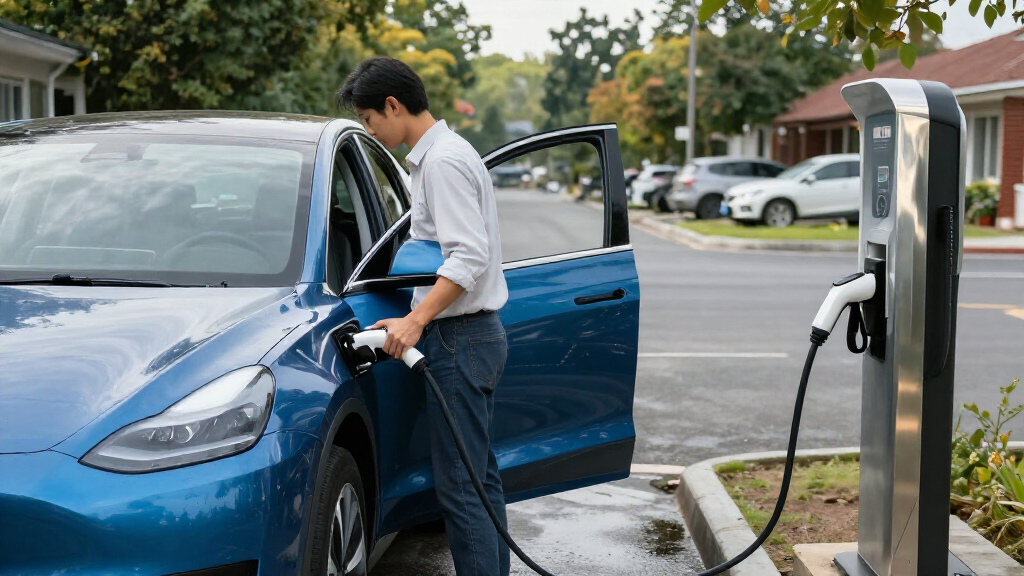
I compared these 15 stations around the decisions that shape a home charging purchase: available charging current, connection and installation type, connector compatibility, cable reach, and practical flexibility. A higher amp rating matters only when the car can use it and the home circuit can support it, so I treated maximum output as one factor rather than an automatic win. I also separated portable chargers from dedicated Level 2 stations because their use cases and performance expectations differ.
The ranking gives preference to options with a clear fit for common home setups and a useful balance of capability and installation demands. Models with Wi-Fi or Bluetooth may suit drivers who want connected controls, while simpler plug-in units can be a better match for buyers who value straightforward setup. Higher-output hardwired chargers rank well for homes and vehicles able to use that capacity, but not ahead of broadly useful options merely because their ratings are larger. I also considered where buyer checks are needed, including connector fit, circuit capacity, outlet suitability, and whether included adapters or installation details meet the intended use.
| electric vehicle charging station | Connector |
|---|---|
| Grizzl-E Level 2 40A EV Charge | — |
| bokman Portable Level 1 and Le | J1772 |
| EVDANCE Portable Level 1 and L | J1772 |
| DEWALT Level 2 EV Charger | SAE J1772 |
| Autel Home EV Charger up to 50 | J1772 |
| Autel MaxiCharger AC Home 50A | J1772 |
| Autel MaxiCharger Level 2 EV C | SAE J1772 |
| IYILO Level 2 EV Charger | — |
| Autel MaxiCharger Level 2 EV C | — |
| EVIQO Level 2 EV Charger | — |
| ChargePoint HomeFlex Level 2 E | J1772 |
| Emporia Pro Level 2 EV Charger | SAE J1772 |
| Emporia Level 2 WiFi EV Charge | SAE J1772 |
| Lectron Nexus Level 2 J1772 EV | J1772 |
| EVIQO EVIPOWER-2 Level 2 NACS | NACS |
Factors to Consider When Choosing Best Electric Vehicle Charging Stations
Choosing a charger starts with the car and the home electrical system, not the largest number on a product label. I’d work through these factors before settling on a model, since they can rule out an otherwise appealing option or prevent paying for capacity you cannot use.
Match charger output to the vehicle and circuit
A charger’s amp rating describes its maximum available current; it does not guarantee that your vehicle will charge at that rate. Check the vehicle’s onboard AC charging limit and compare it with the circuit’s capacity before choosing between 40A, 48A, 50A, or 80A equipment. The circuit, breaker, wiring, and installation method must all be suitable for the charger’s specified load. A higher-rated unit can leave room for a future vehicle, but it may call for costly electrical work that delivers no immediate benefit. Ask a qualified electrician to confirm what your home can support rather than inferring capacity from an existing outlet. If your current car has a lower AC limit, a well-matched 40A option may be a more sensible purchase than an 80A station.
Choose plug-in or hardwired installation deliberately
A NEMA 14-50 charger can be convenient when a properly installed, compatible outlet is already available, and unplugging the unit may make a move or equipment change easier. That convenience should not be confused with plugging into any outlet: the outlet, wiring, and breaker need to meet the charger’s requirements. Hardwired units avoid a plug connection and can support installations designed for higher current, but they require fixed wiring and professional installation. The cost and effort of installing a new outlet can narrow the practical difference between the two approaches. Before ordering, decide whether portability or a permanent installation matters more, then price the electrical work as part of the decision. Never use an extension cord or improvised adapter as a substitute for a suitable installation.
Verify connector compatibility, especially J1772 and NACS
Most stations in this roundup use a J1772 connector, while the EVIQO EVIPOWER-2 is a NACS model. The right choice depends on your vehicle’s charging port and the equipment approved for your specific vehicle, not simply on the connector name gaining attention. Some drivers can use an adapter, but compatibility, charging limits, and adapter requirements vary by vehicle and charging setup. Confirm whether an adapter is included, supplied by the automaker, or needs to be purchased separately. If more than one EV will use the station, check both vehicles’ ports and any adapter plan before choosing. Connector fit is a better first filter than comparing small differences in cable length or app features.
Treat portable chargers as a separate use case
Portable Level 1/Level 2 units can make sense for travel, occasional charging, or a driver who needs different connection options. Their appeal is flexibility, not necessarily the charging output of a dedicated higher-current home station. Check the exact input plug, included adapters, supported voltage and current, and the outlet conditions required for each mode. An adapter changes the physical connection; it does not upgrade the circuit or make an unsuitable outlet safe. Buyers who charge at home every day may prefer a fixed station with a longer cable or more output, while occasional users may value a portable unit’s broader role. Avoid buying one based on its maximum mode without confirming which compatible power source you can actually use.
Measure cable reach and plan the parking position
A 25-foot cable can offer more placement flexibility than a shorter lead, but the best length depends on where the charging port sits and how the car parks. Measure from the planned station location to the vehicle’s port on both sides of the parking space, allowing enough slack to route the cable without stretching it. Think about whether one charger will serve a second parking spot or a vehicle with a different port location. A longer cable can reduce the need to reposition the car, though it also takes more space to coil and store. Decide where the cable will hang when not in use so it does not cross a walkway or rest where it can be driven over. This small planning step can matter more to daily convenience than a modest increase in charging current.
Pay for connected features only when they solve a real problem
Wi-Fi and Bluetooth can support remote controls or charger management, but connected features are only useful if you plan to use them and your installation has a reliable signal. Review the specific functions offered rather than treating wireless connectivity as a performance upgrade. If you already manage charging through your vehicle, a simpler station may be enough for your routine. A connected charger can be a better fit when household scheduling or monitoring is part of how you manage charging. Also check whether the station’s app and network setup suit the location where it will be installed. Compare those practical benefits with the extra setup and dependence on wireless access, then spend on features that match your habits.
Frequently Asked Questions
Should I choose a 48A or 80A home charging station?
Start with the vehicle’s maximum AC charging rate and the electrical capacity available at home. An 80A station, such as the Autel MaxiCharger 80A, is only useful at its full output when the vehicle and installation can both support it. A 48A charger may already meet a driver’s needs and can be a more practical fit for many home circuits. If you expect to own a different vehicle later, ask an electrician whether planning for higher capacity makes sense before paying for an 80A unit. The charger’s rating alone does not tell you how quickly your specific car will charge.
Is a NEMA 14-50 EV charger easier to install than a hardwired model?
A plug-in model can simplify installation if you already have a correctly installed NEMA 14-50 outlet in the right location and it meets the charger’s requirements. If the outlet needs to be added or upgraded, the work may involve an electrician and can reduce the convenience advantage. Hardwired chargers require fixed wiring, but that can suit a permanent installation or a setup calling for higher current. Neither option should be connected to an outlet or circuit just because the plug fits. Have the circuit and installation plan checked before buying so you can compare the real work involved.
Can I use a J1772 charger with a vehicle that has a NACS port?
Possibly, but compatibility depends on the vehicle and the approved charging adapter or equipment. Most chargers in this roundup are J1772, while the EVIQO EVIPOWER-2 has a NACS connector, so confirm your car’s port before choosing. Check the vehicle maker’s guidance for supported adapters and any limits on AC charging. Do not assume that a connector adapter changes the charger’s power or makes every pairing compatible. If you plan to charge two vehicles with different ports, include the adapter plan in the overall cost and routine.
Is a portable Level 1/Level 2 charger enough for daily home charging?
It can be enough if the charger’s supported current and the time your vehicle sits parked match your driving needs. The bokman and EVDANCE portable models offer different Level 1/Level 2 configurations, but their listed output is below that of many dedicated 40A–80A stations. Level 1 charging can work for low daily mileage or long parking periods, while Level 2 generally adds charge more quickly when the car and power source support it. Confirm the exact plug, adapter, circuit, and charging mode you can use at home. Choose a portable unit for flexibility, not on the assumption that every outlet will provide Level 2 performance.
How do I know whether my electrical panel can support a Level 2 charger?
A product’s amp rating cannot confirm that your panel or wiring has spare capacity. An electrician can review the panel, breaker space, existing loads, wiring, and proposed charger location to identify what installation is suitable. That assessment can also show whether a 40A plug-in model, a 48A hardwired unit, or another configuration makes sense. Avoid relying on the presence of a 240V outlet alone, since its rating and condition may not match the charger. Getting this check before ordering can prevent choosing a unit that requires unexpected electrical changes.
Conclusion
For the broadest balance of high output and useful charging management, I’d start with the Emporia Pro as my best overall choice, provided the home circuit and vehicle suit 48A charging. The Grizzl-E 40A is my best value-style pick for buyers who want a straightforward NEMA 14-50 option, while the Autel MaxiCharger 80A is the premium choice for a home and vehicle capable of using its higher output. Beginners who already have a compatible outlet may find the plug-in ChargePoint HomeFlex or Grizzl-E easier to evaluate than a high-current hardwired installation, though the electrical setup still needs verification. For flexible backup or travel use, compare the portable bokman and EVDANCE; for a NACS connector, consider the EVIQO EVIPOWER-2 after checking vehicle compatibility. My final choice would depend first on the car’s port and charging limit, then on the circuit and installation cost—not the highest amp number on the label.
Evergreen bestsellers Picks

Bose QuietComfort True Wireless Earbuds with Active Noise Cancellation, Black

Ninja NC501 CREAMi XL Deluxe 11-in-1 Ice Cream and Frozen Treat Maker

Dyson Ball Animal 3 Upright Vacuum – Corded, 290 AW, De‑tangling Motorbar Cleaner Head, 3 Suction Modes
As an affiliate, we earn on qualifying purchases.