
Among these premium portable generators, my best overall pick is the Westinghouse 6600-Watt Home Backup Portable Generator, which balances useful home-backup output with transfer-switch readiness and RV outlets. For quieter, lighter power, the Honda EU2200i is a standout inverter option, while the EcoFlow DELTA Pro suits buyers who want battery power without routine engine noise or fuel storage. The central tradeoff is between high-output gas and dual-fuel models, compact inverters, and battery stations that differ sharply in runtime, noise, and upkeep. I also compare what you gain from tri-fuel capability, electric start, and larger power reserves—and what those features cannot solve. Continue reading for the full breakdown and guidance on matching a generator to your actual loads.

Get business pricing on garage and car supplies
- Business-only prices and quantity discounts
- Tax-exempt purchasing
- Multiple users, one account, clear invoices
Complete the kit


Key Takeaways
- The Westinghouse 6600-Watt model takes the overall lead for pairing substantial backup capability with transfer-switch and RV-ready connections; buyers needing more simultaneous load capacity should look to the 13,000- and 14,500-watt class instead.
- The Honda EU2200i and WEN 2350 are better fits for quiet, portable inverter power than large open-frame generators, but their lower output rules them out for running multiple major household appliances.
- The Westinghouse 14,500-watt tri-fuel model offers the broadest fuel flexibility in this lineup, while dual-fuel alternatives provide a simpler choice for households planning around gasoline and propane.
- The EcoFlow DELTA Pro and Jackery Explorer 300 avoid engine exhaust and routine fuel handling, but battery capacity and recharge planning make them a different kind of backup solution than fuel-powered generators.
- The WEN DF680iX and Westinghouse 5000-watt inverter occupy the middle ground: more output and RV usefulness than the smallest inverters, with a different portability and noise balance than high-wattage open-frame units.
| Westinghouse 6600-Watt Home Backup Portable Generator with Transfer Switch and RV-Ready Outlets, Gas Powered, CO Sensor |  | Best for Mid-Range Home Backup | Peak power: 6,600 W | Running power: 5,300 W | Engine: 274 cc 4-stroke OHV | VIEW ON AMAZON | See Our Full Breakdown |
| Honda EU2200i 2200-Watt Inverter Generator |  | Best Quiet Premium Inverter | Maximum output: 2,200 W | Running output: 2,200 W | Engine: 121 cc 4-stroke | VIEW ON AMAZON | See Our Full Breakdown |
| Westinghouse WGen9500DF Dual Fuel Portable Generator |  | Best for Flexible High-Output Backup | Running watts: 9,500 W gasoline; 8,500 W propane | Peak watts: 12,500 W gasoline; 11,200 W propane | Engine: 457 cc 4-stroke OHV | VIEW ON AMAZON | See Our Full Breakdown |
| Westinghouse 14,500-Watt Tri-Fuel Portable Generator |  | Best Premium Whole-Home Capacity | Peak output: 14,500 W gasoline; 13,500 W propane; 12,000 W natural gas | Running output: 11,500 W gasoline; 10,500 W propane; 9,500 W natural gas | Engine: 550 cc 4-stroke OHV | VIEW ON AMAZON | See Our Full Breakdown |
| WEN Super Quiet 2350-Watt Portable Inverter Generator with Fuel Shut Off, Gasoline Power, Ultra Lightweight (56235i) Black |  | Best Lightweight Inverter | Surge power: 2,350 W | Engine: 79 cc 4-stroke OHV | Weight: 39 lb | VIEW ON AMAZON | See Our Full Breakdown |
| Oxseryn 4400-Watt Gas-Powered Inverter Generator |  | Best Lightweight RV Inverter | Peak power: 4,400 watts | Running power: 3,400 watts | Fuel: Gasoline | VIEW ON AMAZON | See Our Full Breakdown |
| Westinghouse 5000 Peak Watt Quiet Portable Inverter Generator |  | Best Quiet Inverter for Longer Trips | Peak power: 5,000 watts | Fuel: Gasoline | Total harmonic distortion: Less than 3% | VIEW ON AMAZON | See Our Full Breakdown |
| Westinghouse 14,500-Watt Dual-Fuel Portable Generator | 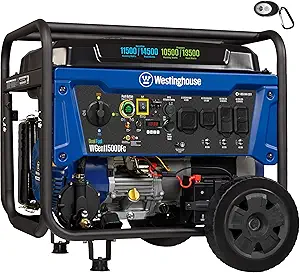 | Best for High-Capacity Home Backup | Fuel type: Gasoline and propane | Peak output on gasoline: 14,500 watts | Running output on gasoline: 11,500 watts | VIEW ON AMAZON | See Our Full Breakdown |
| Jackery Explorer 300 Portable Power Station 292Wh |  | Best Compact Battery Power Station | Battery capacity: 292Wh | Surge output: 600 watts | Battery cell type: LiFePO4 | VIEW ON AMAZON | See Our Full Breakdown |
| DuroMax XP13000EH 13,000-Watt Dual Fuel Portable Generator |  | Best Heavy-Duty Dual-Fuel Workhorse | Model: XP13000EH | Power output: 13,000 watts | Fuel type: Gasoline and propane | VIEW ON AMAZON | See Our Full Breakdown |
| Westinghouse WGen3600cv Portable Generator with CO Sensor |  | Best for Long Runtime in a Mid-Output Gas Generator | Running watts: 3,600 W | Peak watts: 4,650 W | Engine: 212cc 4-stroke OHV | VIEW ON AMAZON | See Our Full Breakdown |
| EcoFlow DELTA Pro Portable Power Station, 3600Wh, 3600W | 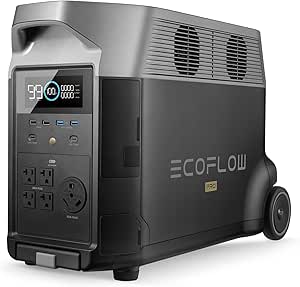 | Best Premium Battery-Based Power Station | Battery capacity: 3,600Wh LFP | AC output: 3,600W; up to 4,500W with X-Boost | Expandable capacity: Up to 25kWh | VIEW ON AMAZON | See Our Full Breakdown |
| WEN 6800-Watt Dual-Fuel RV-Ready Electric Start Inverter Generator (DF680iX) |  | Best for Flexible RV and Backup Power | Engine: 224cc dual-fuel | Gasoline output: 6,800 surge watts; 5,100 rated watts | Propane output: 6,000 surge watts; 4,500 rated watts | VIEW ON AMAZON | See Our Full Breakdown |
| DuroStar DS13000MX 13,000-Watt Dual-Fuel Portable Generator |  | Best for High-Output Home Backup | Model: DS13000MX | Power output: 13,000 watts | Engine displacement: 500 cc | VIEW ON AMAZON | See Our Full Breakdown |
| premium portable generator | Engine |
|---|---|
| Westinghouse 6600-Watt Home Ba | 274 cc 4-stroke OHV |
| Honda EU2200i 2200-Watt Invert | 121 cc 4-stroke |
| Westinghouse WGen9500DF Dual F | 457 cc 4-stroke OHV |
| Westinghouse 14,500-Watt Tri-F | 550 cc 4-stroke OHV |
| WEN Super Quiet 2350-Watt Port | 79 cc 4-stroke OHV |
| Oxseryn 4400-Watt Gas-Powered | — |
| Westinghouse 5000 Peak Watt Qu | — |
| Westinghouse 14,500-Watt Dual- | 550cc 4-stroke OHV |
| Jackery Explorer 300 Portable | — |
| DuroMax XP13000EH 13,000-Watt | — |
| Westinghouse WGen3600cv Portab | 212cc 4-stroke OHV |
| EcoFlow DELTA Pro Portable Pow | — |
| WEN 6800-Watt Dual-Fuel RV-Rea | 224cc dual-fuel |
| DuroStar DS13000MX 13,000-Watt | — |
More Details on Our Top Picks
Westinghouse 6600-Watt Home Backup Portable Generator with Transfer Switch and RV-Ready Outlets, Gas Powered, CO Sensor
The Westinghouse WGen5300cv offers a useful middle ground for buyers who need more than a compact inverter can provide without stepping up to the much larger WGen9500DF or 14,500-watt tri-fuel model. Its 5,300 running watts can support a range of household essentials, while the 120/240V selector and transfer-switch-ready outlet make it a practical fit for a properly installed home backup setup. The RV outlet adds flexibility for travel, though the generator’s size and recoil start make it less appealing for frequent solo hauling or quick, effortless starts. A 14.5-hour stated runtime on its 4.7-gallon tank can reduce refueling interruptions at moderate load. The CO sensor and low-oil shutdown add welcome safeguards, but this remains a conventional gas-powered generator, not a quiet inverter option for noise-sensitive campsites.
Pros:- 5,300 running watts suit a broad set of home backup needs
- Transfer-switch-ready and RV-ready outlets support different uses
- Stated runtime reaches 14.5 hours on a 4.7-gallon tank
- CO sensor and automatic low-oil shutdown add safety protections
Cons:- Recoil starting requires manual effort
- Heavy, bulky design is inconvenient for frequent transport
- Gasoline-only operation offers less fuel flexibility than the WGen9500DF
Best for: Homeowners who want to power essential circuits and also need an RV-ready outlet, without the output and bulk of a high-capacity tri-fuel generator.
Not ideal for: Campers seeking quiet inverter power or anyone who needs frequent easy transport and push-button starting.
- Peak power:6,600 W
- Running power:5,300 W
- Engine:274 cc 4-stroke OHV
- Fuel tank:4.7 gallons
- Stated runtime:Up to 14.5 hours
- Outlets:5-20R 120V 20A; TT-30R 30A; L14-30R 30A transfer-switch-ready
- Voltage:120/240 V selectable
- Safety:CO sensor and automatic low-oil shutdown
Our verdict“Choose this Westinghouse for substantial home backup with RV flexibility, but skip it if quiet operation or easy portability matters most.”
Honda EU2200i 2200-Watt Inverter Generator
The Honda EU2200i is the refined, low-noise choice in this group for buyers who value inverter power over whole-home capacity. At a stated 48–57 dB(A), it is better suited to a campsite or close neighbors than the larger open-frame Westinghouse backup models, while inverter output is designed for sensitive electronics. Bluetooth monitoring and CO-MINDER shutdown add useful oversight, though neither changes the central limitation: its 2,200-watt output is for modest loads, not a broad household backup plan. Runtime ranges from 3.2 to 8.1 hours depending on load, so it calls for more fuel attention than the WEN’s stated 5.7 hours at half load. Product details also give different tank-capacity and weight figures, so I would verify those before buying. Availability is listed as restricted in California.
Pros:- Quiet stated operating range suits noise-sensitive settings
- Inverter technology is intended for sensitive electronics
- Bluetooth connectivity supports remote monitoring
- CO-MINDER detects hazardous carbon monoxide and can shut the unit down
Cons:- 2,200 watts limits the number and size of loads it can support
- Runtime varies from 3.2 to 8.1 hours with use
- Listed weight and fuel-tank capacity differ between product details
Best for: Campers, RV owners, and electronics users who prioritize quiet inverter power and app monitoring over high output.
Not ideal for: Households needing to run several large appliances or buyers who need a long runtime between refills.
- Maximum output:2,200 W
- Running output:2,200 W
- Engine:121 cc 4-stroke
- Fuel:Gasoline
- Tank capacity:0.95 gallons in description; 1 gallon in specifications
- Runtime:3.2–8.1 hours
- Noise level:48–57 dB(A)
- Weight:51 lb in specifications; just over 47 lb in description
- Safety and connectivity:CO-MINDER shutdown and Bluetooth
Our verdict“Pick the EU2200i for quiet, monitored power at camp or in an RV, not for substantial home backup.”
Westinghouse WGen9500DF Dual Fuel Portable Generator
The WGen9500DF pairs substantial backup capacity with the practical advantage of gasoline or propane. Its stated 9,500 running watts on gasoline and 8,500 on propane place it well above the WGen5300cv, making it a stronger fit for households with heavier loads or RV users who need more output. Remote and electric starting also remove much of the manual effort associated with the WGen5300cv’s recoil start. The tradeoff is size: this is a large conventional generator, not a quiet, lightweight inverter like the Honda EU2200i or WEN 56235i. Gasoline runtime is listed at up to 12 hours, and the multiple household, transfer-switch, and RV connections add useful setup options. Minimal assembly is required, and the unit may have a residual oil or fuel odor from factory testing.
Pros:- High running output supports heavier backup loads than the WGen5300cv
- Gasoline and propane operation gives fuel-choice flexibility
- Remote, electric, and recoil starting methods
- Household, transfer-switch, and 50A RV-style outlets broaden connection options
Cons:- Large conventional-generator format is less suited to quiet or compact use
- Requires some assembly before operation
- Factory testing may leave a residual oil or fuel odor
Best for: Homeowners or RV users who need high output, want a propane backup option, and value remote or electric starting.
Not ideal for: Buyers prioritizing low noise, compact storage, or a lightweight generator for frequent transport.
- Running watts:9,500 W gasoline; 8,500 W propane
- Peak watts:12,500 W gasoline; 11,200 W propane
- Engine:457 cc 4-stroke OHV
- Fuel types:Gasoline and propane
- Gasoline tank:6.6 gallons
- Gasoline runtime:Up to 12 hours
- Starting methods:Remote, electric, and recoil
- Outlets:Two 5-20R 120V 20A GFCI; L14-30R 120V 30A; 14-50R 120/240V 50A
Our verdict“Choose the WGen9500DF when high output and dual-fuel flexibility matter more than quiet operation or easy transport.”
Westinghouse 14,500-Watt Tri-Fuel Portable Generator
For buyers who want the broadest fuel flexibility and highest listed output here, the Westinghouse tri-fuel generator stands apart. It produces up to 11,500 running watts on gasoline, with lower output on propane and natural gas; that capacity exceeds the WGen9500DF, while the third fuel option can matter when gasoline storage or supply is a concern. The remote electric start and transfer-switch-ready design suit a permanent backup plan more than casual camping. Low total harmonic distortion is intended to make its output more suitable for sensitive electronics than many conventional generators, but this is still a heavy-duty unit with a 550cc engine and 9.5-gallon tank—not a portable inverter in the Honda or WEN sense. Gasoline runtime reaches a stated 19 hours, whereas propane runtime is up to seven hours on a 20-pound tank, so fuel choice affects how often it needs attention.
Pros:- Three fuel types offer more supply flexibility than the WGen9500DF
- 11,500 running watts on gasoline support demanding backup loads
- Remote electric start and transfer-switch-ready design suit home backup
- Low-THD output is designed for sensitive electronics
Cons:- Heavy-duty engine and large tank make frequent movement difficult
- Propane runtime is listed at up to seven hours on a 20 lb tank
- Output is lower on propane and natural gas than on gasoline
Best for: Homeowners planning broad backup coverage who want gasoline, propane, and natural gas options, plus remote starting.
Not ideal for: Campers, apartment dwellers, or anyone who needs a compact generator that one person can move easily.
- Peak output:14,500 W gasoline; 13,500 W propane; 12,000 W natural gas
- Running output:11,500 W gasoline; 10,500 W propane; 9,500 W natural gas
- Engine:550 cc 4-stroke OHV
- Fuel types:Gasoline, propane, and natural gas
- Gasoline tank:9.5 gallons
- Gasoline runtime:Up to 19 hours
- Propane runtime:Up to 7 hours on a 20 lb tank
- Features:Remote electric start, transfer-switch ready, fuel gauge, and low THD
Our verdict“Choose this model for high-capacity home backup and three-fuel flexibility, provided its size and fuel-dependent output fit your setup.”
WEN Super Quiet 2350-Watt Portable Inverter Generator with Fuel Shut Off, Gasoline Power, Ultra Lightweight (56235i) Black
The WEN 56235i is the easiest pick here for buyers who expect to carry their generator, not leave it beside a transfer switch. At 39 pounds, it is lighter than the Honda EU2200i’s listed 51 pounds, and its inverter output is suited to electronics during camping, tailgating, or small backup jobs. It also gives a little more surge capacity than the Honda’s stated maximum output, but neither compact unit approaches the household coverage of the WGen5300cv or larger Westinghouse models. A stated 51 dB at quarter load helps in quieter settings; the one-gallon tank and 5.7-hour runtime at half load mean extended use will require refueling. Fuel shutoff and eco-mode are practical maintenance and efficiency features, though the modest output makes this a poor match for large appliances or multi-circuit backup.
Pros:- 39-pound weight is easier to carry than the Honda EU2200i
- Inverter output is designed for sensitive electronics
- Stated 51 dB noise level at quarter load suits quieter settings
- Fuel shutoff and eco-mode support efficient operation and storage
Cons:- 2350 W surge output is not suited to larger appliances
- One-gallon tank limits runtime between refills
- Two-year warranty is shorter than the Honda EU2200i’s listed three years
Best for: Campers and tailgaters who want a light, quiet inverter for electronics and modest loads.
Not ideal for: Homeowners seeking whole-home backup or buyers who need long operation without refueling.
- Surge power:2,350 W
- Engine:79 cc 4-stroke OHV
- Weight:39 lb
- Noise level:51 dB at quarter load
- Fuel tank:1 gallon
- Runtime:5.7 hours at half load
- 120V outlets:Two 14A NEMA 5-20R
- Additional outlets:One 8.3A 12V DC receptacle; two 5V USB ports
- Warranty:2 years
Our verdict“Pick the WEN for lightweight, quiet power on trips and small loads, but choose a larger Westinghouse if home backup is the priority.”
Oxseryn 4400-Watt Gas-Powered Inverter Generator
The Oxseryn stands out for pairing 3,400 running watts with a 56-pound listed weight, a practical mix for RV owners who need more capacity than a small inverter can offer without stepping up to a large backup unit. Its RV outlet and two 120V outlets cover common campsite connections, while ECO mode is rated for up to 14 hours at a quarter load. Compared with the Westinghouse 5000 Peak Watt Quiet Portable Inverter Generator, it offers less output and lacks the Westinghouse’s remote start and lower stated noise level, but its lighter listed weight can make it easier to handle. The tradeoff is an open-frame design: it is not the pick for buyers prioritizing quiet operation or a more enclosed generator. I’d also factor in gasoline-only fueling and the possibility of a fuel smell on delivery.
Pros:- Provides 3,400 running watts for moderate RV and backup loads.
- Dedicated RV port alongside two 120V AC outlets and a 12V DC outlet.
- ECO-mode runtime is rated up to 14 hours at 25% load.
- Listed weight of 56 pounds is lighter than many higher-output portable generators.
Cons:- Open-frame construction is a drawback for noise-sensitive campsites.
- Gasoline-only operation offers less fuel flexibility than dual-fuel alternatives.
- Listed noise level is under 72 dBA at 23 feet, louder than the Westinghouse inverter’s stated minimum.
Best for: RV owners who want a relatively light gasoline inverter with a dedicated RV outlet and enough running output for moderate campsite loads.
Not ideal for: Campers in noise-sensitive settings or buyers who want remote starting, dual-fuel flexibility, or a more enclosed design.
- Peak power:4,400 watts
- Running power:3,400 watts
- Fuel:Gasoline
- Fuel tank capacity:2 gallons
- Runtime:Up to 14 hours at 25% load with ECO mode
- Noise level:Under 72 dBA at 23 feet
- Weight:56 pounds
- Outlets:2 × 120V AC, 1 × 12V DC, 1 RV port
Our verdict“Choose the Oxseryn for a lighter, RV-ready inverter with useful midrange output, but skip it if quiet operation is your priority.”
Westinghouse 5000 Peak Watt Quiet Portable Inverter Generator
This Westinghouse is the strongest fit here for buyers who want quiet inverter operation without giving up a useful mix of output and controls. Its 3,900 rated watts exceed the Oxseryn’s 3,400, and its stated noise level starts at 52 dBA; that combination suits longer RV stays or backup use where both capacity and sound matter. The remote, electric, and recoil start options also give it an ease-of-use advantage over the simpler Oxseryn. A digital display tracks fuel, output, runtime, voltage, and lifetime hours, helping owners plan refueling and monitor loads. The tradeoffs are gasoline-only fueling and a 3.4-gallon tank that adds bulk compared with smaller portable options. It is also not silent, and buyers needing whole-home-scale output should look instead at the much larger Westinghouse 14,500-watt dual-fuel model.
Pros:- Up to 3,900 rated watts with less than 3% total harmonic distortion.
- Remote, electric, and recoil starting provide flexible ways to start the unit.
- Rated for up to 18 hours of runtime with a 3.4-gallon tank.
- Digital display and RV-ready outlet support practical trip and backup use.
Cons:- Gasoline-only operation lacks the fuel choice offered by the Westinghouse 14,500-watt dual-fuel model.
- A 52 dBA minimum is quiet for a generator but not silent.
- Its output remains far below large home-backup generators in this roundup.
Best for: RV travelers and homeowners who want a quieter inverter with remote start, useful output monitoring, and extended light-load runtime.
Not ideal for: Buyers who need high-capacity whole-home backup, dual-fuel operation, or the lightest generator for frequent manual carrying.
- Peak power:5,000 watts
- Fuel:Gasoline
- Total harmonic distortion:Less than 3%
- Noise level:As low as 52 dBA
- Maximum runtime:Up to 18 hours
- Fuel tank capacity:3.4 gallons
- Starting methods:Remote, electric, and recoil
- Outlets:5–20R 120V duplex, TT-30R 30A RV outlet, and two USB outlets
Our verdict“Pick this Westinghouse for quieter RV and backup power with convenient starting and monitoring, not for large household loads.”
Westinghouse 14,500-Watt Dual-Fuel Portable Generator
For buyers whose priority is keeping more household circuits running, this Westinghouse makes the clearest case in the group: it delivers 11,500 running watts on gasoline and supports a transfer switch, placing it well above the inverter generators in available output. Unlike the gasoline-only Westinghouse 5000, it can also run on propane, giving owners another fuel option during an outage. Low THD is specified to support sensitive electronics, and remote electric start reduces the effort of getting a large unit going. That capacity brings a real portability penalty: this is a heavy-duty machine, not a generator meant to be carried to a campsite. Propane runtime is listed at up to seven hours on a 20-pound tank, shorter than its gasoline runtime. I’d choose it for a prepared home backup setup, not casual trips where size and easy handling matter.
Pros:- 11,500 running watts on gasoline can serve much larger loads than the inverter models here.
- Dual-fuel operation provides a propane alternative to gasoline.
- Transfer-switch-ready design suits planned home backup installations.
- Low THD is specified to support sensitive electronics.
Cons:- Heavy-duty size can make moving and positioning the generator difficult.
- Propane runtime is rated for up to seven hours on a 20-pound tank.
- Its scale and output are excessive for many campsite and small-load needs.
Best for: Homeowners preparing for outages who need substantial output, transfer-switch readiness, and the option to use propane.
Not ideal for: RV travelers or buyers who need a compact, frequently moved generator; its heavy-duty format and limited propane runtime per tank are poor fits.
- Fuel type:Gasoline and propane
- Peak output on gasoline:14,500 watts
- Running output on gasoline:11,500 watts
- Peak output on propane:13,500 watts
- Running output on propane:10,500 watts
- Gasoline runtime:Up to 19 hours
- Fuel tank capacity:9.5 gallons
- Propane runtime:Up to 7 hours on a 20-pound tank
- Engine:550cc 4-stroke OHV
Our verdict“Choose this Westinghouse for high-output, transfer-switch-ready home backup with fuel flexibility, not for portable recreation.”
Jackery Explorer 300 Portable Power Station 292Wh
The Jackery is the portability outlier in this roundup: at a listed 7.1 pounds, it is easy to carry where a gasoline generator would be inconvenient or unsuitable. It supplies 300 watts of rated output for phones, small electronics, and other modest loads, with AC, USB, and car-port connections. That makes it a different kind of portable power choice from the Oxseryn or Westinghouse inverter: it runs without gasoline and avoids the generator’s engine noise, but its 292Wh capacity is not meant for prolonged high-draw appliances or broad home backup. The LiFePO4 battery is listed for over 4,000 charge cycles, while solar panels can provide an off-grid recharge option but are sold separately. I’d choose it for personal electronics and short trips, not as a substitute for the much higher-output fuel generators.
Pros:- Listed weight of 7.1 pounds makes it far easier to carry than the gasoline generators.
- LiFePO4 battery is rated for over 4,000 charge cycles.
- AC, USB-C, USB-A, and 12V car-port outputs support a range of small devices.
- Can be recharged with compatible solar panels, which are sold separately.
Cons:- 292Wh capacity and 300-watt rated output limit it to modest loads and shorter use.
- Solar panels are not included.
- It cannot match the appliance and home-backup capacity of the Oxseryn or Westinghouse generators.
Best for: Hikers, campers, and travelers who need lightweight power for phones and small electronics without carrying fuel.
Not ideal for: Households seeking outage backup for appliances, or anyone needing sustained output above 300 watts.
- Battery capacity:292Wh
- Surge output:600 watts
- Battery cell type:LiFePO4
- Listed weight:7.1 pounds
- Dimensions:9.1 × 5.2 × 7.8 inches
- Voltage:120 volts
- Connector types:DC car port, USB-A, USB-C
- Battery charge time:4 hours
Our verdict“Choose the Jackery for lightweight, quiet power for small devices, but not for appliances or serious home backup.”
DuroMax XP13000EH 13,000-Watt Dual Fuel Portable Generator
The DuroMax XP13000EH is aimed at buyers who want high-output backup power and the option to run on either gasoline or propane. Its 13,000-watt stated output and 50-amp transfer-switch-ready outlet make it a much closer match for demanding home or jobsite use than the Westinghouse 5000 inverter, which is quieter and more suited to smaller loads. The all-metal frame, copper windings, and no-flat tires point toward a rugged, movable design, while push-button electric start cuts down on startup effort. Still, “portable” here should not be confused with light: the product data gives no weight, so I would not assume it is easy for one person to reposition. It also lacks runtime, tank-capacity, and noise details in the supplied specifications, making it harder to plan fuel use or compare operating conditions with the Westinghouse 14,500-watt model.
Pros:- Dual-fuel operation allows use of gasoline or propane.
- 13,000-watt stated output suits demanding backup and jobsite applications.
- 50-amp transfer-switch-ready outlet supports a home backup connection.
- All-metal frame, copper windings, and no-flat tires suit rugged use.
Cons:- High-output, all-metal construction is likely to be less convenient to move than inverter options.
- The supplied product data does not state runtime or fuel tank capacity.
- The supplied data does not provide a noise level for comparison with quieter inverter models.
Best for: Homeowners and jobsite users who need high output, dual-fuel flexibility, and a 50-amp transfer-switch-ready connection.
Not ideal for: Buyers seeking a quiet, lightweight camping generator or anyone who needs published runtime, tank-capacity, and noise figures before choosing.
- Model:XP13000EH
- Power output:13,000 watts
- Fuel type:Gasoline and propane
- Starting method:Push-button electric start
- Outlet:50-amp transfer-switch-ready outlet
- Frame:All-metal
- Windings:100% copper
- Wheels:No-flat tires
Our verdict“Choose the XP13000EH for rugged, high-output dual-fuel backup with a 50-amp connection, provided its weight and operating details suit your setup.”
Westinghouse WGen3600cv Portable Generator with CO Sensor
The WGen3600cv suits buyers who want a conventional gasoline generator with useful endurance: its 4-gallon tank supports up to 14 hours of runtime, helping reduce refueling during an extended outage. The 3,600 running watts and TT-30R RV outlet also make it more capable for a camper setup than a small power station such as the Jackery Explorer 300. Automatic low-oil and carbon monoxide shutdown add practical safety protections, though they do not replace careful outdoor placement.
Its tradeoff is mobility and flexibility. Unlike the wheeled WEN DF680iX, the WGen3600cv’s wheel kit is not included, and it runs on gasoline only. Its output is also far below the large-home capacity of the DuroStar DS13000MX. I’d rank it for buyers who value steady runtime and straightforward RV-ready connections over dual-fuel flexibility or high-load backup.
Pros:- Up to 14 hours of runtime from a 4-gallon gasoline tank
- 3,600 running watts with household and RV-ready outlets
- Automatic low-oil and carbon monoxide shutdown
- Rubber outlet covers help protect connections when not in use
Cons:- Wheel kit is not included, making transport less convenient
- Gasoline-only operation offers less fuel flexibility than the WEN DF680iX
- Output is modest beside high-capacity options such as the DuroStar DS13000MX
Best for: RV owners and households seeking a gasoline generator for moderate loads and longer stretches between refueling
Not ideal for: Buyers who need dual-fuel operation, included wheels for frequent movement, or enough output for substantial whole-home loads
- Running watts:3,600 W
- Peak watts:4,650 W
- Engine:212cc 4-stroke OHV
- Fuel type:Gasoline
- Fuel tank capacity:4 gallons (15 L)
- Runtime:Up to 14 hours per tank
- Outlets:Two 5–20R 120V duplex outlets, one TT-30R 30A outlet, and one L5-30R 30A outlet
- Safety features:Automatic low-oil and carbon monoxide shutdown; rubber outlet covers
- Warranty:3-year limited warranty
Our verdict“Choose the WGen3600cv for moderate backup or RV loads when long gasoline runtime matters more than wheels, dual-fuel capability, or high wattage.”
EcoFlow DELTA Pro Portable Power Station, 3600Wh, 3600W
The EcoFlow DELTA Pro is the clearest choice here for buyers who want substantial stored power without a gasoline engine running beside the home or campsite. Its 3,600Wh LFP battery and 3,600W AC output can support a range of devices, while app control lets owners monitor settings over Wi-Fi or Bluetooth. Compared with the gasoline-powered Westinghouse WGen3600cv, it avoids routine engine noise and fuel storage, and its five charging methods provide more ways to replenish it.
That convenience comes with limits: stored capacity is finite, and expanding it to 25kWh requires compatible add-ons. A full solar recharge also calls for four 400W panels, so solar replenishment can mean a sizable setup. Unlike the WEN DF680iX, it doesn’t offer an engine that can keep producing power as long as fuel is available. I’d pick it for quiet, configurable battery backup, not as a direct substitute for long-running fuel generation.
Pros:- 3,600Wh LFP battery with expandable capacity up to 25kWh using compatible add-ons
- 3,600W AC output with up to 4,500W using X-Boost
- Five charging methods, including wall, solar, vehicle, and EV station charging
- Wi-Fi and Bluetooth app control for monitoring and settings
Cons:- Battery capacity is finite and expansion requires compatible add-ons
- A full solar recharge requires four 400W panels
- Unlike fuel generators, it must be recharged rather than refueled for continued operation
Best for: Homeowners and mobile power users who want quiet battery backup, app monitoring, and the option to expand storage
Not ideal for: Buyers who need prolonged high-output operation without recharging or who want a simple, low-add-on solar setup
- Battery capacity:3,600Wh LFP
- AC output:3,600W; up to 4,500W with X-Boost
- Expandable capacity:Up to 25kWh
- Output methods:15
- USB-C output:Two ports, up to 100W
- Charging methods:EV station, solar, wall outlet, Smart Generator, and car outlet
- Solar conversion efficiency:Up to 23%
- App connectivity:Wi-Fi and Bluetooth
Our verdict“Choose the DELTA Pro for quiet, app-managed battery backup with expansion options, and skip it if you need fuel-powered endurance without recharging.”
WEN 6800-Watt Dual-Fuel RV-Ready Electric Start Inverter Generator (DF680iX)
The WEN DF680iX makes sense for buyers who want a portable inverter generator with more output than the Westinghouse WGen3600cv and a choice between gasoline and propane. It delivers 5,100 rated watts on gasoline or 4,500 on propane, plus an RV outlet and 120V/240V L14-30R connection. That combination is useful when an RV setup and household backup needs overlap. Electric start, a telescoping handle, and wheels also ease setup compared with the wheel-kit-not-included Westinghouse.
Fuel flexibility has practical limits: the listed gasoline runtime is up to 6.1 hours at half load, and propane runtime assumes a 20-pound tank that is not included in the package details. Its 6,800-watt gasoline surge output still falls well short of the DuroStar DS13000MX for large loads. I’d favor the WEN when inverter output, portability, and two fuel choices matter more than long runtime or maximum home-backup capacity.
Pros:- Runs on gasoline or propane, giving owners a choice of fuel
- Rated output of 5,100 watts on gasoline and 4,500 watts on propane
- RV-ready outlet and 120V/240V L14-30R connection
- Electric start, wheels, and telescoping handle support easier handling
Cons:- Gasoline runtime is up to 6.1 hours at half load
- Propane tank is not included in the listed package details
- Output is considerably lower than the DuroStar DS13000MX
Best for: RV owners and homeowners who need a portable inverter generator with dual-fuel capability and 120V/240V connections
Not ideal for: Buyers who need long runtime from a compact fuel supply, included propane, or output suited to large whole-home loads
- Engine:224cc dual-fuel
- Gasoline output:6,800 surge watts; 5,100 rated watts
- Propane output:6,000 surge watts; 4,500 rated watts
- Noise level:64 dB at quarter load
- Gasoline tank capacity:2.9 gallons
- Gasoline runtime:Up to 6.1 hours at half load
- Propane runtime:Up to 9 hours with a 20 lb tank at half load
- Outlets:One 120V/240V L14-30R, two 120V outlets, one TT-30R RV outlet, one 12V DC outlet, and two 5V USB ports
- Warranty:3 years
Our verdict“Choose the WEN DF680iX if you need portable dual-fuel inverter power for RV and moderate backup loads, rather than maximum wattage or long gasoline runtime.”
DuroStar DS13000MX 13,000-Watt Dual-Fuel Portable Generator
When wattage takes priority, the DuroStar DS13000MX occupies a different tier from the other fuel generators here: its stated 13,000-watt output and 50-amp outlet are aimed at substantial backup loads and transfer-switch connections. It also runs on gasoline or propane and has push-button electric start, features that give it more fuel choice and easier startup than the gasoline-only Westinghouse WGen3600cv. Carbon monoxide detection with automatic shutoff adds a safety measure, while its steel frame is built for heavy-duty use.
This capacity comes with a real portability cost. The heavy-duty construction may make moving it difficult, and the supplied data does not specify tank capacity or runtime, so I can’t compare refueling intervals with the WGen3600cv’s stated 14 hours. It is also far less suited to easy RV handling than the wheeled WEN DF680iX. I’d rank it for backup power needs where high output matters more than compactness or known endurance.
Pros:- Stated 13,000-watt output for larger backup and job-site loads
- Gasoline or propane operation offers fuel flexibility
- Push-button electric start simplifies startup
- 50-amp outlet supports transfer-switch connection
Cons:- Heavy-duty construction may make the generator difficult to move
- Fuel capacity and runtime are not specified in the supplied product data
- Its high-output backup focus is less suited to compact RV use than the WEN DF680iX
Best for: Homeowners who need high-output dual-fuel backup and plan to connect through a 50-amp transfer-switch setup
Not ideal for: RV travelers or buyers who frequently reposition a generator, or anyone who needs documented runtime and fuel-capacity figures before choosing
- Model:DS13000MX
- Power output:13,000 watts
- Engine displacement:500 cc
- Fuel type:Gasoline or propane
- Start type:Push-button electric start
- Safety feature:Carbon monoxide detection with automatic shutoff
- Outlet:50-amp
- Construction:Steel frame
Our verdict“Choose the DS13000MX when high-output dual-fuel backup and a 50-amp connection matter more than portability or documented runtime.”

How We Picked
I ranked these options by how well their output, power type, and features fit distinct premium portable-generator needs—not by wattage alone. I weighed usable running capacity, inverter design where specified, fuel options, starting convenience, RV and home-backup connections, portability, and the maintenance or recharge demands each type brings. A high-output model can run more equipment, but it is not automatically a better choice if its size, noise, and fuel use exceed the buyer’s needs.
The Westinghouse 6600-Watt model ranks first as the most balanced fit for buyers seeking one fuel-powered unit for home backup and RV use. The Honda EU2200i and larger inverter models rank strongly for cleaner, quieter portable power, while high-output dual- and tri-fuel machines suit heavier backup loads. Battery stations are included for buyers who prioritize quiet, exhaust-free operation, but their finite stored energy keeps them from replacing a fuel generator for every outage. I treat products as different tools, so the ranking reflects practical fit and tradeoffs rather than a single performance scale.
Factors to Consider When Choosing Premium Portable Generators
Before choosing among these models, I would start with the job the generator must do, then work backward to output, fuel, and form factor. The questions below address common selection mistakes that specifications alone do not resolve.
Size for Starting Loads, Not Just Running Watts
List the appliances you expect to run at the same time and note both their running and startup demands. Motors in refrigerators, pumps, and air conditioners can briefly draw much more power when they start, so a generator that appears adequate on steady wattage may still struggle. Add only loads you realistically need together; sizing for every appliance in the house can lead to buying a machine that is harder to move and feed. Check whether a quoted peak figure is being confused with continuous output. For a few essentials, a small inverter may be sufficient, while whole-home circuits can call for a much larger unit and a professionally planned connection. Keep some capacity in reserve if you expect to add a load later.
Choose Fuel Around Storage and Resupply
Gasoline, propane, and natural gas or other supported fuels each change how an outage plan works. Gasoline can be convenient to source, but stored fuel needs safe handling and periodic attention; propane stores differently, though tank size and availability constrain runtime. Tri-fuel flexibility can help when one supply is unavailable, but only if you have the compatible connections and fuel access to use it. Do not assume a dual- or tri-fuel generator produces identical output on every fuel. Compare the manufacturer’s ratings for each fuel and plan around the lowest output that matches your likely setup. A simpler single-fuel plan may be more practical than extra flexibility you will not use.
Match Inverter, Conventional, and Battery Power to the Setting
Inverter generators are often the better fit for sensitive electronics, quieter environments, and changing loads, but compact models cannot replace high-output backup units. Conventional high-wattage generators can serve larger loads, with size, operating noise, and fuel consumption often part of the tradeoff. Battery power stations remove exhaust at the point of use and avoid engine maintenance, but their stored energy is finite and must be replenished from an outlet, vehicle, or compatible charging source. For repeated or extended outages, calculate daily energy use rather than focusing only on maximum wattage. For short, quiet tasks, a battery unit may cover the need with less setup. These categories solve different problems, so compare operating patterns as well as headline specs.
Plan the Connection Before an Outage
A generator’s outlets do not by themselves make it ready to power household wiring. Buyers planning to use a transfer switch should confirm generator compatibility, switch requirements, and installation needs with a qualified electrician before purchase. RV owners should check the generator outlet, RV inlet, and the electrical demands of their rig rather than relying on the phrase “RV-ready.” Extension cords also have limits: use cords rated for the load and keep the generator outdoors, away from doors and windows, to reduce carbon monoxide risk. CO sensors add a layer of protection, but they do not make indoor or enclosed operation safe. A little connection planning can prevent an expensive mismatch.
Treat Portability as a Whole-Setup Question
“Portable” can mean one person can lift a compact inverter, or that a larger machine can be moved on wheels across suitable ground. Consider the generator’s weight alongside handles, wheel design, storage space, and how far it must travel from its operating location. A heavy unit may be manageable in a garage but awkward to load into a vehicle or position on uneven ground. Battery stations can be easier to use in enclosed spaces because they have no exhaust while operating, though their weight and charging equipment still matter. Include fuel containers, cables, and any transfer equipment in your space plan. The best fit is the full setup you can store and deploy safely, not simply the generator chassis.
Compare Upkeep and Long-Run Readiness
Fuel generators need more than a one-time purchase: plan for oil and filter service as specified, fuel-system care, and periodic operation or checks. A machine that sits untouched for years may not be ready when an outage arrives, particularly if fuel has been stored poorly. Battery stations skip engine servicing but need charge-level monitoring and a realistic recharge plan; stored energy should not be treated as unlimited backup. Read the manual for maintenance intervals, storage instructions, and any fuel-specific requirements before choosing. Buyers who want the least engine upkeep may prefer a battery unit for modest loads, while those expecting long outages should prioritize replenishable fuel and a clear maintenance routine. Readiness depends on the plan around the machine as much as on the machine itself.
Frequently Asked Questions
Can one portable generator power my whole home during an outage?
That depends on which circuits you want to run at once, their startup demands, and the generator’s continuous output on your chosen fuel. High-output models in this lineup can support more equipment than the compact inverters, but a large wattage label does not guarantee whole-home coverage. Ask an electrician to identify priority circuits and size a transfer-switch setup around them. Many households get a more workable plan by powering selected essentials rather than every appliance. Never connect a generator directly to household wiring without an approved transfer arrangement.
Is an inverter generator worth choosing if I need home backup?
An inverter can be a strong choice when quiet operation, portability, and power for electronics matter more than running many large loads. The Honda EU2200i and WEN 2350 are compact examples, while the WEN DF680iX and Westinghouse 5000-watt inverter offer a higher-output direction within the lineup. You still need to match continuous and starting wattage to the appliances you plan to use. If your backup plan includes several major loads at once, a high-output conventional generator may fit better. Choose based on the load list and setting, not the inverter label alone.
Should I choose dual fuel or tri-fuel for emergency power?
Dual fuel can simplify a plan built around two fuels you can store or access, while tri-fuel adds another option when supply conditions change. The extra flexibility only helps if the generator supports the connection you need and you can obtain that fuel during an outage. Output can differ by fuel, so compare each rating against your expected loads rather than assuming full capacity across all choices. A larger fuel menu can also mean more planning around hoses, tanks, and safe storage. If you already have a reliable fuel plan, a simpler model may be the more useful purchase.
Can a battery power station replace a gas generator for a long outage?
It can replace one for some short or modest-load needs, particularly when quiet, exhaust-free operation matters. It cannot provide energy beyond its stored capacity unless you can recharge it, so estimate how much power your devices use over a full day and how often you can replenish the station. The Jackery Explorer 300 is aimed at small loads, while the EcoFlow DELTA Pro has a much larger stated capacity and output. Neither should be judged by wattage alone: total energy, charging access, and load duration all matter. For extended outages with substantial demand, a fuel generator—or a planned combination of battery storage and a replenishable source—may be more practical.
What should I check before connecting a generator to an RV or transfer switch?
Verify that the generator’s outlet type and electrical ratings match the RV inlet or the transfer-switch plan, and check the equipment’s actual load demands. “RV-ready” does not mean every RV appliance can run together, and an included transfer switch or transfer-switch compatibility does not remove the need for correct installation. Have a qualified electrician handle any household wiring connection and confirm applicable local requirements. For RV use, account for startup loads such as air conditioning and any other devices running at the same time. Also place the generator outdoors with safe clearance from occupied areas, since carbon monoxide can enter enclosed spaces.
Conclusion
For most buyers who want one fuel-powered machine for household essentials and RV use, I recommend the Westinghouse 6600-Watt Home Backup Portable Generator as the best overall balance in this group. The best value depends on your load: choose the WEN 2350 for simpler, lighter inverter power, or step up to a higher-output option if you need more capacity. For beginners seeking a well-known compact inverter approach, the Honda EU2200i is the clearest fit, provided its output covers the intended devices. My best premium choice for quiet, exhaust-free operation is the EcoFlow DELTA Pro, while the Westinghouse 14,500-Watt Tri-Fuel suits buyers prioritizing high output and fuel flexibility. For heavy backup on dual fuel, compare the DuroMax XP13000EH and Westinghouse WGen9500DF against your required loads and connection plan. Pick the smallest type that meets your real demands, and plan fuel, charging, ventilation, and connections before an outage.