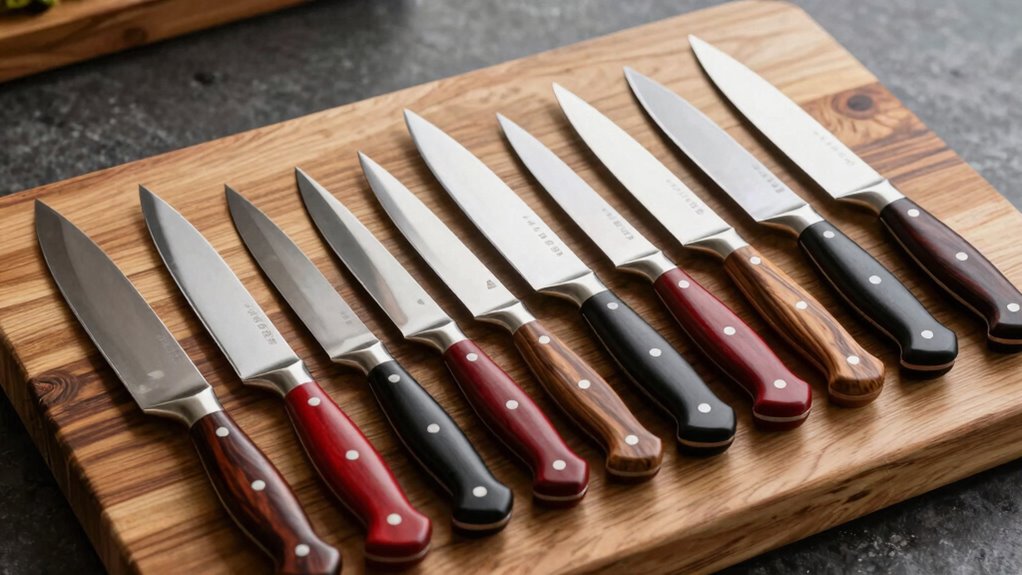

For an all-around vegetable knife, I’d start with the Mercer Culinary Genesis 7-Inch Nakiri, which offers a dedicated vegetable-friendly blade shape; the Victorinox Swiss Classic Paring Knife is a nimble choice for peeling and small cuts, while the HOSHANHO 7-Inch Nakiri stands out for shoppers seeking a larger chopping blade. The main decision is whether you need a specialized nakiri, a versatile santoku, or a compact paring knife—and whether a single blade or a multi-knife set suits your kitchen. Sets can cover more tasks, but individual knives often make it easier to choose the blade that fits your grip and routine. Read on for the full breakdown of how these 14 options differ.

Get garage and car supplies delivered free — and shop member deals
- Fast, free delivery on millions of items
- Access to Prime Big Deal Days deals on October 6–7
- Prime Video, Amazon Music and more included
Complete the kit


Key Takeaways
- Nakiri knives lead for board-based vegetable prep: The Mercer, HOSHANHO, Cuisinart, and PAUDIN models offer a wider blade shape suited to chopping and slicing vegetables, while requiring more drawer space than paring knives.
- Paring knives solve a different problem: The Victorinox and Cuisinart 3.5-inch knife favor peeling, trimming, and small produce; neither is a substitute for a longer blade when cutting large vegetables.
- Santoku knives make the most sense as flexible all-rounders: The 7-inch imarku and high-carbon stainless steel options can handle vegetables alongside other kitchen prep, though they are less specialized than a nakiri.
- Multi-piece sets trade specialization for coverage: Arcos, Chef Craft, Henckels, BYkooc, and VITUER give buyers multiple small-blade options, but an eight-piece set may be unnecessary if one dependable paring knife meets the need.
- Blade shape and task matter more than the word “vegetable”: Horonaxo’s serrated tomato knives suit delicate, slick-skinned produce, while straight-edge paring knives and broad nakiri blades address different cuts.
| Arcos Nova Paring Knife Set, 3-Piece, Stainless Steel, Multicolor |  | Best Color-Coded Set | Set size: 3 knives | Blade material: Nitrum stainless steel | Blade length: 3.5 inches (85 mm) | VIEW ON AMAZON | See Our Full Breakdown |
| Victorinox Swiss Classic 3.25-Inch Straight-Edge Paring Knife |  | Best for Precise Small Cuts | Brand: Victorinox | Model: 6.76 | Blade length: 3.15 inches | VIEW ON AMAZON | See Our Full Breakdown |
| Chef Craft Select Two-Piece Vegetable Knife Set, 4.5-Inch Blade |  | Best Value for Everyday Slicing | Set contents: 2 vegetable knives | Blade length: 4.5 inches | Item length: 8.5 inches | VIEW ON AMAZON | See Our Full Breakdown |
| 7-Inch High-Carbon Stainless Steel Santoku Chef Knife |  | Best for All-Round Vegetable Prep | Brand: DDF iohEF | Blade length: 7 inches | Blade material: 5Cr15MoV stainless steel | VIEW ON AMAZON | See Our Full Breakdown |
| Horonaxo 2-Piece Serrated Tomato Knife Set |  | Best for Soft-Skinned Produce | Set size: 2 knives | Blade material: High-carbon stainless steel | Blade edge: Serrated | VIEW ON AMAZON | See Our Full Breakdown |
| HOSHANHO 7-Inch Nakiri Knife |  | Best for a Hard, Precise Edge | Blade length: 7 inches | Blade material: 10Cr15CoMoV high-carbon stainless steel | Blade hardness: 60 HRC | VIEW ON AMAZON | See Our Full Breakdown |
| BYkooc 8-Piece Paring Knife Set with Sheaths |  | Best for Color-Coded Prep | Set contents: 4 paring knives and 4 sheaths | Blade material: Stainless steel | Blade length: 3.8 inches | VIEW ON AMAZON | See Our Full Breakdown |
| imarku 7-Inch Santoku Knife |  | Best All-Purpose Vegetable Knife | Blade length: 7 inches | Blade material: High-carbon stainless steel | Blade thickness: 2.5 mm | VIEW ON AMAZON | See Our Full Breakdown |
| Cuisinart Triple Rivet 3.5-Inch Paring Knife with Blade Guard |  | Best for Fine Vegetable Prep | Model: C77TR-3PR | Blade length: 3.5 inches | Blade material: High-carbon stainless steel | VIEW ON AMAZON | See Our Full Breakdown |
| Cuisinart 7-Inch Nakiri Knife with Blade Guard |  | Best for Guarded Storage | Model number: C77SS-7NAKPK | Blade length: 7 inches | Blade material: Stainless steel | VIEW ON AMAZON | See Our Full Breakdown |
| Henckels Forged Accent 2-Piece Paring Knife Set |  | Best for Varied Detail Work | Set includes: 3-inch paring knife and 4-inch paring knife | Construction: Forged bolster | Blade finish: Satin-finished | VIEW ON AMAZON | See Our Full Breakdown |
| Mercer Culinary Genesis 7-Inch Nakiri Vegetable Knife |  | Best for Confident Chopping | Brand: Mercer Culinary | Model: M20907 | Blade length: 7 inches | VIEW ON AMAZON | See Our Full Breakdown |
| PAUDIN 7-Inch Nakiri Vegetable Knife |  | Best for Multipurpose Prep | Knife type: Nakiri | Blade length: 7 inches | Blade material: 5Cr15MoV high-carbon stainless steel | VIEW ON AMAZON | See Our Full Breakdown |
| VITUER 8-Piece Paring Knife Set with Sheaths, 4 Knives |  | Best for Shared Kitchens | Set contents: 4 paring knives and 4 knife sheaths | Blade length: 3.7 inches | Blade material: 3Cr13MoV stainless steel | VIEW ON AMAZON | See Our Full Breakdown |
| vegetable knife | Blade material | Handle material | Construction | Blade length |
|---|---|---|---|---|
| Arcos Nova Paring Knife Set | Nitrum stainless steel | Polypropylene | Stamped | 3.5 inches (85 mm) |
| Victorinox Swiss Classic 3.25- | Stainless steel | Polypropylene | Stamped | 3.15 inches |
| Chef Craft Select Two-Piece Ve | Stainless steel | Stainless steel | Forged | 4.5 inches |
| 7-Inch High-Carbon Stainless S | 5Cr15MoV stainless steel | Stainless steel | Forged | 7 inches |
| Horonaxo 2-Piece Serrated Toma | High-carbon stainless steel | ABS | Stamped | — |
| HOSHANHO 7-Inch Nakiri Knife | 10Cr15CoMoV high-carbon stainless steel | Pakkawood | Forged | 7 inches |
| BYkooc 8-Piece Paring Knife Se | Stainless steel | Plastic | Stamped | 3.8 inches |
| imarku 7-Inch Santoku Knife | High-carbon stainless steel | Pakkawood | — | 7 inches |
| Cuisinart Triple Rivet 3.5-Inc | High-carbon stainless steel | Stainless steel | Forged | 3.5 inches |
| Cuisinart 7-Inch Nakiri Knife | Stainless steel | Stainless steel | Forged | 7 inches |
| Henckels Forged Accent 2-Piece | — | — | Forged bolster | — |
| Mercer Culinary Genesis 7-Inch | High-carbon German steel | Santoprene | Forged | 7 inches |
| PAUDIN 7-Inch Nakiri Vegetable | 5Cr15MoV high-carbon stainless steel | Pakkawood | Forged | 7 inches |
| VITUER 8-Piece Paring Knife Se | 3Cr13MoV stainless steel | Polypropylene | Forged | 3.7 inches |
More Details on Our Top Picks
Arcos Nova Paring Knife Set, 3-Piece, Stainless Steel, Multicolor
For vegetable prep that involves peeling, trimming, and other close-up work, the three-knife set gives you a dedicated paring knife for different tasks without taking much drawer space. Its 3.5-inch Nitrum stainless steel blades are suited to controlled cuts, while the brightly colored polypropylene handles make it easier to tell the knives apart. Compared with the single Victorinox Swiss Classic, this Arcos set offers more knives and color coding, but its blades are slightly longer and still too short for substantial chopping. The stamped construction keeps the knives lightweight, though it lacks the heft of forged options such as the Chef Craft Select set. Dishwasher-safe care is convenient, but buyers who want one knife for nearly all vegetable work should choose a longer blade.
Pros:- Three knives let you assign separate tools to different prep tasks
- Color-coded handles make knives easy to distinguish
- Nitrum stainless steel blades are described as durable and rust-resistant
- Dishwasher-safe knives with a 10-year warranty
Cons:- Short blades are limiting for larger vegetables and longer slices
- Stamped construction feels less substantial than a forged knife
Best for: Home cooks who regularly peel and trim vegetables and want several easy-to-identify paring knives for shared prep or separate tasks
Not ideal for: Cooks who want one all-purpose vegetable knife for slicing or chopping larger produce, since the 3.5-inch blades are compact
- Set size:3 knives
- Blade material:Nitrum stainless steel
- Blade length:3.5 inches (85 mm)
- Handle material:Polypropylene
- Construction:Stamped
- Blade edge:Plain
- Care:Dishwasher safe
- Warranty:10 years
Our verdict“Choose this set for color-coded peeling and trimming tools; skip it if you need a longer blade for general vegetable prep.”
Victorinox Swiss Classic 3.25-Inch Straight-Edge Paring Knife
The Victorinox Swiss Classic is the most focused pick here for small, precise vegetable tasks: its pointed 3.15-inch blade can help remove seeds, core small produce, and trim around stems. The slip-resistant polypropylene handle adds control when the work calls for careful hand positioning. Unlike the three-knife Arcos Nova set, this is a single tool, so it takes less sorting and suits a cook who already owns other knives. Its compact size also makes it less capable for slicing a cucumber or chopping a larger vegetable than the 4.5-inch Chef Craft Select knives. The blade is stamped rather than forged, and its strength is narrow-task control, not the versatility of a Santoku. Dishwasher-safe care and NSF approval are useful practical details, but buyers seeking a broad prep knife should look elsewhere.
Pros:- Pointed blade suits coring, seed removal, and detailed trimming
- Slip-resistant polypropylene handle supports controlled work
- Dishwasher safe
- NSF approved and backed by a lifetime warranty against original manufacturer’s defects
Cons:- Short blade is poorly suited to long slices or larger vegetables
- Single knife offers less task separation than the Arcos Nova three-piece set
- Stamped construction is less substantial than the forged Chef Craft Select knives
Best for: Cooks who often core, seed, and trim small vegetables and prefer one compact, pointed paring knife
Not ideal for: Anyone looking for a primary vegetable slicer or a knife suited to larger produce; its 3.15-inch blade is deliberately compact
- Brand:Victorinox
- Model:6.76
- Blade length:3.15 inches
- Blade material:Stainless steel
- Handle material:Polypropylene
- Construction:Stamped
- Care:Dishwasher safe
- Certification:NSF approved
- Warranty:Lifetime warranty against original manufacturer’s defects
Our verdict“Pick this for controlled detail work on small vegetables, not as your main knife for chopping and slicing.”
Chef Craft Select Two-Piece Vegetable Knife Set, 4.5-Inch Blade
The Chef Craft Select set earns its place by pairing two 4.5-inch blades with a vegetable-focused shape: that extra reach over the Victorinox Swiss Classic makes it easier to cut through tomatoes, cucumbers, and similar produce in fewer strokes. A pair also means one knife can stay in use while the other is being washed or assigned to another ingredient. Its thin stainless steel blades are intended for precise cuts, and the listed forged construction distinguishes it from the stamped Arcos Nova and Victorinox options. The tradeoff is a more specific role: these are described as vegetable knives, so they are less suited to cooks who want one compact paring knife for coring and peeling. Stainless steel handles may also feel less familiar to buyers who prefer a grippy polymer handle. Dishwasher-safe care is convenient, but this set prioritizes straightforward slicing over broad versatility.
Pros:- Two knives provide a spare or allow separate prep tasks
- 4.5-inch blades offer more reach than the Victorinox Swiss Classic paring knife
- Thin blades are designed for precise vegetable cuts
- Forged construction and dishwasher-safe care
Cons:- Vegetable-focused design offers less versatility for detailed paring or general kitchen work
- Stainless steel handles may not suit cooks who prefer a softer, slip-resistant grip
Best for: Home cooks who prepare vegetables often and want two longer, thin-bladed knives for slicing tomatoes, cucumbers, and similar produce
Not ideal for: Buyers who need a pointed knife for small-scale coring and peeling or want a broadly versatile chef-style knife
- Set contents:2 vegetable knives
- Blade length:4.5 inches
- Item length:8.5 inches
- Blade material:Stainless steel
- Handle material:Stainless steel
- Construction:Forged
- Blade edge:Plain
- Care:Dishwasher safe
Our verdict“Choose this pair for regular vegetable slicing with more blade reach than a paring knife, but not for an all-purpose kitchen blade.”
7-Inch High-Carbon Stainless Steel Santoku Chef Knife
Among these five picks, this Santoku is the strongest choice for chopping, slicing, and dicing larger amounts of vegetables. Its 7-inch blade gives it far more working length than the Victorinox and Arcos paring knives, while its stated 15-degree edge on each side is designed for cuts from either hand. The forged 5Cr15MoV stainless steel blade and hollow stainless steel handle create a full-size option for cooks who also want to cut fruit, meat, or cheese. Compared with the 4.5-inch Chef Craft Select pair, this knife is more versatile and offers a longer blade, but it does not give you a second knife for separate prep tasks. At 8 ounces, it is also much heavier than the small paring models. The product title mentions dishwasher safety, but the care details supplied do not confirm it, so hand-care expectations are unclear.
Pros:- Seven-inch blade handles larger vegetables more easily than the paring knives
- Double-edged design is suited to left- and right-handed users
- Forged 5Cr15MoV stainless steel construction
- Designed for vegetables, fruit, meat, and cheese
Cons:- Full-size blade is less convenient for small, detailed peeling and trimming
- At 8 ounces, it is heavier than the compact options in this group
- Dishwasher safety is mentioned in the title but not detailed in the supplied product information
Best for: Cooks who want one full-size knife for chopping and slicing vegetables as well as handling fruit, meat, and cheese
Not ideal for: People who mainly peel or core small produce, prefer a lightweight compact knife, or need clearly specified dishwasher-care guidance
- Brand:DDF iohEF
- Blade length:7 inches
- Blade material:5Cr15MoV stainless steel
- Blade edge:Plain, double-edged
- Edge angle:15 degrees per side
- Blade hardness:Up to 58
- Construction:Forged
- Handle material:Stainless steel
- Item weight:8 ounces
Our verdict“Choose this Santoku as your main vegetable-prep knife if you want a longer, versatile blade and can accept its greater size and weight.”
Horonaxo 2-Piece Serrated Tomato Knife Set
For ripe tomatoes and other soft-skinned produce, the Horonaxo set offers a different cutting approach from every plain-edge knife here: its serrated blades are designed to grip and cut through delicate skins rather than relying on a smooth edge. Two knives can help keep separate tasks moving, and the lightweight ABS handles are intended for a comfortable grip during repeated prep. Compared with the Chef Craft Select pair, Horonaxo is the more specialized choice for soft skins; the Chef Craft’s plain 4.5-inch blades are a better fit when you want a general vegetable-slicing edge. The listing gives the Horonaxo blade length inconsistently as 5 and 6 inches, which makes its exact reach uncertain. Its stamped construction also differs from the forged Chef Craft set. Buyers who want one knife for chopping assorted vegetables should choose the 7-inch DDF Santoku instead.
Pros:- Serrated edges are designed to cut soft skins without crushing the produce
- Two knives support separate prep tasks or provide a spare
- Lightweight ABS handles are designed for a non-slip, comfortable grip
- High-carbon stainless steel blades
Cons:- Blade length is listed inconsistently as both 5 and 6 inches
- Serrated edge is more specialized than the plain edge on the Chef Craft Select knives
- Stamped construction may feel less substantial than the forged alternatives
Best for: Cooks who frequently slice ripe tomatoes or other soft-skinned produce and want two lightweight serrated knives
Not ideal for: Anyone seeking a general-purpose vegetable knife for chopping and dicing, or a buyer who needs a clearly specified blade length
- Set size:2 knives
- Blade material:High-carbon stainless steel
- Blade edge:Serrated
- Listed blade length:5 inches and 6 inches
- Item length:9 inches
- Handle material:ABS
- Construction:Stamped
- Item weight:27.22 g
Our verdict“Choose this set for soft-skinned produce such as ripe tomatoes, but look to the DDF Santoku for broader vegetable prep.”
HOSHANHO 7-Inch Nakiri Knife
The HOSHANHO 7-Inch Nakiri is the vegetable-first choice here for buyers who want a firm, precise cut from a harder blade. Its 60 HRC steel and 15-degree edge are suited to clean slicing and chopping, while the hollow grind is designed to help pieces release instead of clinging during prep. Compared with the Cuisinart 7-Inch Nakiri, HOSHANHO provides more blade and edge detail in its specs, but Cuisinart includes a blade guard and may suit buyers who prioritize straightforward storage. The pakkawood handle adds a traditional feel, though it calls for more care than a low-maintenance synthetic grip. At 350 g, it is also a substantial knife rather than a featherweight option. Its 7-inch length works well for everyday vegetables but is less suited to especially large produce or long slicing strokes.
Pros:- 15-degree edge is suited to precise vegetable slicing
- 60 HRC high-carbon stainless steel offers a hard blade
- Hollow-ground design is intended to reduce food sticking
- Pakkawood handle is shaped for a comfortable grip
Cons:- The 7-inch blade may feel short for large vegetables and long cutting strokes
- At 350 g, it is relatively substantial for cooks who prefer lighter knives
- No blade guard is listed for storage
Best for: Home cooks who regularly chop vegetables and want a hard, fine-edged nakiri with a traditional-style handle.
Not ideal for: Cooks who need a longer blade for large produce, prefer a lighter knife, or want a blade guard included.
- Blade length:7 inches
- Blade material:10Cr15CoMoV high-carbon stainless steel
- Blade hardness:60 HRC
- Edge angle:15 degrees
- Handle material:Pakkawood
- Construction:Forged
- Blade edge:Plain
- Item weight:350 g
Our verdict“Choose the HOSHANHO if you want a hard, precise nakiri for routine vegetable prep and do not need a longer blade or included guard.”
BYkooc 8-Piece Paring Knife Set with Sheaths
The BYkooc 8-piece set is aimed at kitchens that need several small knives for peeling and detail work, rather than one main vegetable chopper. Four colors make it easier to assign knives to different ingredients or tasks, and each knife has its own protective sheath for drawer storage. Compared with the Cuisinart Triple Rivet 3.5-Inch Paring Knife, BYkooc supplies more task-specific knives and guards, while Cuisinart offers a single forged option with a bolster. That makes BYkooc more flexible for shared prep, but its stamped blades and plastic handles are a simpler build. The 3.8-inch blades can handle trimming, peeling, and small produce, yet they are not a substitute for a 7-inch nakiri when chopping a pile of vegetables. Buyers should choose this set for variety and storage, not heavy-duty cutting.
Pros:- Four knives cover multiple small prep tasks
- A matching sheath is included for each knife
- Color coding can help separate knives by task
- Compact blades suit peeling and detailed cuts
Cons:- Short blades are not suited to large-scale vegetable chopping
- Plastic handles may be less durable than sturdier handle materials
- Stamped construction is simpler than the forged Cuisinart paring knife
Best for: Households that want several small knives for peeling, trimming, and separating prep tasks, with individual guards for drawer storage.
Not ideal for: Cooks seeking a primary vegetable knife for chopping large quantities or those who prefer forged construction and more robust handles.
- Set contents:4 paring knives and 4 sheaths
- Blade material:Stainless steel
- Blade length:3.8 inches
- Item length:7.7 inches
- Handle material:Plastic
- Construction:Stamped
- Blade edge:Plain
- Colors:Black, yellow, green, and red
Our verdict“Pick BYkooc for a color-coded set of guarded paring knives, but choose a nakiri if vegetable chopping is your main task.”
imarku 7-Inch Santoku Knife
The imarku 7-Inch Santoku suits cooks who want one knife for vegetables and the rest of everyday prep. Its 7-inch blade handles chopping, slicing, dicing, and mincing, while the hollow design is intended to reduce food sticking. That broader role sets it apart from the HOSHANHO 7-Inch Nakiri, which is more specifically shaped and specified for vegetable work, including a 15-degree edge and 60 HRC hardness. imarku instead offers a general-purpose santoku with a comfortable pakkawood handle and a listed 2.5 mm blade thickness. The stated edge angle ranges from 15 to 18 degrees per side, so it is not as narrowly specified as HOSHANHO’s edge. No care instructions are provided, which leaves buyers to determine suitable cleaning and maintenance; packaging may also vary.
Pros:- Versatile 7-inch blade handles several everyday prep tasks
- Hollow design is intended to reduce food sticking
- Pakkawood handle is designed for a secure, comfortable grip
- High-carbon stainless steel is described as resistant to rust and corrosion
Cons:- Less specialized for vegetable chopping than the HOSHANHO nakiri
- The 15–18-degree-per-side edge range is less exact than a single stated angle
- No dishwasher or care instructions are provided
Best for: Home cooks who want a single mid-length knife for vegetables plus routine slicing, dicing, and mincing of other foods.
Not ideal for: Buyers seeking a dedicated nakiri profile, precise hardness specifications, or clear care instructions in the product details.
- Blade length:7 inches
- Blade material:High-carbon stainless steel
- Blade thickness:2.5 mm
- Edge angle:15–18 degrees per side
- Handle material:Pakkawood
- Weight:6.88 ounces
- Overall length:12 inches
- Included components:1 santoku knife
Our verdict“Choose the imarku santoku if you want a vegetable-capable everyday knife rather than a dedicated nakiri.”
Cuisinart Triple Rivet 3.5-Inch Paring Knife with Blade Guard
The Cuisinart Triple Rivet Paring Knife fills the small-task role in a vegetable-knife lineup: peeling, trimming, and shaping produce where a broad blade would feel cumbersome. Its 3.5-inch forged blade, full tang, and wide safety bolster offer a more substantial construction than the BYkooc paring set, while the included guard makes it easier to store a single knife safely. That added stability is useful for controlled hand work, but the short blade is not built for chopping a whole onion or handling bulky vegetables. The black handle uses stainless steel rivets, though the listed handle material is stainless steel, so buyers should confirm the grip details if they have a strong material preference. The product data gives no specific drawbacks beyond its limited size; its role is deliberately narrow compared with the 7-inch nakiri options.
Pros:- Short blade offers control for peeling and detailed cuts
- Forged, full-tang construction
- Wide safety bolster is designed to add stability
- Blade guard is included for storage
Cons:- The 3.5-inch blade is too short for most bulk vegetable chopping
- Its narrow task range makes it less versatile than a 7-inch santoku or nakiri
Best for: Cooks who often peel, trim, or make precise cuts on small vegetables and want a forged paring knife with a guard.
Not ideal for: Anyone looking for a main vegetable-chopping knife or a longer blade for slicing larger produce.
- Model:C77TR-3PR
- Blade length:3.5 inches
- Blade material:High-carbon stainless steel
- Handle material:Stainless steel
- Construction:Forged
- Blade edge:Plain
- Item length:6.6 inches
- Included components:Paring knife and blade guard
- Warranty:Lifetime
Our verdict“Choose this Cuisinart for controlled peeling and trimming, not as a replacement for a full-size vegetable knife.”
Cuisinart 7-Inch Nakiri Knife with Blade Guard
The Cuisinart 7-Inch Nakiri is a straightforward choice for vegetable chopping when safe storage matters as much as the blade itself. Its 7-inch plain stainless steel blade is intended for chopping, slicing, and dicing, and the matching blade guard gives it a storage advantage over the HOSHANHO nakiri, which has more detailed edge and hardness specifications but no guard listed. Cuisinart’s product data does not specify an edge angle or hardness, so buyers who want those performance details may prefer HOSHANHO. The forged construction offers a clear build detail, but the listed 16-inch item length could make storage awkward in a crowded drawer. This is a focused vegetable knife rather than an all-purpose santoku like the imarku; choose it when a dedicated nakiri profile and protected storage are the priorities.
Pros:- 7-inch blade is sized for routine vegetable chopping and slicing
- Nakiri format is dedicated to vegetable prep
- Forged construction
- Matching blade guard is included
Cons:- No blade hardness or edge angle is specified
- Listed 16-inch item length may be awkward in smaller drawers
- Less versatile for general-purpose tasks than the imarku santoku
Best for: Vegetable-focused home cooks who want a 7-inch nakiri with a guard for safer drawer storage.
Not ideal for: Buyers who want published edge-angle or hardness details, or who need a compact knife for tight storage.
- Model number:C77SS-7NAKPK
- Blade length:7 inches
- Blade material:Stainless steel
- Handle material:Stainless steel
- Blade edge:Plain
- Construction:Forged
- Item length:16 inches
- Included component:Blade guard
Our verdict“Choose this Cuisinart if you want a dedicated 7-inch nakiri and an included guard matters more than detailed blade specifications.”
Henckels Forged Accent 2-Piece Paring Knife Set
The 3-inch and 4-inch pairing gives this set an advantage when vegetable prep shifts between fine trimming and slightly larger cuts. I’d choose it over the VITUER 8-Piece Paring Knife Set when I want two different blade sizes rather than several same-size knives; VITUER, by contrast, supplies sheaths for every knife. The precision-honed, satin-finished blades are intended for detailed work on vegetables as well as fruit and meat, while forged bolster construction adds balance at the handle. Its stain- and rust-resistant blades can go in the dishwasher, a convenience the hand-wash-only Mercer Culinary Genesis Nakiri does not offer. The tradeoff is scale: these are paring knives, not substitutes for a full-size nakiri when chopping a large pile of vegetables. The description also gives no blade material or included storage protection.
Pros:- Includes 3-inch and 4-inch blades for different detail tasks
- Precision-honed edges are designed to retain sharpness longer
- Forged bolster construction adds balance and durability
- Dishwasher-safe blades offer easier cleanup than hand-wash-only options
Cons:- Short blades are less suited to chopping large vegetables than a nakiri
- Blade material is not specified
- No protective sheaths or storage solution are mentioned
Best for: Home cooks who regularly switch between fine trimming and small vegetable cuts and want two paring-knife sizes.
Not ideal for: Cooks who need a primary knife for chopping whole vegetables or want sheaths and a stated blade material.
- Set includes:3-inch paring knife and 4-inch paring knife
- Construction:Forged bolster
- Blade finish:Satin-finished
- Blade care:Dishwasher-safe or hand wash
- Blade resistance:Stain- and rust-resistant
- Intended tasks:Detailed preparation of fruits, vegetables, and meats
Our verdict“Choose this set for flexible, small-scale vegetable prep with two blade lengths, but pick a nakiri for high-volume chopping.”
Mercer Culinary Genesis 7-Inch Nakiri Vegetable Knife
For cooks who want a dedicated vegetable blade, the 7-inch forged nakiri is more suitable for repeated slicing and chopping than the Henckels Forged Accent paring knives, whose shorter blades are built for detail work. Its high-carbon German steel and hand-polished, taper-ground edge are aimed at controlled cuts, while the Santoprene handle provides a nonslip grip during prep. At 4 ounces, it is a relatively light option for a full-size vegetable knife. Compared with the PAUDIN 7-Inch Nakiri, the Genesis has a specified steel type and a grip material focused on secure handling; PAUDIN instead offers a pakkawood handle and a patterned blade. The main concession is upkeep: Mercer recommends hand washing and thorough drying, so it is a weaker fit for anyone who expects dishwasher cleanup.
Pros:- Forged high-carbon German steel blade
- Taper-ground edge is designed for precise slicing and chopping
- Santoprene handle provides a comfortable, nonslip grip
- Four-ounce weight keeps the full-size knife relatively light
Cons:- Hand washing and thorough drying are recommended
- Not recommended for dishwasher use
- Seven-inch blade is less suited to fine paring than a short knife
Best for: Home cooks who want a lightweight, full-size nakiri for regular vegetable slicing and chopping and are willing to hand wash it.
Not ideal for: Dishwasher-dependent cooks or anyone seeking a short knife for peeling and intricate trimming.
- Brand:Mercer Culinary
- Model:M20907
- Blade length:7 inches
- Blade material:High-carbon German steel
- Handle material:Santoprene
- Construction:Forged
- Blade edge:Plain
- Item weight:4 ounces
- Country of manufacture:Taiwan
Our verdict“Pick the Genesis for controlled, full-size vegetable chopping if careful hand washing is part of your routine.”
PAUDIN 7-Inch Nakiri Vegetable Knife
The PAUDIN pairs a 7-inch nakiri profile with a plain edge for slicing, dicing, chopping, and mincing, making it a more versatile vegetable-prep choice than the Henckels Forged Accent set of short paring knives. Its 5Cr15MoV stainless steel blade is described as rust-resistant and easy to sharpen, while the shaped pakkawood handle gives it a different feel from the Mercer Culinary Genesis Nakiri’s nonslip Santoprene grip. A waved blade pattern is presented as a way to reduce food friction and ease cleaning, but it is decorative rather than genuine Damascus steel; buyers should not treat the pattern as evidence of a special layered construction. The listed weight is 225 grams, so this is not the lightest-feeling option in the group. It suits cooks wanting one substantial knife for varied vegetable cuts, not those after a compact paring tool.
Pros:- Seven-inch nakiri blade handles several common vegetable-cutting tasks
- 5Cr15MoV stainless steel is described as rust-resistant
- Pakkawood handle is shaped for a comfortable grip
- Blade is described as easy to sharpen and maintain
Cons:- Waved pattern is decorative, not genuine Damascus construction
- At 225 grams, it may feel substantial to cooks who prefer a lighter knife
- Full-size blade is less convenient for small, intricate tasks than a paring knife
Best for: Home cooks who want one full-size knife for slicing, dicing, chopping, and mincing vegetables, with a pakkawood handle.
Not ideal for: Buyers seeking a compact knife for peeling and fine trimming, or anyone expecting the waved pattern to indicate Damascus steel.
- Knife type:Nakiri
- Blade length:7 inches
- Blade material:5Cr15MoV high-carbon stainless steel
- Blade hardness:56+
- Blade edge:Plain
- Construction:Forged
- Handle material:Pakkawood
- Item weight:225 g
- Model number:K15AC
Our verdict“Choose the PAUDIN if you want a versatile 7-inch vegetable knife and value its pakkawood handle more than a compact form.”
VITUER 8-Piece Paring Knife Set with Sheaths, 4 Knives
This set’s defining advantage is four paring knives with four matching sheaths, which makes it more practical for shared kitchens or organized storage than the Henckels Forged Accent set, where no protective covers are specified. Each knife has a 3.7-inch stainless steel blade suited to small vegetable jobs such as trimming and dicing; it is not a replacement for the Mercer Culinary Genesis’s seven-inch nakiri when the task is chopping a large vegetable. The polypropylene handles are designed for a comfortable grip, and the rainbow color gives the set a distinct appearance. Compared with the BYkooc 8-Piece Paring Knife Set, the supplied details here specify 3Cr13MoV steel, blade hardness, and dimensions. The limitations are equally clear: all four knives share one compact size, and hand washing is recommended.
Pros:- Four knives and four protective sheaths are included
- 3.7-inch blades suit small and intricate preparation tasks
- Polypropylene handles are designed for a comfortable grip
- Blade steel and hardness are specified
Cons:- Hand washing is recommended
- All four knives use the same compact blade length
- Not suited to chopping large vegetables as efficiently as a nakiri
Best for: Households or shared kitchens that want several small vegetable-prep knives with individual sheaths for storage.
Not ideal for: Cooks seeking one primary knife for large-scale chopping, or those who need multiple blade sizes or dishwasher cleanup.
- Set contents:4 paring knives and 4 knife sheaths
- Blade length:3.7 inches
- Blade material:3Cr13MoV stainless steel
- Blade hardness:56 ± 2 HRC
- Handle material:Polypropylene
- Blade edge:Plain
- Construction:Forged
- Item weight:0.16 kg
- Care:Hand wash recommended
Our verdict“Choose this set for multiple sheathed knives dedicated to small prep, not as a stand-in for a full-size vegetable knife.”

How We Picked
I compared the 14 options by how well their blade shape and size match common vegetable-prep tasks: peeling and trimming, slicing delicate produce, and chopping larger vegetables on a board. I also weighed practical usability, including whether a knife’s format is suited to precise handwork or repeated board cuts, and whether the lineup offers a useful single knife or a set with a clear purpose. The product descriptions provided the basis for these comparisons; I do not present them as hands-on test results.
The ranking favors knives with a clear role and broader usefulness for vegetable prep, while accounting for tradeoffs such as limited blade length, specialization, and the extra space or choice involved in a set. That puts the Mercer Genesis Nakiri first as a focused vegetable-prep pick, while paring knives rank higher for small, detailed work and serrated tomato knives remain task-specific. No one blade type wins every kitchen: the order reflects usefulness for the stated vegetable-knife use, not a claim that each option serves the same job.
| vegetable knife | Handle material | Construction | Blade edge |
|---|---|---|---|
| Arcos Nova Paring Knife Set | Polypropylene | Stamped | Plain |
| Victorinox Swiss Classic 3.25- | Polypropylene | Stamped | — |
| Chef Craft Select Two-Piece Ve | Stainless steel | Forged | Plain |
| 7-Inch High-Carbon Stainless S | Stainless steel | Forged | Plain, double-edged |
| Horonaxo 2-Piece Serrated Toma | ABS | Stamped | Serrated |
| HOSHANHO 7-Inch Nakiri Knife | Pakkawood | Forged | Plain |
| BYkooc 8-Piece Paring Knife Se | Plastic | Stamped | Plain |
| imarku 7-Inch Santoku Knife | Pakkawood | — | — |
| Cuisinart Triple Rivet 3.5-Inc | Stainless steel | Forged | Plain |
| Cuisinart 7-Inch Nakiri Knife | Stainless steel | Forged | Plain |
| Henckels Forged Accent 2-Piece | — | Forged bolster | — |
| Mercer Culinary Genesis 7-Inch | Santoprene | Forged | Plain |
| PAUDIN 7-Inch Nakiri Vegetable | Pakkawood | Forged | Plain |
| VITUER 8-Piece Paring Knife Se | Polypropylene | Forged | Plain |
Factors to Consider When Choosing Vegetable Knives
I’d choose a vegetable knife by starting with the cuts I make most often, then matching the blade to the task. These broader points can help narrow the field before choosing between a single knife and a set.
Match Blade Shape to the Cut
A broad, relatively straight-edged nakiri is designed for controlled board cuts, making it a natural fit for frequent chopping and slicing. A santoku is a more general-purpose shape if the same knife will also handle non-vegetable prep. Paring knives provide close control for peeling, trimming, and small produce, but their short blades can make large chopping jobs slow. A serrated edge can grip soft or slick skins, yet it is less suited to the smooth push cuts many cooks want for everyday vegetables. One common mistake is buying by the “vegetable” label without checking whether the blade matches the way you prep.
Choose a Length You Can Control
A longer blade can cover more of a large vegetable in one stroke, but it also needs more room on the board and in storage. Short paring blades are easier to maneuver for detailed work, though using one on a cabbage or squash can mean extra cuts and less efficient handling. Consider your board size and the produce you buy most often rather than assuming a larger knife is automatically more useful. If you share a kitchen or have limited counter space, a compact knife may get used more consistently. For a first dedicated vegetable knife, choose a length that feels manageable for your typical prep rather than the biggest blade available.
Decide Between a Single Knife and a Set
A single knife is usually the clearer choice when you already know whether you need board chopping or fine handwork. Sets can make sense when you want several small blades for different users or tasks, and included sheaths or blade guards can help with storage. However, more pieces do not automatically add useful coverage: several similar paring knives may leave a gap where a larger chopping knife would help more. Check which blade shapes are actually included, not just the piece count. If you are replacing a worn knife, identify the task it failed at before choosing a multipiece set.
Think About Grip and Handling
A knife that is comfortable to hold is easier to guide through repetitive prep, while a handle that feels awkward can make a suitable blade frustrating to use. Handle construction and overall balance affect how secure and controlled a knife may feel, but a feature list cannot tell you how it fits your hand. If possible, compare the handle shape and grip in person, especially when buying a knife for someone else. A lighter paring knife and a broader nakiri can feel very different even when both are well suited to vegetables. Do not choose on blade shape alone if comfort is a deciding factor.
Plan for Storage and Care
Before buying, decide where the knife will live: a drawer, block, magnetic strip, or protective sheath each suits different kitchens. Blade guards and sheaths can help keep an edge separated from other utensils, but they do not remove the need for safe handling. Follow the manufacturer’s care instructions, especially if you are unsure whether a particular knife is dishwasher-safe. Multi-piece sets take more storage space and create more parts to keep track of than a single knife. Good storage habits matter for both safety and keeping a blade from knocking against other tools.
Know When to Pay More
Paying more is most defensible when a knife’s construction, handle, or intended role matches frequent use and the design solves a real problem for you. A dedicated nakiri can be worth choosing over a small set if most of your prep happens on a board. On the other hand, occasional peeling may not call for a specialized collection when one straightforward paring knife covers the job. Avoid treating a premium label or a high-carbon description as a guarantee of a better fit; usability and care needs still matter. Spend toward the task you repeat, not toward features that will sit unused.
Frequently Asked Questions
Should I choose a nakiri or a santoku for everyday vegetable prep?
Choose a nakiri if most of your work involves chopping and slicing vegetables on a board, since its broad, straight-edged profile is dedicated to that style of prep. A santoku is the more flexible choice if you want one knife to cover vegetables and a wider mix of kitchen tasks. Neither shape replaces a small paring knife for peeling or trimming in the hand. Think about your usual cuts, not just which name sounds more specialized. If you are unsure, a santoku may make more sense as a general kitchen knife, while a nakiri is a more focused addition.
Can a paring knife handle all my vegetable cutting?
A paring knife can handle small produce, peeling, trimming, and detail work, but its short blade is limiting for large vegetables and repeated board chopping. You may need more strokes to cut ingredients such as cabbage or a large squash, which can make prep slower. If vegetables are a large part of your meals, pairing a paring knife with a longer santoku or nakiri gives you more range. If you mainly prep small garnishes or peel produce, a paring knife may be enough. Let the size of your usual ingredients guide the choice.
Are serrated tomato knives useful beyond tomatoes?
A serrated knife can help cut soft, ripe, or slick-skinned produce when a straight edge tends to press or slide over the surface. That can make it useful for certain fruits and delicate vegetables, though the exact range depends on the blade’s length and design. It is not a direct replacement for a nakiri or santoku for routine chopping. A two-piece serrated set is most sensible when you often prepare foods that benefit from a gripping edge or need a spare for another user. Otherwise, a versatile straight-edge knife may cover more of your everyday work.
Is a multi-piece paring knife set a better choice than one paring knife?
A set is worthwhile when you genuinely need several small knives—for example, to keep one at a second prep station or have tools available for multiple cooks. It can also offer storage protection when sheaths are included. But the number of pieces matters less than whether the blades add different, useful capabilities. If the knives are similar, a single paring knife plus a larger vegetable knife may give you more practical coverage. For occasional peeling and trimming, one well-matched blade is often the simpler choice.
What should I check before buying a knife for someone else?
Start with the recipient’s common tasks and kitchen setup: a nakiri suits frequent board chopping, while a paring knife fits peeling and fine work. Consider hand comfort, since handle shape and knife balance are personal and can be hard to judge from product details alone. Check where the knife will be stored, especially if the recipient has limited drawer space or needs a protective cover. A large set can seem generous but may add clutter if only one blade will be used. When you cannot check grip in person, a straightforward, task-matched knife is a safer choice than an elaborate set.
Conclusion
For the best overall vegetable-focused pick, I’d choose the Mercer Culinary Genesis 7-Inch Nakiri for a dedicated board-prep role. The best value direction is a focused single knife that matches the job rather than paying for extra blades you may not use; among these options, the Victorinox Swiss Classic is a practical fit for routine small cuts. For a premium-leaning dedicated choice, compare the HOSHANHO and Mercer nakiri options by the features and handling details that matter to you. Beginners who want a compact, manageable knife can start with a straight-edge paring option, while cooks who need flexibility should look at a santoku. For specific needs, choose Horonaxo’s serrated tomato knives for delicate produce, a nakiri for frequent board chopping, or a paring set when multiple small blades serve a real purpose. The best choice is the one whose shape fits the cuts you make most often.
Fall Picks
fall essentials
As an affiliate, we earn on qualifying purchases.