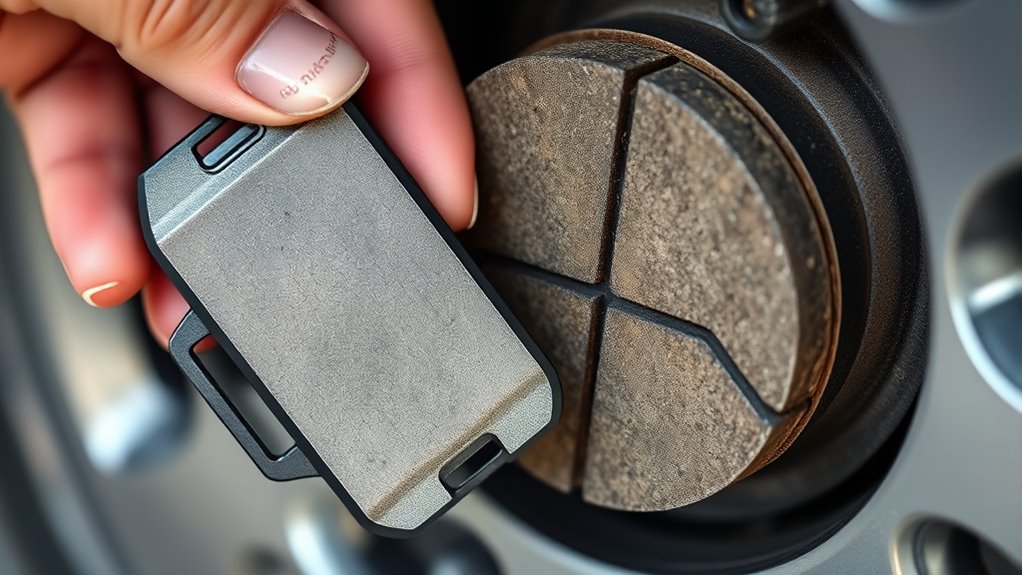

Ceramic brake pads offer quieter, cleaner, and more consistent braking performance, making them ideal if you prioritize low dust and noise. They last longer and require less maintenance, though they tend to be pricier initially. Traditional pads provide stronger initial bite and are more budget-friendly, but they generate more dust and noise and wear out faster. To discover how these differences can affect your driving experience, keep exploring the details.
Key Takeaways
- Ceramic brake pads provide consistent braking performance across a wide temperature range, unlike traditional pads which may fade under high heat.
- They generate less brake dust and noise, contributing to a cleaner and quieter braking experience.
- Traditional pads often offer stronger initial bite and responsiveness, especially in demanding or high-performance driving.
- Ceramic pads tend to have longer lifespan and require less frequent replacements compared to traditional options.
- Overall, ceramic pads deliver smoother, quieter, and more durable performance, while traditional pads may offer more immediate responsiveness.
When it comes to stopping power, choosing the right brake pads is essential for safety and performance. Whether you’re commuting daily or hitting the track, your brake pads play a vital role in how well your vehicle responds during braking. Two common options are ceramic and traditional brake pads, each with their own advantages and drawbacks. Understanding their differences can help you make an informed decision based on your driving habits and priorities.
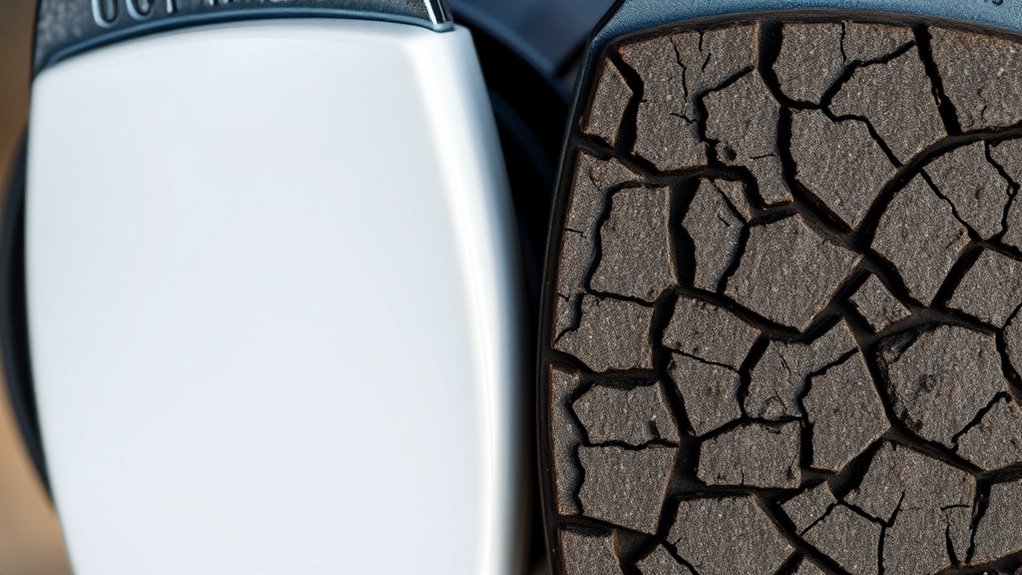
Ceramic brake pads are known for producing less brake dust compared to traditional pads. This means your wheels stay cleaner longer, reducing the need for frequent cleaning and helping maintain that fresh, polished look. Less brake dust also means less grime accumulation on your wheels, which can contribute to better overall brake performance over time. Additionally, ceramic pads tend to generate lower noise levels during braking. If you value a quieter ride, especially in urban environments or early mornings, ceramic pads are an appealing choice because they dampen vibrations and minimize squealing sounds that can be common with other types of pads.
Ceramic brake pads produce less dust and noise, keeping wheels cleaner and rides quieter.
Traditional brake pads, often made from semi-metallic or organic materials, are generally less expensive upfront and are known for their strong initial bite. If you need powerful braking performance for demanding driving conditions, these pads can be more responsive. However, they tend to produce more brake dust, which can quickly dirty your wheels and reduce their aesthetic appeal. Noise levels can also be higher with traditional pads, especially as they wear down or if they’re not properly maintained. Some drivers find the louder operation and increased dust to be a trade-off for the cost savings and performance benefits they offer.
While ceramic brake pads are often praised for their quiet operation and cleaner profile, they come with a higher price tag. They tend to last longer and perform consistently across a range of temperatures, making them suitable for drivers who want durability and minimal maintenance. Traditional pads, on the other hand, are more budget-friendly initially, but they may wear out faster and require more frequent replacements, especially if you’re frequently driving in stop-and-go traffic or harsh conditions. Moreover, Kia Tuning can include brake upgrades that further enhance your braking performance and tailor it to your specific needs.
Ultimately, your choice between ceramic and traditional brake pads hinges on what you prioritize most—whether it’s cleaner wheels and quieter operation or cost-effective, powerful braking. Both options have their place, but understanding how they influence brake dust and noise levels helps you choose the right fit for your driving style. Investing in the right pads can enhance safety, improve your driving experience, and save you time and money in the long run.

Bendix Premium SBC1210 Ceramic Front Brake Pads for Select Models Lexus HS250h, Pontiac Vibe, Scion xB, xD, Toyota Corolla, Matrix, Prius V, RAV4
- OE Replacement Design: Fits select Lexus, Toyota, Pontiac, Scion models
- High-Quality Materials: Resistant to wear and corrosion
- Enhanced Safety: Reduces brake fade for consistent braking
As an affiliate, we earn on qualifying purchases.
As an affiliate, we earn on qualifying purchases.
Frequently Asked Questions
Do Ceramic Brake Pads Last Longer Than Traditional Ones?
Yes, ceramic brake pads last longer than traditional ones. They have a better wear life because their materials resist brake fade and reduce wear over time. While they tend to cost more initially, their durability makes them more cost-effective in the long run. You’ll appreciate fewer replacements and less maintenance, making ceramic pads a smarter choice if you want longevity and better overall performance.
Are Ceramic Brake Pads More Environmentally Friendly?
Think of ceramic brake pads as the eco-friendly gardeners of your car’s braking system. They produce less dust and contain fewer harmful materials, making them more eco-friendly and promoting material sustainability. Unlike traditional pads, which can wear down faster and shed more particles, ceramic pads help reduce environmental impact. So, if you’re aiming for greener driving, ceramic brake pads are a smarter choice for better eco-friendliness.
Can I Mix Ceramic and Traditional Brake Pads?
You can technically mix ceramic and traditional brake pads, but it’s not recommended due to mix compatibility and safety concerns. Different pad types have varying wear rates and friction characteristics, which can cause uneven braking and reduce safety. To guarantee the best performance and safety, it’s best to replace brake pads in pairs with the same type, avoiding mixing ceramic and traditional pads. Always follow your vehicle manufacturer’s recommendations.
How Do Brake Pads Affect Fuel Efficiency?
Did you know that brake pads can influence your fuel efficiency by up to 10%? When brake pad wear increases, your vehicle requires more energy to stop, which can lead to higher fuel consumption. The type of brake pads affects the friction and how smoothly your brakes work, impacting fuel consumption factors. Using well-maintained, high-quality brake pads can help your car operate more efficiently and save you money at the pump.
Are Ceramic Brake Pads Noisier Than Traditional Ones?
No, ceramic brake pads are generally quieter than traditional ones. They produce lower noise levels and are less prone to brake squeal, making for a smoother, quieter ride. You might notice some noise during initial braking, but overall, ceramic pads tend to be more silent. If you’re concerned about noise, ceramic brake pads are a great choice because they minimize disruptive sounds and provide a more comfortable driving experience.
Conclusion
Choosing between ceramic and traditional brake pads can substantially impact your safety and driving experience. Imagine you’re on a road trip, and your ceramic pads provide quiet, reliable stopping power in sudden emergencies. Or consider a driver who switches to ceramic and finds the reduced brake dust keeps their car cleaner and maintenance easier. Making the right choice means better performance, fewer worries, and peace of mind on every journey. So, think about what matters most to you before making your decision.