
Your radiator and cooling system keep your engine from overheating by regulating its temperature. The radiator transfers heat from the coolant to the air through narrow tubes and fins, while the coolant circulates to absorb excess heat from the engine. This process relies on components like the water pump and thermostat to maintain ideal engine temperature. Proper maintenance ensures these systems work efficiently, preventing damage and keeping your engine reliable – details on how this all works continue below.
Key Takeaways
- Radiators transfer heat from engine coolant to the environment, preventing overheating.
- Cooling systems circulate coolant to absorb and dissipate engine heat efficiently.
- The radiator’s fins and tubes maximize heat exchange through airflow.
- The thermostat regulates coolant flow, maintaining optimal engine temperature.
- Proper maintenance ensures effective heat dissipation and prevents engine damage.

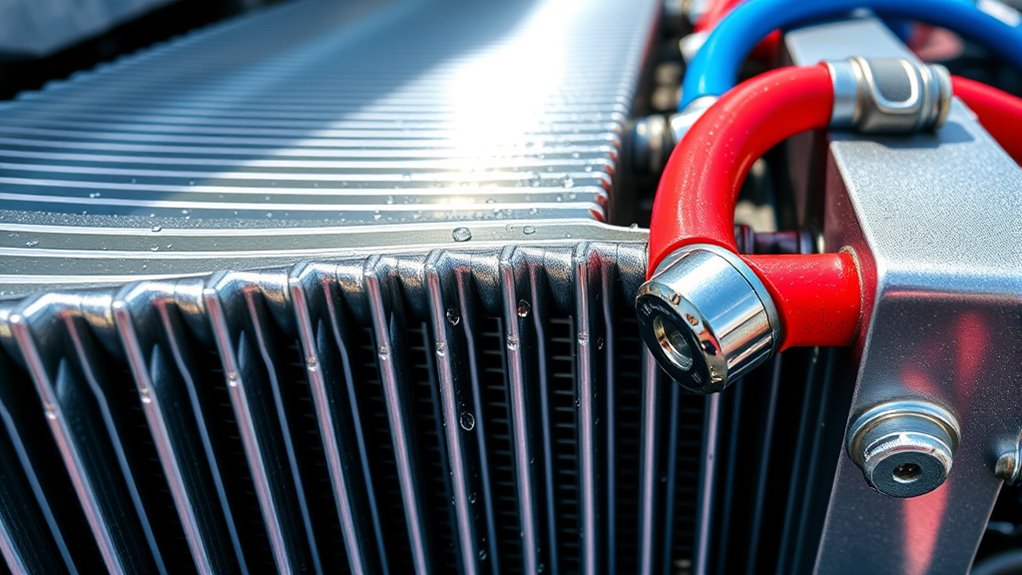
Radiators and cooling systems play a pivotal role in maintaining your vehicle’s engine temperature within ideal limits. When you start your engine, it generates a significant amount of heat through combustion and friction. Without an effective cooling system, this heat can build up rapidly, risking engine overheating and potential damage. Your radiator acts as the main component in this process, facilitating coolant circulation to keep things in check. Coolant, usually a mix of water and antifreeze, flows through the engine block, absorbing excess heat. As it circulates, it carries this heat away from the engine, preventing temperatures from climbing too high. This circulation is essential because it guarantees that heat dissipation happens efficiently, preventing localized hotspots that could cause engine failure. The radiator’s design maximizes heat dissipation by allowing the heated coolant to pass through narrow tubes and a large surface area of fins. As airflow moves through these fins, it cools the hot coolant by transferring heat from the liquid to the air, which then escapes into the environment. This process is continuous, with the radiator constantly exchanging heat to maintain a steady engine temperature. When the coolant reaches a certain temperature, a thermostat opens to let the circulating coolant flow into the radiator for cooling, then returns to the engine once it’s cooled down. This cycle keeps the engine operating within a safe temperature range, optimizing performance and efficiency. Your cooling system also relies on a water pump to maintain consistent coolant circulation. This pump ensures the coolant moves rapidly through the engine and radiator, preventing hot spots and ensuring uniform temperature regulation. If coolant flow slows or stops, heat dissipation becomes inefficient, and the engine can overheat quickly. That’s why maintaining proper coolant levels and checking for leaks is essential—any interruption in circulation compromises heat dissipation and risks engine damage. Proper coolant circulation is vital for engine health, ensuring the longevity and reliable operation of your vehicle.

Klimoto Radiator | Compatible with Nissan Frontier 1998-2004 Xterra 2000-2004 2.4L L4 3.3L V6 | Compatible with NI3010110 214603S600 214609Z000 214103S200
- Vehicle Compatibility: Fits Nissan Frontier and Xterra (1998-2004)
- Folded Fin Design: Enhanced cooling with folded fins
- Increased Core Thickness: 26mm core reduces overheating
As an affiliate, we earn on qualifying purchases.
As an affiliate, we earn on qualifying purchases.
Frequently Asked Questions
What Are the Signs of a Failing Radiator?
If your radiator is failing, you’ll notice signs like coolant discoloration, which indicates contamination, and radiator corrosion, leading to leaks. You might also see coolant leaks under your vehicle or experience overheating, especially during long drives. A sweet smell or steam coming from the engine bay are warning signs. Pay attention to these symptoms, as they signal your radiator needs inspection or replacement to prevent engine damage.
How Often Should Cooling Systems Be Flushed?
You should flush your cooling system every 30,000 miles or every 2-3 years, whichever comes first. Imagine a car owner neglecting coolant maintenance, leading to rust buildup and reduced radiator lifespan. Regular flushing removes debris and old coolant, preventing overheating. This proactive approach keeps your radiator working efficiently, prolongs its lifespan, and guarantees your engine stays cool, saving you money on costly repairs down the line.
Can Radiator Leaks Be Repaired at Home?
Yes, you can attempt a DIY repair for radiator leaks, but it depends on the leak’s size and location. You should use a radiator sealant or leak repair kit designed for such issues. While DIY repair can be effective for small leaks, it’s essential to follow instructions carefully for leak prevention. For larger or persistent leaks, consider consulting a professional to avoid further damage.
What Types of Coolant Are Best for Different Engines?
You should choose coolant types based on your engine’s compatibility. For most modern engines, a premixed, ethylene glycol-based coolant works well, offering corrosion protection and ideal temperature regulation. If you have a high-performance or antique engine, check your owner’s manual for specific coolant types recommended by the manufacturer. Using the correct coolant guarantees your engine stays protected and runs efficiently, preventing overheating and corrosion.
How Does Altitude Affect Cooling System Performance?
Did you know that at higher altitudes, cooling efficiency drops by up to 20%? The altitude impact causes thinner air, which makes it harder for radiators to dissipate heat effectively. As you ascend, your cooling system struggles to maintain ideal engine temperature, risking overheating. To counter this, you may need upgraded radiators or coolant systems designed for high-altitude conditions, ensuring your engine stays cool no matter the elevation.
Conclusion
So, don’t overlook the importance of your radiator and cooling system. Without them, your engine would overheat and break down quickly. You might think it’s unnecessary or too complicated to maintain, but regular checks keep everything running smoothly. Trust me, a well-maintained cooling system saves you from costly repairs and keeps your vehicle running efficiently. Keep it in good shape, and you’ll enjoy a safer, more reliable drive every time.