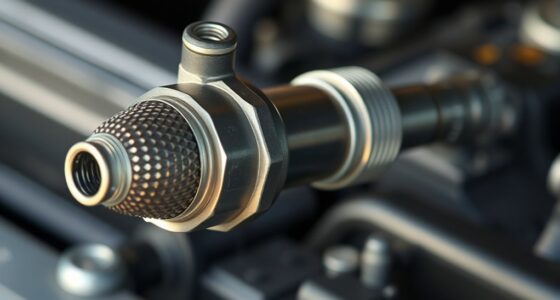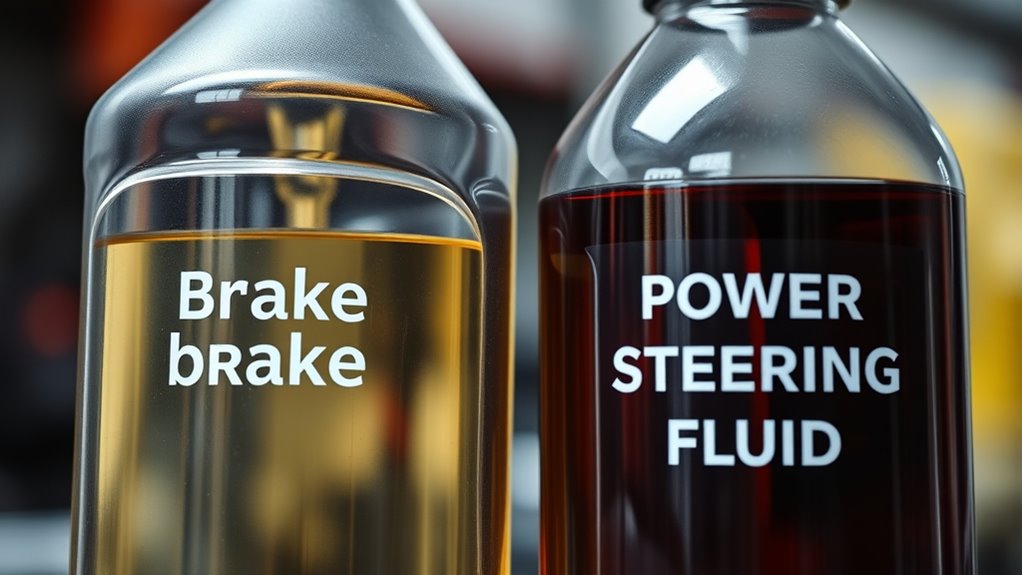

Brake fluid and power steering fluid serve different functions in your vehicle. Brake fluid transmits force from the pedal to brakes, withstands high heat and pressure, and can absorb moisture over time. Power steering fluid lubricates steering components, helps them move smoothly, and should stay clean. Using the wrong fluid can cause damage or reduce safety. Understanding these differences guarantees you keep your vehicle in top shape—discover more tips to stay safe and avoid costly repairs.
Open a free Amazon Business account
Business pricing, bulk buying and tax-exempt orders.
As an affiliate, we earn on qualifying purchases.
Key Takeaways
- Brake fluid transmits force in braking systems and withstands high heat, while power steering fluid lubricates steering components at lower temperatures.
- Brake fluid is typically glycol-based with a high boiling point; power steering fluid is often automatic transmission fluid or similar.
- Using the wrong fluid can damage seals and system components, leading to costly repairs and safety issues.
- Brake fluid often absorbs moisture, requiring regular replacement; power steering fluid’s condition affects steering effort and noise.
- Proper maintenance and correct fluid choice are essential for vehicle safety, system longevity, and optimal performance.

When it comes to maintaining your vehicle, understanding the difference between brake fluid and power steering fluid is essential. Both fluids play critical roles in your car’s safety and performance, but they serve very different purposes and require specific attention. Knowing which fluid does what helps you perform proper brake system maintenance and ensures your steering remains smooth and responsive. For example, using the correct type of essential oils for specific health concerns can make a significant difference in treatment outcomes.
Understanding brake and power steering fluids is key to vehicle safety and proper maintenance.
Brake fluid is designed to withstand high temperatures and pressure fluctuations within your braking system. It transmits force from the brake pedal to the brake calipers or wheel cylinders, allowing you to stop effectively. Because it operates under such intense conditions, brake fluid must have a high boiling point to prevent vapor lock, which could compromise your ability to brake. Over time, brake fluid can absorb moisture from the air, reducing its effectiveness and potentially leading to corrosion inside the brake system. Regularly checking and replacing your brake fluid, as recommended by your vehicle’s manufacturer, helps maintain ideal braking performance and prevents costly repairs. Proper brake system maintenance ensures that the hydraulic pressure stays consistent, and your stopping power remains reliable.
Power steering fluid, on the other hand, is used to lubricate and facilitate the movement of the steering components. It helps reduce friction between the steering rack, pump, and other parts, making steering easier and more responsive. Unlike brake fluid, power steering fluid doesn’t need to withstand extreme heat but must remain free of contaminants to ensure smooth steering operation. If your power steering fluid becomes dirty or low, you might notice increased steering effort or noise when turning. Checking the level and condition of your power steering fluid periodically allows you to catch issues early, preventing damage to steering components. Regular steering component lubrication through proper fluid maintenance keeps steering responsive and reduces wear on parts like the pump and rack.
While both fluids are vital, they are not interchangeable. Using the wrong fluid can cause damage—brake fluid can harm the seals in your steering system, and power steering fluid may not provide the necessary pressure for braking. Always follow your vehicle’s specifications for fluid types and change intervals. Keeping these fluids in good condition not only extends the lifespan of your braking and steering systems but also ensures your safety on the road. Regular checks, timely replacements, and understanding their distinct roles empower you to maintain your vehicle effectively, avoiding costly repairs and keeping your driving experience smooth and secure.
As an affiliate, we earn on qualifying purchases.
Frequently Asked Questions
Can I Use Brake Fluid in My Power Steering System?
You shouldn’t use brake fluid in your power steering system because of fluid compatibility issues. Brake fluid is more corrosive and can damage seals and components designed for power steering fluid. For proper maintenance, always use the manufacturer-recommended fluid and check the fluid levels regularly. Using the correct fluid guarantees smooth steering and prevents costly repairs, so stick to the right type and follow maintenance tips for safety and ideal vehicle performance.
Are There Any Visual Signs of Fluid Contamination?
Yes, you can spot contamination symptoms by checking the fluid color. If your power steering fluid looks darker, cloudy, or has debris, it’s a sign of contamination. Clear, clean fluid indicates good condition. Regularly inspecting the fluid allows you to catch contamination early, preventing damage. If you notice any discoloration or particles, it’s time to flush and replace the fluid to maintain ideal steering performance.
How Often Should I Change Each Type of Fluid?
You should change your brake fluid every 2 years and your power steering fluid roughly every 50,000 miles or as recommended in your vehicle’s manual. Consistent fluid maintenance guarantees peak performance and safety. Keep an eye out for signs of contamination or degradation, and stick to the fluid replacement intervals to prevent damage. Regularly scheduled fluid changes help maintain smooth operation and extend your vehicle’s lifespan.
What Are the Risks of Mixing Brake and Power Steering Fluids?
Mixing brake fluid with power steering fluid can lead to serious risks due to fluid incompatibility. It may cause system damage, reduced effectiveness, or failure of essential components. You should avoid this mistake during maintenance, as it can result in costly repairs. Always use the correct fluid for each system, and double-check labels to prevent accidental cross-contamination, ensuring your vehicle stays safe and reliable.
Do Different Vehicle Models Require Different Fluid Types?
Think of vehicle compatibility like fitting puzzle pieces together; each model has unique specifications. You need to match the right fluid types to your vehicle’s requirements, based on fluid specifications. Different vehicle models often demand specific brake or power steering fluids to guarantee peak performance. Always check your owner’s manual or consult with a professional to confirm the correct fluid type, avoiding potential damage or safety issues.
Conclusion
Understanding the difference between brake fluid and power steering fluid is vital for your vehicle’s safety and performance. Did you know that using the wrong fluid can reduce braking efficiency by up to 50%? Always check your owner’s manual and use the correct fluid type. Keeping these fluids in good condition ensures smoother steering and reliable braking, helping you stay safe on the road. So, make fluid maintenance a priority—you’ll thank yourself later!
NFL season / tailgating Picks
team gear
As an affiliate, we earn on qualifying purchases.