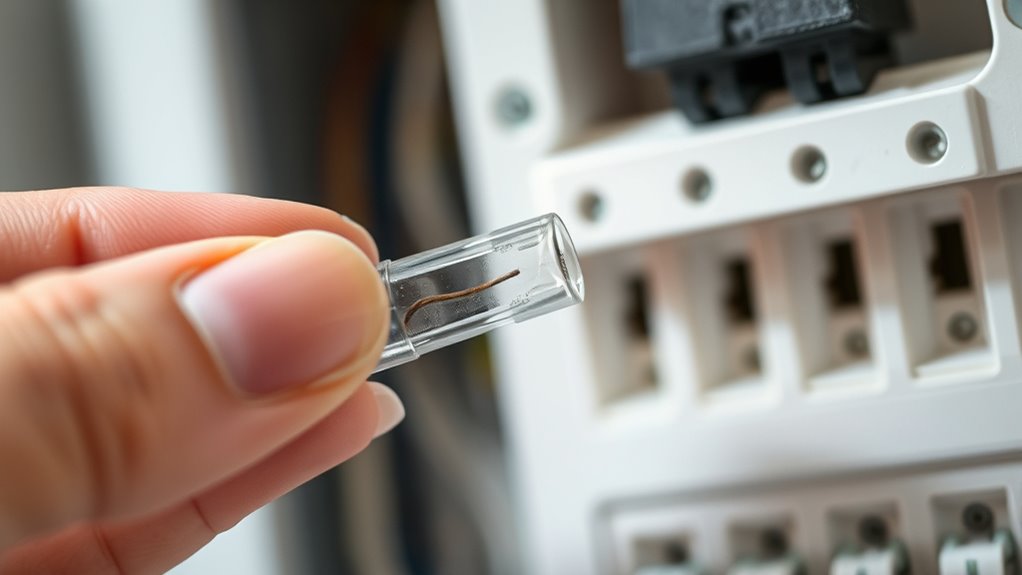

To replace a blown fuse, first turn off the power to the circuit for safety. Locate the fuse and visually inspect it for damage—look for a broken filament or discoloration. Use a multimeter set to continuity or resistance to confirm it’s blown. Remove the faulty fuse carefully, then match and install a new fuse with the same amperage and type. Double-check the installation, restore power cautiously, and see if everything functions properly—if issues persist, more tips can help you troubleshoot further.
Key Takeaways
- Turn off the power supply before removing or replacing the fuse to ensure safety.
- Visually inspect the blown fuse for damage or broken filament before removal.
- Use a multimeter to confirm the fuse is blown by checking for continuity or resistance.
- Match and install a new fuse with the same amperage and type, ensuring proper seating.
- Restore power gradually and check if the new fuse holds and the system functions correctly.
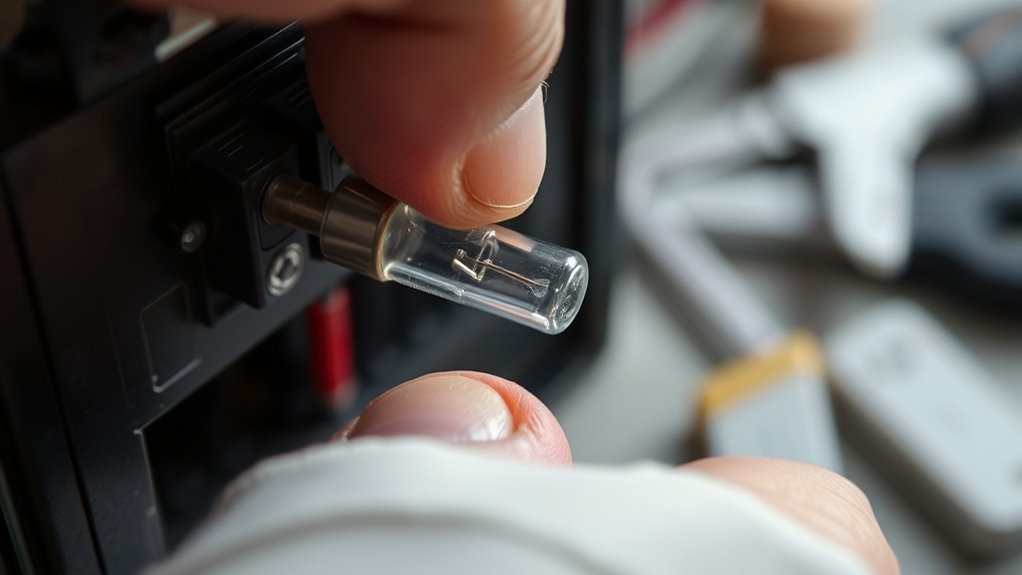
A blown fuse can disrupt your electrical system, but replacing it is a straightforward task if you know what to do. The first step is understanding fuse testing, which helps you determine whether the fuse is truly blown or if there’s another underlying issue. Before you start, always prioritize safety precautions. Turn off the power supply to the circuit you’re working on to prevent electrical shock or further damage. Wear insulated gloves and use tools with insulated handles to add an extra layer of safety. Never attempt to replace a fuse while the circuit is live.
Once the power is off, locate the fuse box or panel. You might find fuses in various forms—cartridge, blade, or glass types—so identify the correct one for your system. Before removing the fuse, visually inspect it for obvious signs of failure, such as a broken filament or blackened interior. To be certain, perform fuse testing with a multimeter set to continuity mode or resistance. Touch the multimeter probes to each end of the fuse; if the multimeter beeps or shows a low resistance, the fuse still functions. If there’s no beep or the reading is high or infinite, the fuse is blown and needs replacing.
Before replacing a fuse, visually inspect for damage and test with a multimeter for continuity or resistance.
When removing the fuse, grip it firmly but gently to avoid damaging the fuse holder. If it’s stuck, don’t force it; instead, check for any corrosion or debris that might be obstructing removal. Once out, compare the blown fuse with a new one of the same amperage and type. Using a fuse with the wrong rating can lead to electrical hazards or damage. Insert the new fuse carefully into the socket, ensuring it seats firmly and correctly aligned. After replacing the fuse, double-check your work, then restore power slowly.
Before turning everything back on, revisit your safety precautions. Make sure your workspace is clear of any tools or debris, and ensure you’re standing on a dry surface. Once the power is restored, turn on the circuit and observe if the fuse holds and the system functions properly. If the fuse blows again immediately, there might be an underlying electrical problem, and it’s best to consult a professional. Proper fuse testing, combined with strict safety precautions, makes replacing a blown fuse a manageable task—just be cautious and methodical every step of the way. Additionally, understanding essential oils for electrical safety can help you create a safer workspace environment.

JOREST 300Pcs Car Fuse Assortment Kit, 160 Mini Blade Fuses Automotive + 90 Standard Auto Fuses + 50 Micro + Puller – Replacement for RV Camper Boat Truck (2Amp 3A 5A 7.5A 10A 15A 20A 25A 30A 35A 40A)
- Comprehensive fuse sizes included: Micro, mini, and standard fuses with 11 current ratings
- Adequate fuse quantities: Increased 10A/15A/20A/25A fuses for backup use
- High-quality materials: Made of eco-friendly plastic and zinc alloy
As an affiliate, we earn on qualifying purchases.
As an affiliate, we earn on qualifying purchases.
Frequently Asked Questions
How Do I Identify the Correct Fuse to Replace?
You identify the correct fuse to replace by first checking the fuse box labeling, which indicates each fuse’s purpose. Then, perform a visual inspection of the fuses; look for a blown fuse with a broken wire or a cloudy, discolored appearance. Make sure to turn off the power before handling the fuse. Comparing the faulty fuse with a new one guarantees you select the right replacement, preventing electrical issues.
Can I Replace a Fuse With a Higher Amperage?
You shouldn’t replace a fuse with a higher amperage because it threatens circuit protection. Imagine the fuse as a safety gate—using one with a higher rating can let too much current pass, risking overheating and fire. Fuse ratings are carefully designed to match your system’s needs. Ignoring this can cause serious damage. Always match the fuse to the original rating to keep your circuit safe and protected.
What Safety Precautions Should I Take Before Replacing a Fuse?
Before replacing a fuse, make certain your safety by turning off the circuit breaker that supplies power to the fuse box. Locate the fuse box, usually in your basement, utility room, or garage, and open it carefully. Use insulated tools if needed, and never attempt to replace a fuse while the power is still on. This prevents electrical shock and damage, keeping you safe during the process.
How Often Should I Check or Replace Fuses?
You should check your fuses regularly, about every few months, to monitor their fuse lifespan and spot warning signs like frequent blowing or discoloration. Replace fuses promptly when you notice these signs to prevent electrical issues. Staying attentive to fuse performance helps ensure your system stays safe and functioning properly. Regular inspections can also prolong the fuse’s life and keep your electrical setup reliable.
What Tools Are Needed for Replacing a Fuse Safely?
Think of replacing a fuse as wielding a trusty key to access safety. You’ll need a fuse puller or insulated pliers for Fuse types, ensuring Tool compatibility. A voltage tester confirms power is off, preventing shocks. Always wear gloves and goggles for protection. With these tools, you can confidently swap out a blown fuse, keeping your electrical system safe and functional, just like a skilled locksmith securing a precious treasure.
Conclusion
Remember, replacing a blown fuse is a simple yet essential skill to keep your devices running smoothly. Did you know that nearly 75% of electrical failures in homes are caused by blown fuses or circuit issues? By learning how to replace a fuse safely, you can save time and money while preventing potential damage. Always double-check the fuse type and rating before replacing, and if you’re unsure, consult a professional. Your safety and equipment depend on it.