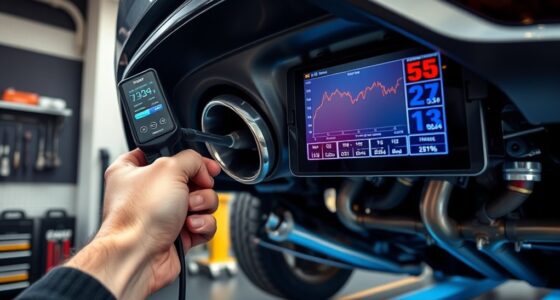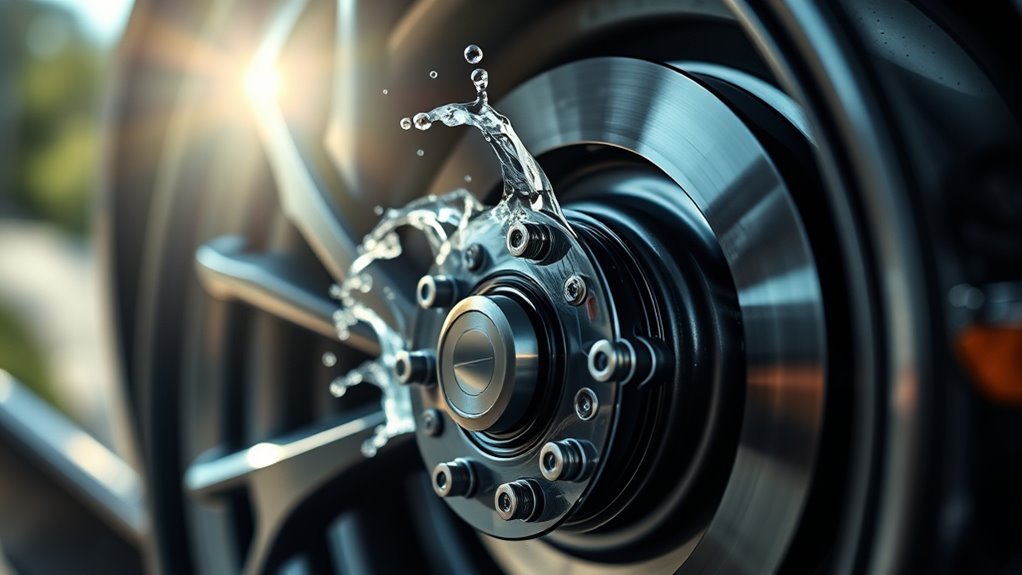

Anti-lock braking systems (ABS) help keep you safe by preventing your wheels from locking up during sudden stops, so you maintain control and steer clear of obstacles. When you press the brake pedal firmly, sensors detect if any wheel is about to lock, and the system quickly adjusts brake pressure to keep the wheels turning. This rapid modulation helps you stop safely without losing steering control. Keep exploring how ABS works to stay even safer behind the wheel.
Key Takeaways
- ABS prevents wheel lock-up during braking, maintaining control and steering ability.
- It uses sensors and hydraulic valves to rapidly modulate brake pressure and prevent skidding.
- Proper, steady pedal pressure combined with muscle activation enhances ABS effectiveness.
- ABS reacts quickly to changing conditions, adjusting brake force hundreds of times per second.
- The system’s integration with human response improves safety during emergency stops and challenging conditions.

Have you ever wondered how your car prevents wheels from locking up during sudden braking? The answer lies in the sophisticated system called ABS, or Anti-lock Braking System. When you press the brake pedal firmly in an emergency, your instinct might be to stop as quickly as possible. However, without ABS, applying too much brake force can cause your wheels to lock, leading to a loss of steering control and potential accidents. That’s where ABS steps in, working rapidly to modulate brake pressure and keep your wheels turning, giving you the ability to steer and avoid hazards.
Understanding how ABS works starts with recognizing the importance of core engagement and muscle activation. When you press the brake pedal, your leg muscles activate to generate force. In a normal braking situation, you might not consciously think about how your muscles coordinate to apply pressure. But with ABS, this process becomes critical because the system relies on sensors that detect wheel speed. Once the sensors identify that a wheel is about to lock up, the ABS control module quickly adjusts the brake pressure. This rapid modulation involves activating hydraulic valves that release and reapply brake force in quick bursts, often hundreds of times per second.
ABS relies on sensors detecting wheel speed and your muscle coordination to modulate brake pressure rapidly.
This process requires precise muscle activation from your foot and leg, as your brain instinctively responds to the feedback from the brake pedal and road conditions. Your muscles work together to maintain steady pressure, even as the ABS system intermittently releases and reapplies brake force. This synergy between your muscle engagement and the system’s automated control ensures that you maintain ideal braking without losing steering ability. It’s an elegant dance where your body’s natural muscle activation complements the system’s rapid adjustments, helping you stay in control during critical moments.
Moreover, the effectiveness of ABS depends not just on the system’s mechanics but also on your ability to remain calm and keep steady pressure on the brake pedal. Sudden, jerky movements can confuse the system or reduce its effectiveness. Instead, you should apply firm, steady pressure to the brake pedal, trusting that ABS will handle the fine-tuned modulation. This way, your muscles provide a stable foundation for the system’s rapid responses, ensuring your safety. Additionally, understanding the importance of proper braking technique can enhance the effectiveness of ABS and your overall safety.
In essence, ABS is an impressive blend of technology and human coordination. It relies on your core engagement and muscle activation to apply consistent pressure, while the system’s sensors and valves do the complex work of preventing wheel lockup. Together, they help you maintain control, steer clear of obstacles, and come to a safe stop—even in the most challenging conditions.

TYTOGE ABS Anti Lock Brake Module Replacement for Cadillac 2011-2016 20842710 Anti Lock Braking System ABS Module
OE NUMBER: The ABS anti lock brake control pump module replace part number are 22806344, 22803991, 20842710, 22752525,…
As an affiliate, we earn on qualifying purchases.
As an affiliate, we earn on qualifying purchases.
Frequently Asked Questions
How Does ABS Differ From Traditional Braking Systems?
ABS differs from traditional braking systems by using advanced braking technology to prevent wheel lockup during hard braking. This allows you to maintain steering control and reduces skidding, making your vehicle safer. Unlike conventional brakes that might lock up, ABS automatically modulates brake pressure to optimize stopping power. With this braking technology, you gain better control, especially in slippery conditions, enhancing overall vehicle safety and helping you avoid accidents.
Can ABS Prevent All Types of Accidents?
Imagine you’re driving through sudden rain, and a pedestrian steps onto the road. ABS helps you maintain vehicle stability, reducing skidding and helping you steer clear of harm. However, it can’t prevent all accidents, especially those caused by unpredictable factors like distracted drivers or poor visibility. While ABS improves safety by aiding braking control and pedestrian safety, you still need to stay alert and cautious to avoid every danger.
Is ABS Effective in All Weather Conditions?
ABS is generally effective in all weather conditions, but its braking performance can vary. It helps you maintain traction control during sudden stops, especially on wet or icy roads, by preventing wheel lock-up. However, in extreme conditions like deep snow or ice, ABS might not fully prevent skidding. Always drive cautiously and adjust your speed to match the weather, knowing ABS enhances safety but doesn’t eliminate all risks.
How Do I Know if My ABS System Is Malfunctioning?
Imagine driving and suddenly, the warning light on your dashboard flickers on like a warning beacon. That’s your sign that your ABS sensor might be malfunctioning. You’ll notice brake performance issues or unusual noises during braking, indicating a problem. Check for warning lights and listen for any sensor malfunction signals. If these appear, get your system inspected promptly to guarantee your ABS keeps you safe when you need it most.
Does ABS Increase Stopping Distance on Dry Roads?
ABS doesn’t increase stopping distance on dry roads; in fact, it can improve braking efficiency. By preventing wheel lockup, ABS helps you maintain better control and maximize road grip during sudden stops. This means you might stop slightly faster or more safely, especially in emergency situations. So, with ABS, you’re less likely to slide or lose control, making your braking more effective on dry pavement.

Nomocale 1 PC Car ABS Wheel Speed Sensor, OEM 2049052905 Anti-Lock Brake Sensor, 0.26 Inches Front Left or Right Car ABS Sensor Replacement Accessories, Compatible with Mercedes Benz (Black)
High-quality Materials: This ABS wheel speed sensor is made of high-quality materials with good durability and anti-deformation ability,…
As an affiliate, we earn on qualifying purchases.
As an affiliate, we earn on qualifying purchases.
Conclusion
Now that you understand how ABS works to keep you safe, it’s clear why it’s such a crucial feature in your vehicle. By preventing wheel lock-up and maintaining control, ABS helps you avoid accidents and stay secure on the road. Isn’t knowing how your safety features operate enough motivation to keep your brakes in good condition? Stay vigilant, and remember that understanding your car’s systems can make all the difference in unexpected situations.
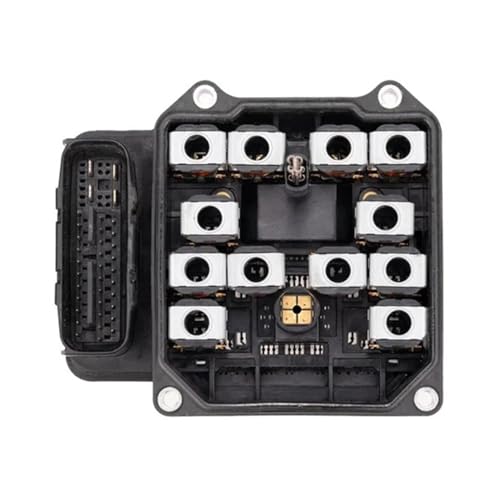
Compatible with Honda Accord 2008-2017 Brake ABS Control Module/VSA Pump Module 8A29B-0803, 7T20A-0796, 4N26E-0184
Compatible With Honda Accord 2008-2017 Brake ABS Control Module/VSA Pump Module 8A29B-0803, 7T20A-0796, 4N26E-0184
As an affiliate, we earn on qualifying purchases.
As an affiliate, we earn on qualifying purchases.

ABS Relay Valve, Compatible with Wabco 4721950330 Meritor S4721950330, 12V Trailer ABS Modulator Valve, Anti-Lock Braking System Valve Assembly, Emission Vacuum Connector Accessories
【Product Specifications】Crack Pressure: 4.0 PSI, Supply Ports: 3/4" NPT, Delivery Ports: 3/8" NPT, Control Port: 3/8" NPT. The…
As an affiliate, we earn on qualifying purchases.
As an affiliate, we earn on qualifying purchases.