To estimate your real battery needs for a road trip, start by listing all your devices and finding their wattage and daily usage hours. Add up their energy consumption to determine your total daily power requirement. Consider your power station’s capacity in watt-hours, and account for inverter and efficiency losses. Balancing capacity, size, and charging options guarantees smooth power management. Keep exploring to discover how to refine your calculations and select the best power station for your adventure.
Key Takeaways
- List all devices you’ll use, noting their wattage and estimated daily usage hours to calculate total energy needs.
- Understand your power station’s capacity in watt-hours and compare it to your total daily energy consumption for accurate sizing.
- Factor in inverter efficiency and environmental conditions, like cold weather, which can affect battery performance.
- Incorporate solar panel recharging options and plan for emergency backup power to extend usage during longer trips.
- Avoid underestimating power needs by adding a safety buffer, and regularly monitor consumption to optimize battery lifespan.

Jackery Portable Power Station Explorer 300, 293Wh Backup Lithium Battery, Solar Generator for Outdoors Camping Travel Hunting Blackout (Solar Panel Optional)
SPEED UP YOUR RECHARGEABILITY: It takes only 2 hours to recharge 80% battery of the power station through…
As an affiliate, we earn on qualifying purchases.
As an affiliate, we earn on qualifying purchases.
Why Knowing Your Device Power Needs Is Key for Road Trips

Knowing your device power needs is essential because it helps you avoid unexpected battery drain during your trip. When planning, consider how solar panels can recharge your power station, ensuring your devices stay powered longer. Different inverter types affect how efficiently your stored energy converts for your gadgets, so understanding which one suits your devices is critical. For example, pure sine wave inverters provide cleaner power for sensitive electronics, while modified sine wave inverters might be suitable for simpler devices. By knowing the wattage your devices require, you can select the right combination of solar panels and inverter types to optimize your setup. Additionally, understanding the power station components can help you choose the most effective configuration for your needs. Recognizing power consumption patterns can further improve your energy management, preventing overloads and maximizing efficiency. Being aware of battery capacity helps ensure you have enough stored energy for your entire trip, avoiding interruptions. A thorough understanding of energy efficiency can also assist in extending your device usage time and reducing unnecessary power draw, making your trip more comfortable. Implementing proper system integration can further enhance your energy management by ensuring all components work seamlessly together. This preparation guarantees you won’t be caught off guard, keeping your devices charged and your trip stress-free.

Portable Solar Generator, 300W Portable Power Station with Foldable 60W Solar Panel,110V Pure Sine Wave 280Wh Battery Power Pack with USB DC AC Outlet for Camping Smart Devices RV Van Outdoor-Orange
Portable Generator with 60W Solar Panel Included: with a big battery pack, ZeroKor 300W power stations Generator are…
As an affiliate, we earn on qualifying purchases.
As an affiliate, we earn on qualifying purchases.
How to List Your Devices and Find Their Power Consumption

To guarantee your power setup can handle all your devices, start by making a detailed list of everything you’ll bring along. This device listing helps you identify the total power consumption needed. To do this effectively:
- Write down each device’s name and model.
- Find or estimate its power consumption in watts (W).
- Note how long you’ll use each device daily.
- Calculate the total energy required by multiplying power consumption by usage time.
- Remember to detect passive voice in your descriptions to ensure clarity and conciseness.
- Organizing your list clearly can help prevent missed devices and ensure your power needs are accurately met.
- Additionally, understanding your battery capacity can help you choose the right power stations for your trip.
- Consulting commercial cleaning equipment specifications can provide insights into typical power needs for various devices, helping you plan more accurately.
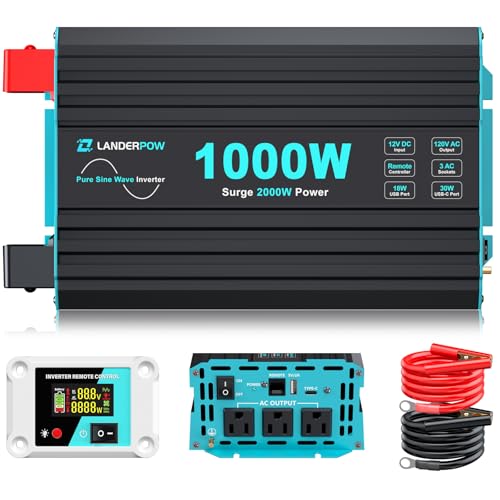
LANDERPOW 1000 Watt Pure Sine Wave Inverter, Power Inverter for Car, Camping, Solar, RV, Truck, Home, 12V DC to 120V AC Inverters with 3 AC Outlet, 30W USB-C, 5V 3.1A USB, Remote Control, Surge 2000W
【𝟏𝟎𝟎𝟎 𝐖𝐚𝐭𝐭 𝐈𝐧𝐯𝐞𝐫𝐭𝐞𝐫】— This pure sine wave inverter can provide 1000W continuous clean DC to AC power (2000W…
As an affiliate, we earn on qualifying purchases.
As an affiliate, we earn on qualifying purchases.
Understanding Power Station Capacity: Watt-Hours, Amps, and What They Mean

Understanding power station capacity is essential for ensuring it can meet your energy needs during road trips. Capacity is often measured in watt-hours (Wh), which indicates how much energy the battery can store and deliver over time. Higher watt-hours mean longer usage between charges. Amps, on the other hand, relate to current flow and influence how quickly a device can draw power. When choosing a power station, consider solar compatibility—this allows you to recharge using solar panels, extending your battery lifespan and independence on the road. Knowing what these measurements mean helps you select the right size for your devices. A larger capacity may last longer but could be heavier and more expensive. Understanding power measurements helps you compare different models effectively, ensuring you find the best fit for your needs. Also, understanding battery efficiency can help optimize your energy use and extend your power station’s runtime during trips. For example, energy consumption considerations can further enhance your planning and device management during extended trips. Additionally, being aware of capacity-to-weight ratio can help you balance portability with energy needs, making your road trips more convenient and efficient.
Jackery Portable Power Station Explorer 300, 293Wh Backup Lithium Battery, Solar Generator for Outdoors Camping Travel Hunting Blackout (Solar Panel Optional)
SPEED UP YOUR RECHARGEABILITY: It takes only 2 hours to recharge 80% battery of the power station through…
As an affiliate, we earn on qualifying purchases.
As an affiliate, we earn on qualifying purchases.
How to Calculate Your Daily Power Usage for a Road Trip

Calculating your daily power usage is essential for ensuring your power station can keep all your devices running throughout the trip. To do this, follow these steps:
Knowing your daily power needs ensures your devices stay powered throughout your trip.
- List all devices you’ll use daily, noting their wattages.
- Estimate how many hours each device runs per day.
- Multiply wattage by hours to find daily energy consumption for each device.
- Sum these amounts to determine your total daily power needs.
- Consider power management strategies to optimize battery life and reduce energy consumption. Incorporating energy-efficient devices can further extend your power station’s runtime. Additionally, assessing your power quality can help prevent device damage and improve overall efficiency. It’s also important to account for battery capacity to ensure your power station can handle your total energy needs during the trip. Properly calculating the power load can help you avoid overloading your system and ensure safety during use. Don’t forget to account for inverter efficiency, since some energy is lost during conversion. Using solar panels to recharge your power station can help meet your daily needs, but ensure they generate enough energy based on your usage. Proper calculation guarantees your power station supports your devices without running out of juice.
How Charging Speed and Efficiency Impact Your Power Needs

Fast charging can save you time on the road, but it often requires more power upfront. Conversion efficiency also plays a role, as some energy is lost during the charging process. Understanding these factors helps you choose the right power station to meet your trip’s needs efficiently. Additionally, considering drone safety guidelines ensures your aerial imaging remains responsible and compliant. Being aware of power management strategies can further optimize your energy consumption and extend your trip duration. Properly assessing battery capacity ensures you avoid running out of power unexpectedly during your journey, especially when considering energy loss factors during fast charging. Recognizing how charging station compatibility influences your charging efficiency can also help you plan more effectively for longer trips.
Charging Rate Effects
Charging speed and efficiency play a crucial role in determining your overall power needs on a road trip. Faster charging can reduce downtime but may impact battery chemistry and longevity. To optimize your power station setup, consider:
- High charging rates can accelerate battery wear through increased charging cycles.
- Different battery chemistries respond uniquely; some tolerate rapid charging better than others.
- Frequent fast charging may decrease overall battery lifespan, requiring more frequent replacements.
- Balancing charging speed with efficiency helps ensure your power needs are realistic and sustainable.
Conversion Efficiency Impact
Since not all of the energy from your power station makes it into the battery, understanding conversion efficiency is essential. Conversion loss occurs during the transfer of energy, meaning some power is wasted as heat or electromagnetic interference. Inverter efficiency plays a key role here, as it determines how effectively DC power converts to AC or vice versa. Lower inverter efficiency increases the amount of energy lost, requiring you to have a larger power station to meet your needs. This inefficiency can considerably impact your total power requirements, especially during fast charging, where higher currents amplify conversion losses. To minimize these effects, choose devices with high inverter efficiency and be mindful of the energy lost during each transfer, ensuring your power station is sized appropriately for your road trip.
Comparing Power Station Sizes: Which One Fits Your Trip?

Choosing the right power station size depends on your trip’s length and your device needs. Smaller units work for short outings with minimal power, while larger ones suit longer trips requiring multiple devices. Consider these factors:
- How many devices you’ll charge daily
- The total wattage of your essential electronics
- The availability of solar panels for recharging
- Whether you need emergency backups for unpredictable situations
A compact power station can power your phone and small gadgets, but a bigger unit ensures you can run essentials like mini-fridges or CPAP machines. If you plan to camp for several days, a larger model with solar compatibility might be best. Also, a robust size can serve as emergency backup power, providing peace of mind during unforeseen events.
Tips to Maximize Battery Life and Manage Power on the Road

Wondering how to get the most out of your power station while on the road? Start by using solar panels to supplement your power supply, especially during sunny days. They can help recharge your battery and extend your usage without draining your main power source. Practice good battery maintenance by keeping terminals clean and avoiding deep discharges, which can shorten battery life. Limit unnecessary device use and turn off power when not needed to conserve energy. Keep your power station in a cool, dry place to prevent overheating and battery degradation. Monitoring your power consumption regularly allows you to adjust usage and prevent unexpected outages. With these tips, you’ll maximize your battery life and stay powered up throughout your trip.
Common Mistakes to Avoid When Estimating Your Battery Needs

Many people underestimate how much power they need for their road trips, which can lead to running out of battery at inconvenient times. One common mistake is overestimating capacity, causing you to carry a larger, heavier power station than necessary. Ignoring efficiency is another pitfall; not considering how your devices consume power can skew your estimates. Additionally, some forget to account for real-world conditions like cold weather or high usage, which drain batteries faster. Finally, relying solely on manufacturer estimates without testing your actual usage can result in surprises. To avoid these errors, measure your typical power consumption, include a buffer for unexpected needs, prioritize efficiency, and regularly update your calculations based on real trip data. This helps ensure you bring just enough power without excess.
How to Pick the Perfect Power Station Based on Your Travel Needs

Selecting the right power station depends on understanding your specific travel needs and how you’ll use your devices on the road. If you plan to rely on solar panels, choose a model with good compatibility and efficient charging capabilities to maximize sunlight. Consider inverter types carefully: pure sine wave inverters provide clean power suitable for sensitive electronics, while modified sine wave inverters are more affordable but less compatible. Think about your device wattage and runtime requirements to pick a station with appropriate capacity. If you’re camping off-grid, a larger station with solar input options offers independence. For quick weekend trips, a compact model with enough power for essential devices may suffice. Matching features with your travel style ensures you get a power station that keeps you connected without unnecessary bulk.
Final Checklist: Making the Right Choice for Your Road Trip

Before finalizing your power station choice, make certain it matches your devices’ compatibility and offers enough power output for all your needs. Consider your budget and how portable the station is, so it fits your trip plans without hassle. By checking these points, you’ll ensure you select the best option for a smooth and enjoyable road trip.
Compatibility and Power Output
Ensuring your power station is compatible with your devices is crucial for a smooth road trip experience. First, check solar compatibility to see if it can recharge via solar panels, giving you more flexibility. Next, verify your device voltage requirements to avoid damage or inefficiency. Then, consider the power output to ensure it can handle your devices simultaneously. Finally, confirm the types of ports available—USB, AC, or DC—to match your gear. Here’s a quick checklist:
- Solar compatibility for eco-friendly recharging
- Device voltage matching to prevent damage
- Sufficient power output for multiple devices
- Appropriate port types for all your gear
Budget and Portability
When choosing a power station for your road trip, considering your budget and how portable the device is can make all the difference. Look for options that fit within your financial limits without sacrificing essential features. Portable chargers and compact power stations are ideal for easy transport and quick setup. If you plan to extend your trip or want sustainable options, consider units compatible with solar panels—these can recharge your power station using sunlight, saving money and reducing environmental impact. Prioritize lightweight models with built-in handles or carrying cases for maximum portability. Balancing cost and size ensures you’ll have enough power for your devices without lugging around bulky equipment. Ultimately, a well-chosen, affordable, and portable power station keeps you connected and energized throughout your adventure.
Frequently Asked Questions
How Do Temperature Changes Affect Battery Performance During Road Trips?
Temperature changes can considerably impact your battery performance during road trips. When the battery temperature drops too low, it reduces efficiency and capacity, while high temperatures can cause overheating and faster degradation. Thermal management systems help maintain ideal battery temperature, ensuring consistent performance. By keeping your battery within the perfect temperature range, you’ll maximize its lifespan and reliability, making your trip smoother and more efficient.
Can Solar Panels Be Integrated With Portable Power Stations Effectively?
Yes, you can effectively integrate solar panels with portable power stations. By balancing bright, breezy days with proper placement, you’ll boost solar panel efficiency and power up your devices. Portable solar solutions are designed for easy setup and seamless connection, making your road trip more reliable and renewable. With the right equipment, you’ll generate green energy on the go, ensuring your power needs are met with minimal fuss and maximum function.
What Safety Precautions Should I Take With High-Capacity Power Stations?
When handling high-capacity power stations, prioritize fire safety by keeping them away from flammable materials and avoiding overcharging. Always follow handling precautions, such as using insulated tools and wearing gloves if needed. Keep the station on a stable surface and avoid exposure to extreme temperatures or moisture. Regularly inspect for damage and disconnect it when not in use. These steps help prevent accidents and guarantee safe operation during your road trip.
How Do Inverter Quality and Efficiency Impact Power Station Performance?
Think of your power station like a race car, where inverter quality and efficiency are the engine’s horsepower. High-quality inverters with better durability and efficiency ratings deliver smoother, more reliable power, maximizing your station’s performance. Poor inverter quality can cause energy loss and overheating, slowing your trip’s momentum. So, choose an inverter built to last and rated highly for efficiency to keep your power station running at peak performance.
Are There Portable Power Stations Suitable for Charging Electric Vehicles?
Yes, some portable power stations are suitable for charging electric vehicles, offering portable charging options with EV compatibility. Look for models with high wattage outputs and multiple charging ports designed for EVs. These stations provide convenient, on-the-go power, making them ideal for emergencies or remote locations. Verify the power station’s capacity matches your EV’s charging requirements to avoid delays and maximize efficiency during your road trip.
Conclusion
As you hit the open road, imagine your power station as a reliable companion, ready to light up your journey and keep your devices alive amid endless horizons. By understanding your needs and making smart choices, you’ll create a seamless adventure where technology and nature blend effortlessly. Trust in your planning, and let your battery power your memories, fueling stories you’ll cherish long after the trip ends. Safe travels, and stay connected wherever the road takes you.