To clean your battery terminals, first turn off your vehicle and disconnect the cables, starting with the negative terminal. Mix baking soda and water, then scrub away corrosion with a wire brush or toothbrush. Rinse with water and dry thoroughly. Reattach the terminals, starting with the positive, and apply a protective layer of petroleum jelly or terminal protector. For step-by-step details and tips on maintaining your battery, keep exploring the process.
Key Takeaways
- Disconnect the negative terminal first, then the positive, using a wrench to prevent electrical shorts.
- Mix baking soda with water to create a neutralizing solution for cleaning corrosion.
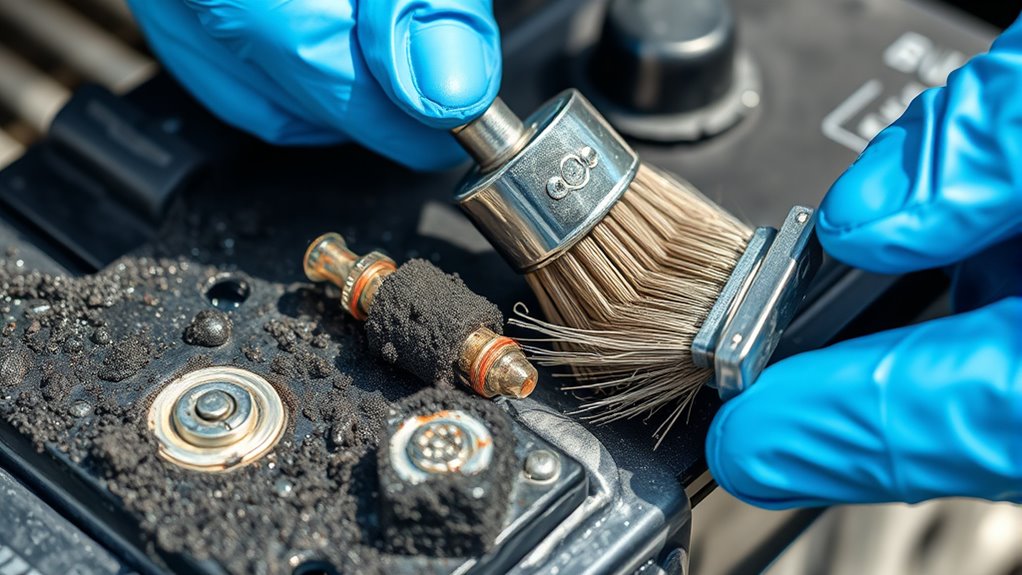
- Scrub terminals and clamps with a wire brush or toothbrush to remove corrosion buildup.
- Rinse thoroughly with clean water and dry all parts completely before reassembling.
- Apply a thin layer of petroleum jelly or terminal protector to prevent future corrosion.

A clean battery terminal is essential for your vehicle’s reliable performance, and luckily, you can tackle this maintenance task yourself. Over time, corrosion can build up around the terminals, leading to poor electrical connections and starting problems. Preventing this corrosion is key to keeping your battery functioning properly. To do so, you should regularly inspect the terminals and clean any buildup as soon as you notice it. Corrosion prevention starts with a simple routine of cleaning and applying protective coatings, such as petroleum jelly or terminal protectors, which help keep moisture and dirt out. Before you begin, it’s vital to follow safety precautions to avoid injury or damage. Always wear gloves and eye protection, as battery acid and corrosion debris can be harmful. Make sure your vehicle is turned off, and disconnect the negative terminal first, then the positive, to prevent short circuits. Working in a well-ventilated area is also essential, as batteries can emit harmful fumes.
Once you’re prepared, start by loosening the terminal clamps with a wrench, taking care not to force or strip the connectors. Remove the terminals carefully, and inspect them closely for signs of corrosion—usually a white, blue, or greenish powder. To clean, mix a solution of baking soda and water; this neutralizes acid deposits and helps loosen corrosion. Dip a wire brush or an old toothbrush into the solution and scrub the terminals thoroughly, paying special attention to the inside of the terminal clamps and the posts themselves. Rinse everything with clean water and dry with a clean cloth. Once dry, reattach the terminals securely, starting with the positive first, then the negative. Applying a thin layer of petroleum jelly or terminal protectant helps prevent future corrosion and makes future cleaning easier. Regular maintenance can also enhance the longevity of your battery and prevent unexpected failures.
Frequently Asked Questions
How Often Should I Clean My Battery Terminals?
You should clean your battery terminals every six months to prevent terminal corrosion and guarantee proper battery performance. Regular battery maintenance helps identify issues early and keeps your vehicle running smoothly. If you notice corrosion or difficulty starting your car, it’s a sign you need to clean the terminals sooner. Keeping your battery terminals clean and free of corrosion extends the life of your battery and improves overall vehicle reliability.
Can I Use Vinegar Instead of Baking Soda?
Like a knight choosing between swords, you wonder if vinegar can replace baking soda. While vinegar alternatives exist, baking soda surpasses in neutralizing acid and cleaning corrosion effectively. Vinegar may work temporarily, but its acidity can damage terminals over time. When comparing, baking soda’s gentle abrasiveness offers a safer, more reliable clean. Stick with baking soda for a thorough, lasting solution, and avoid potential harm from vinegar’s stronger acidity.
What Safety Precautions Are Necessary During Cleaning?
You should wear protective gloves and eye safety gear during cleaning to prevent contact with harmful acids or corrosive residue. Make sure the engine is off and the vehicle is in a well-ventilated area. Avoid sparks or open flames, and handle cleaning agents carefully. Removing jewelry and working slowly can also help prevent accidents. Taking these precautions guarantees your safety while effectively cleaning your battery terminals.
Is It Okay to Clean Terminals While the Car Is Running?
You shouldn’t clean battery terminals while your car’s running; it’s like trying to tame a wild storm. When the engine is on, the battery acid and current flow are at their peak, increasing the risk of sparks and terminal corrosion. Turning off the engine stops the electrical chaos, letting you safely clean away the terminal corrosion without risking a shock or short circuit. Always work with the engine off for safety’s sake.
How Do I Prevent Future Corrosion on Battery Terminals?
To prevent future corrosion on battery terminals, you should regularly perform terminal maintenance and address corrosion causes promptly. Apply a protective coating or terminal protector spray to shield against moisture and acid buildup. Keep the terminals clean and dry, and tighten connections securely. Inspect your battery periodically to catch early signs of corrosion. Taking these simple steps helps extend your battery’s life and guarantees consistent vehicle performance.
Conclusion
Cleaning your battery terminals is like giving your car a fresh start—simple, quick, and surprisingly effective. With just a few household items, you can prevent corrosion and keep your vehicle running smoothly. Don’t let dirty terminals drain your battery’s power—take action today and restore that spark. Remember, a clean connection isn’t just about maintenance; it’s about keeping your journey going strong. So grab your tools and make your battery shine like new again!