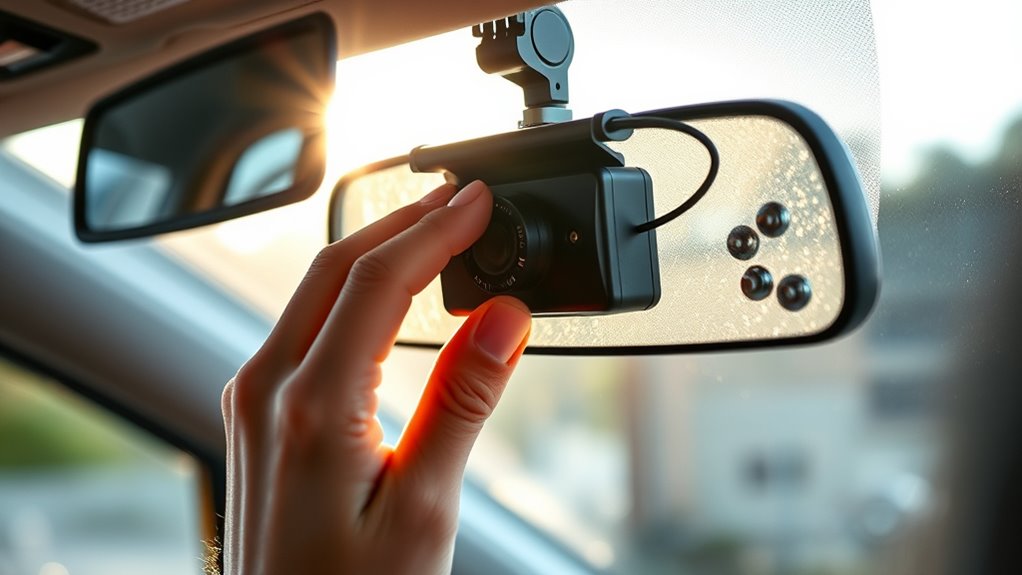

To install a dash cam yourself, start by choosing a location behind the rearview mirror for clear vision, and make certain the surface is clean and dry. Connect the power source, typically through the cigarette lighter or a hardwired kit, and route the wires neatly along the headliner and pillars. Adjust the camera for ideal coverage and test it to guarantee proper recording. If you want to learn detailed steps for a smooth setup, keep exploring the process further.
Open a free Amazon Business account
Business pricing, bulk buying and tax-exempt orders.
As an affiliate, we earn on qualifying purchases.
Key Takeaways
- Choose a mounting location behind the rearview mirror on a clean, dry surface for optimal visibility.
- Connect the power source via the cigarette lighter or hardwire into the fuse box, securing cables neatly.
- Adjust the camera angle and lens to ensure full road coverage and clear footage before finalizing placement.
- Verify legal requirements in your region regarding recording and privacy, and use footage responsibly.
- Regularly check device stability, clean the lens, and review footage to maintain proper operation.

Installing a dash cam is a straightforward process that can substantially enhance your vehicle’s safety and security. Once you’ve chosen the right model, you’ll find that setting it up yourself is both cost-effective and rewarding. The first step involves selecting a suitable mounting location, usually behind the rearview mirror, where the camera can capture a clear view of the road without obstructing your vision. Before attaching the device, verify the surface is clean and dry for best adhesion. Most dash cams come with a mounting bracket or adhesive pad; follow the manufacturer’s instructions carefully to secure it firmly in place. Once mounted, you’ll need to connect the power source, typically via the vehicle’s cigarette lighter socket or hardwired into the fuse box. Hardwiring might sound complicated, but many dash cams include detailed guides and wiring kits that make the task manageable for beginners.
As you install the device, pay attention to the cable management. You want the wires to run neatly along the headliner and down the pillars, secured with clips or tape, to prevent interference with airbags or driving. Proper cable routing not only maintains a clean aesthetic but also minimizes the risk of accidental disconnection or damage. Once connected, turn on the vehicle to check the camera’s power, angle, and video footage quality. Adjust the lens if necessary to guarantee it captures the entire road ahead and covers your vehicle’s surroundings. It’s essential to verify that the device is recording correctly and that the footage is clear and stable.
Understanding legal considerations is vital when installing a dash cam. Different regions have varying laws about where and how you can record in a vehicle. Typically, as long as the camera only records in the front windshield and doesn’t infringe on other privacy laws, you’re within legal boundaries. However, it’s wise to familiarize yourself with local regulations regarding audio recording and the use of footage. Keep in mind that video footage captured by your dash cam can serve as valuable evidence in case of accidents or disputes, but mishandling or sharing recordings improperly could lead to legal issues. Always respect the privacy rights of others and avoid recording in areas where recording is prohibited.
As an affiliate, we earn on qualifying purchases.
Frequently Asked Questions
Can I Install a Dash Cam Without Professional Help?
Yes, you can do a DIY installation of your dash cam, but you should consider legal considerations like ensuring it doesn’t obstruct your view or violate local laws. Follow the manufacturer’s instructions carefully and use the right tools. Take your time to place the camera securely and connect the power source properly. If you’re comfortable with basic electronics, this approach saves money and gives you full control over the process.
What Tools Are Necessary for Dash Cam Installation?
Think of your dash cam installation as crafting a tiny, vigilant guardian for your vehicle. You’ll need a screwdriver for mounting options, and a set of cable ties to keep wires neat. Don’t forget a power source, like a cigarette lighter adapter or hardwired kit, to guarantee your camera stays alert. A trim removal tool can help hide wires, making your setup seamless and professional. With these tools, your dash cam’s ready to watch over your journey.
How Do I Hide the Wiring for a Clean Look?
To hide the wiring for a clean look, you should use wire concealment techniques like running the cables along the headliner, door frames, or under the dashboard. Use adhesive clips and wire channels to secure the cables neatly, avoiding loose or dangling wires. Tuck the wires behind panels for an aesthetic wiring setup. This not only improves the appearance but also prevents wires from interfering with driving.
Is It Safe to Install a Dash Cam on a Rental Car?
Did you know that 78% of drivers believe dash cams improve safety? Installing one on a rental car is generally safe, but you should consider legal considerations and insurance implications first. Check your rental agreement and local laws, as some places prohibit or restrict dash cam use. Also, inform your insurance provider, since a dash cam might help in claims but could also affect coverage if not disclosed.
How Do I Ensure the Dash Cam Doesn’t Obstruct My View?
To guarantee your dash cam doesn’t obstruct your view, carefully position it near the top of your windshield, avoiding the driver’s line of sight. Use visor placement for guidance, placing the camera behind or above the rearview mirror. Check windshield visibility after installation by sitting in your normal driving position and adjusting as needed. This prevents interference with your vision and keeps your recordings clear.
Conclusion
Now that you’ve navigated the road to installing your dash cam, you’re like a captain steering your own ship through clear, calm waters. With each wire tucked neatly and each angle perfectly set, you’ve turned your vehicle into a vigilant guardian, always ready to catch the next adventure or mishap. Think of your dash cam as a trusty lighthouse, casting light on the road ahead, ensuring you stay safe and prepared no matter where the journey takes you.
Flea & tick season Picks
flea and tick prevention
As an affiliate, we earn on qualifying purchases.