To prevent frozen connections when towing in winter, you should thoroughly inspect your hitch, coupler, and safety chains, ensuring they’re free of ice and debris. Use waterproof covers and dielectric grease on electrical connections to keep moisture out. Apply winter-specific lubricants to moving parts and check tire pressure, brakes, and bearings. Regularly maintain your vehicle and trailer, and keep emergency supplies handy. Following these steps keeps your connections secure and avoids freezing issues—continue with the next tips to stay safe and prepared.
Key Takeaways
- Inspect and secure all hitch, coupler, and safety chain connections, removing ice and debris to prevent freezing.
- Apply waterproof grease and seal electrical connectors to protect against moisture and ice buildup.
- Lubricate mechanical parts like latches, pins, and bearings with winter-specific, corrosion-resistant lubricants.
- Check tire pressure, brake systems, and suspension to ensure optimal traction and safety on icy roads.
- Carry an emergency kit, including blankets, tools, and a charged phone, and perform a final visual inspection before driving.

Caravan Hitch Cover Waterproof Breathable Tow Hitch Cover, Tongue Jack Protective Cover Trailer Hitch Lock Covers Fit for RV Caravan Trailer (Gray)
The hitch cover measures 34.25 x 24.41 inch, suitable for almost all common caravans and trailers types. In…
As an affiliate, we earn on qualifying purchases.
As an affiliate, we earn on qualifying purchases.
Why Frozen Connections Are a Common Winter Towing Problem
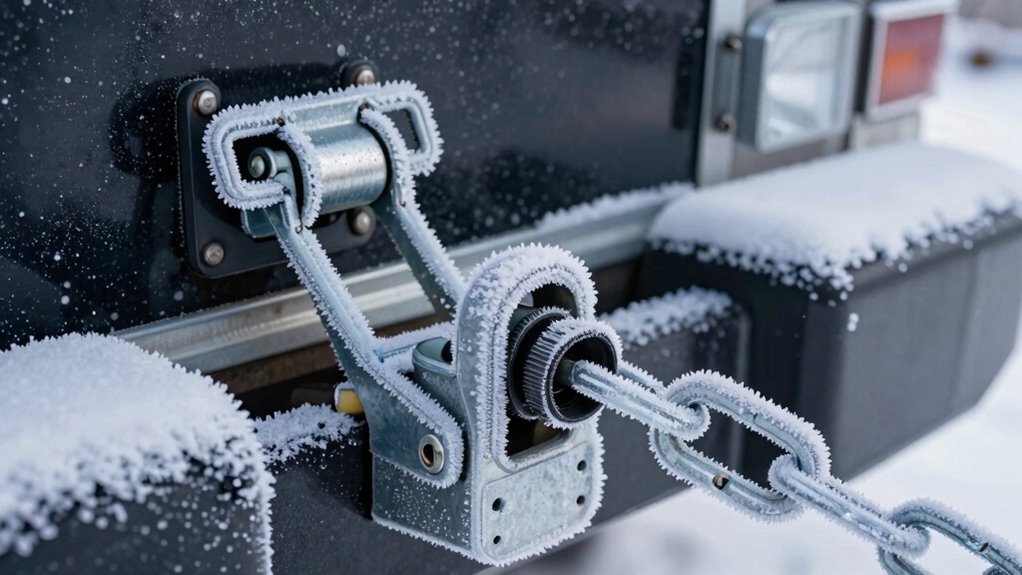
During winter, frozen connections often cause towing problems because low temperatures can cause the metal parts and cables to freeze together. This is a common winter hazard that can disrupt your vehicle maintenance routine and lead to delays or damage. Cold weather makes metal surfaces contract and moisture in the connections freeze, creating a stubborn bond that’s hard to break. If you neglect proper maintenance, these frozen links can strain your towing equipment or damage the hitch components. Understanding how winter affects your towing setup helps you prepare better. Regularly inspecting and lubricating your connections before winter can prevent freezing and ensure smooth operation. Applying appropriate lubricants can reduce moisture buildup and prevent corrosion that contributes to frozen connections. Additionally, using specialized winter lubricants designed for cold temperatures can provide extra protection against freezing. Staying proactive with vehicle maintenance, including checking for moisture accumulation, is essential to avoid frozen connections and the towing issues they cause in cold weather. Using preventive measures such as protective covers or heat wraps can also help keep connections free from ice buildup.

BTAS Dielectric Grease for Electrical Connectors Automotive Spark Plug Boot Battery Terminal Marine Dialectical Electronics Wiring Die Electric Contact Silicone Dialectric Grease 1 oz 1 Pcs
Secure Electrical Connections: Seal, lubricate and insulate to prevent various leaks or damage around any electrical connectors ensuring…
As an affiliate, we earn on qualifying purchases.
As an affiliate, we earn on qualifying purchases.
How to Inspect and Secure Your Hitch and Coupler for Cold Weather
Start by inspecting your hitch and coupler for rust or any signs of damage, as cold weather can worsen these issues. Next, lubricate moving parts to guarantee smooth operation and prevent freezing. Additionally, applying proper home maintenance techniques can help protect your equipment from cold weather damage. Regularly check lubrication points to ensure they are adequately greased for winter conditions. Remember that winterizing equipment includes protecting all vulnerable components from the cold. Keep in mind that portable oil radiators can be used to help maintain optimal temperatures during storage or operation in cold weather. Also, consider using protective covers to shield your equipment from snow and ice. Finally, double-check that all connections are secure before hitting the road.
Check for Rust and Damage
Before hitting the road in cold weather, it’s essential to inspect your hitch and coupler for rust and damage. Begin with a thorough rust inspection, checking for any corrosion that could weaken the metal. Look closely at all surfaces, especially around joints and welds, to spot signs of rust or pitting. Next, perform a damage assessment by examining the hitch and coupler for cracks, bends, or deformation. Ensure there are no missing or loose components that could compromise safety. If you find rust, remove it with a wire brush and apply a protective coating. Address any damage immediately by replacing compromised parts. Regular inspection and maintenance can prevent connection failures and keeps your towing setup secure during cold weather. Additionally, understanding brake system functionality can help ensure overall safety while towing in winter conditions. Being aware of connection strength and testing it before use can further enhance safety on the road. Incorporating corrosion prevention techniques can extend the lifespan of your towing components and improve reliability in winter conditions. Regularly applying protective coatings can also help guard against moisture and salt exposure that accelerate corrosion.
Lubricate Moving Parts
To guarantee your hitch and coupler operate smoothly in cold weather, it’s essential to lubricate all moving parts thoroughly. Cold temperatures can cause metal parts to freeze or stick, making towing risky. Start by inspecting grease fittings and clean them if necessary. Then, apply lubricants specifically designed for winter use to all moving components, such as the hitch ball, latch mechanisms, and locking pins. Proper lubrication reduces friction, prevents rust buildup, and ensures easy operation even in freezing conditions. Regular maintenance with the right products keeps your towing setup winter-ready. Additionally, using eco-friendly lubricants can help minimize environmental impact and promote sustainable practices. Choosing lubricants with appropriate testing accuracy ensures that your equipment performs reliably under cold conditions, preventing unexpected failures. To further improve performance, consider applying weather-resistant lubricants that are formulated to withstand extreme cold and moisture exposure. Incorporating lubricants with heat resistance properties can also help maintain lubrication effectiveness during prolonged use in low temperatures. For added protection, applying corrosion inhibitors can help safeguard metal parts from moisture-related damage during winter months.
Confirm Secure Connections
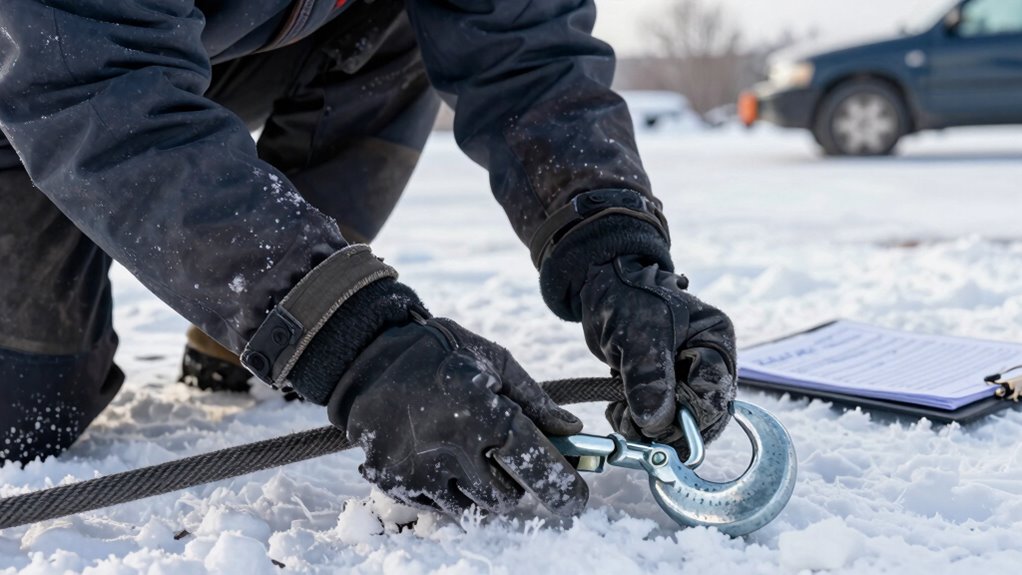
Have you double-checked that your hitch and coupler are securely connected? Ensuring a tight connection is essential, especially in cold weather where ice and snow can hide issues. Verify that the trailer weight is within your vehicle’s towing capacity to prevent strain or accidents. Inspect the hitch ball and coupler for any signs of rust, cracks, or wear, and make sure the latch is fully engaged and locked. Use safety pins or clips to secure the connection. Double-check that the coupler is properly seated on the hitch ball, and test for movement. Properly secured connections reduce the risk of detachment during winter driving, keeping your load safe and your trip trouble-free. Confirming these details is a simple but important step. Additionally, understanding the seasons optimal for towing can help you plan your trips during milder weather to avoid winter hazards. Regular towing equipment maintenance can also prevent unexpected issues in cold conditions.

Goodyear GY3006 Automotive Winter Safety Kit
As an affiliate, we earn on qualifying purchases.
As an affiliate, we earn on qualifying purchases.
Protect Electrical Connections From Moisture and Freezing

Moisture can easily get into your electrical connections and cause problems during cold weather. To prevent this, make sure you seal the connections with protective covers. Doing so keeps moisture out and reduces the risk of freezing and corrosion. Additionally, using quality protective covers designed for electrical connections can ensure a better seal and longer-lasting protection. Considering environmentally friendly options for these covers can also help reduce your ecological footprint.
Prevent Moisture Intrusion
When preparing your vehicle for winter, safeguarding electrical connections from moisture and freezing is essential to guarantee reliable operation. Moisture intrusion can cause corrosion, poor connections, or complete failure. To prevent this, use moisture barriers like dielectric grease or waterproof tape to seal vulnerable areas. Employ sealing techniques that create a tight barrier, stopping water from seeping into connectors. Regularly inspect connections for cracks or leaks, and replace damaged seals immediately. Keeping connections dry and protected ensures your towing setup stays functional despite harsh conditions.
- Apply dielectric grease to connectors before sealing
- Use waterproof tape or shrink tubing for added protection
- Regularly check and replace worn sealing materials
Use Protective Covers
Wondering how to keep electrical connections safe from winter’s harsh conditions? Using protective covers is one of the best weatherproofing techniques you can adopt. These covers shield your trailer’s electrical connections from moisture, snow, and ice, preventing corrosion and freezing. Make sure to choose covers that fit snugly and are rated for outdoor use. Before towing, inspect each connection and secure the protective covers tightly in place. This simple step helps prevent water intrusion that can cause electrical failures or damage. Regularly check and replace covers if they become cracked or worn. With these protective covers, you’ll keep your electrical connections dry and functional, ensuring safe and reliable towing despite winter’s challenging weather.
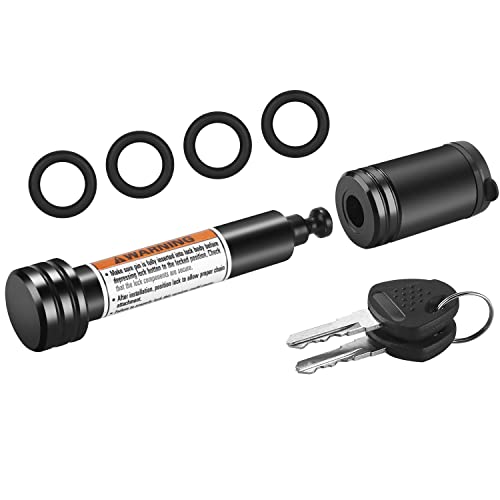
METOWARE Trailer Hitch Lock – 5/8" Dia Locking Hitch Pin, Anti-Theft Trailer Receiver Lock, Fits 2" Receiver Tubes, Class III & IV Hitch Receivers, Black (1 Pack)
[Higher Security and Theft Deterrence] The trailer receiver lock is made with high-strength steel. So that the trailer…
As an affiliate, we earn on qualifying purchases.
As an affiliate, we earn on qualifying purchases.
How to Apply Anti-Freeze and Lubricants to Prevent Freezing
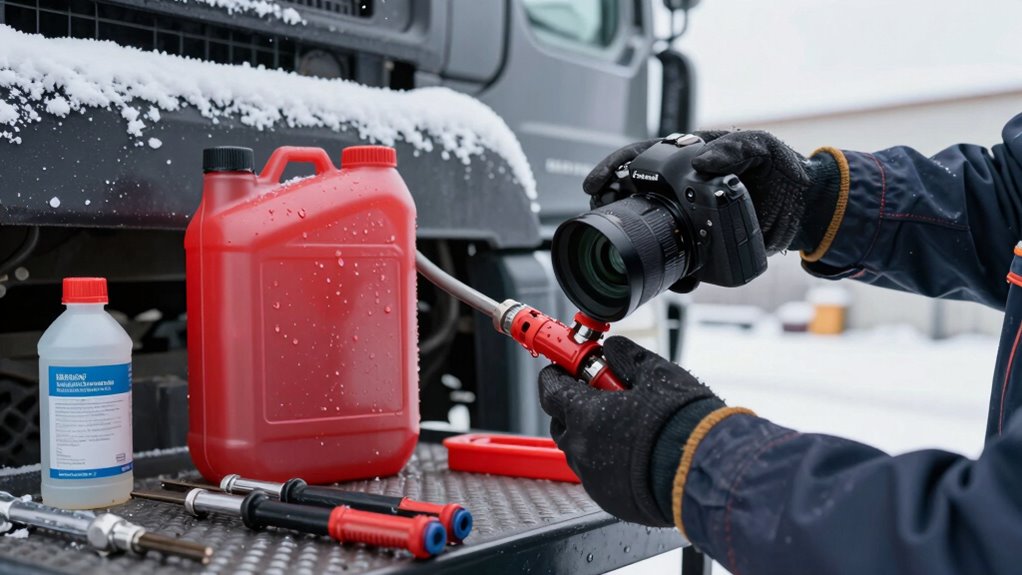
Applying anti-freeze and lubricants correctly is essential to prevent your vehicle’s fluids and parts from freezing during winter. Proper anti freeze application ensures your radiator and windshield washer fluid won’t freeze, while lubricant application keeps moving parts protected from icy conditions. To do this, start by checking fluid levels and topping off with winter-grade fluids. Use a spray lubricant on door locks, hinges, and other moving parts prone to freezing. Make sure to apply anti-freeze to the cooling system according to manufacturer instructions.
- Test and top off all fluids with winter-grade anti freeze
- Apply lubricant to door locks, hinges, and latches
- Ensure proper anti freeze application in the cooling system
Check and Maintain Your Trailer Brakes and Bearings for Winter
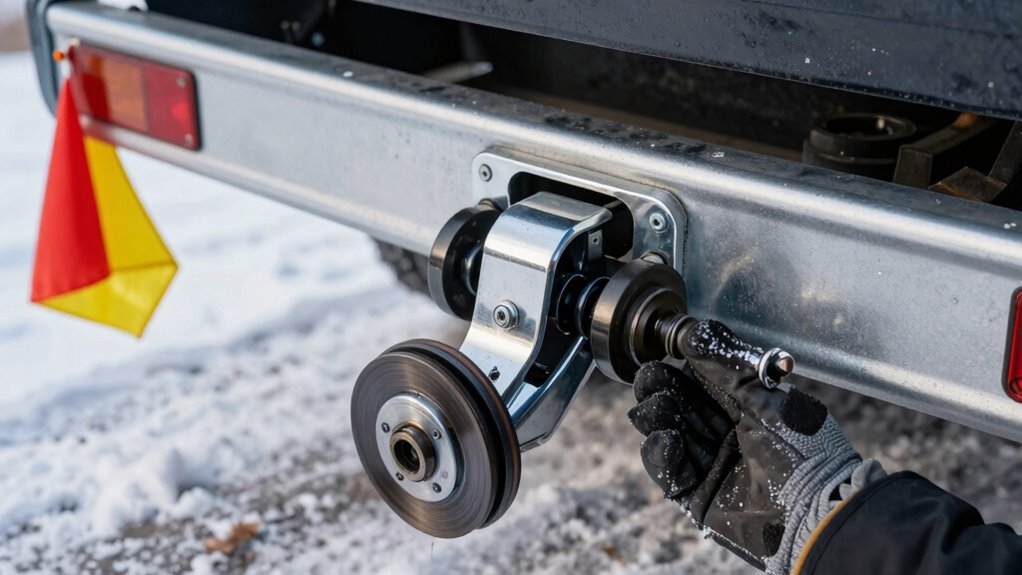
Before hitting the road this winter, you need to make certain your trailer brakes are properly adjusted for reliable stopping. Check your bearings for wear and add lubrication to prevent freezing and seizing. Keeping these components in top shape helps keep your trailer safe and ready for winter conditions.
Proper Brake Adjustment Techniques
Proper brake adjustment is essential to guarantee your trailer brakes function reliably during winter conditions. Properly adjusted brakes ensure stopping power and reduce wear, especially when cold temperatures can affect brake performance. Start by inspecting the brake shoes and lining, ensuring they are evenly spaced and not worn down. Adjust the brake slack so the parking brake engages smoothly without dragging. Test your brake adjustment by slowly backing up and applying the brakes; they should lock up just before the trailer starts to skid. Remember, a well-maintained parking brake is critical for winter safety. Regularly check the brake adjustment before each trip to prevent icy, frozen connections and ensure your trailer responds reliably when needed.
Lubrication and Bearing Checks
Since cold temperatures can cause lubrication to thicken and bearings to seize, it’s crucial to check and maintain your trailer’s lubrication and bearings regularly. Start with a thorough bearing inspection to spot rust, corrosion, or wear. Applying fresh grease ensures smooth operation and helps prevent freezing. Use the right grease for your trailer’s bearings, and apply it evenly during lubrication. Regular checks help catch issues early, avoiding costly repairs or breakdowns on icy roads. Keep a simple maintenance schedule to stay ahead of winter conditions and guarantee your trailer stays ready.
| Step | Action | Notes |
|---|---|---|
| Bearing Inspection | Check for rust or damage | Replace if needed |
| Grease Application | Apply fresh grease evenly | Use appropriate trailer grease |
| Check Seals | Ensure seals are intact and clean | Prevent moisture entry |
| Spin Bearings | Make bearings spin smoothly | No grinding or resistance |
| Record Maintenance | Keep a maintenance log | Track inspection dates |
Prepare Your Tires and Suspension for Cold Weather Towing
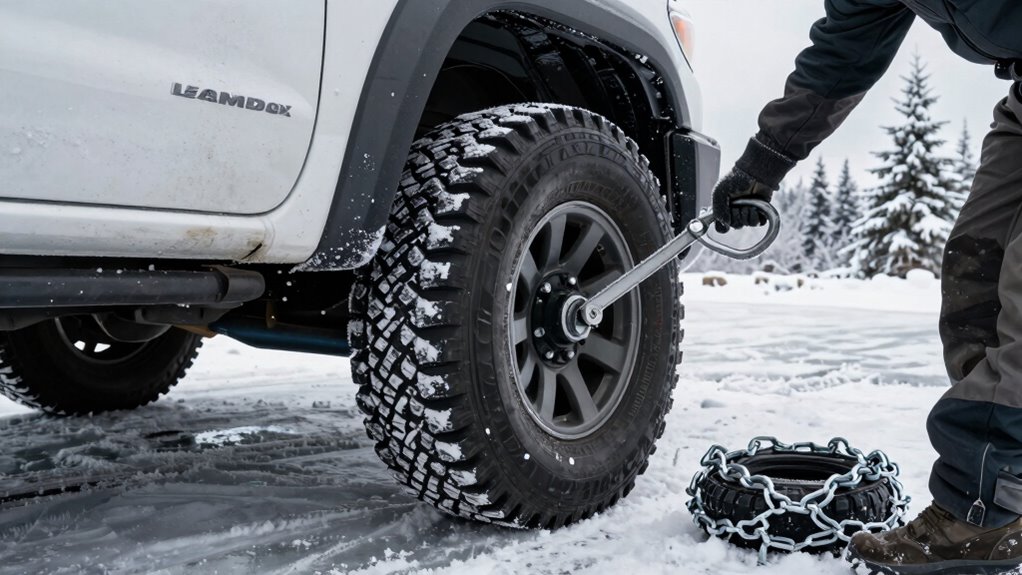
Cold weather can considerably impact your tires and suspension, so it’s essential to prepare them for winter towing. Low temperatures cause tire pressure to drop, which can lead to reduced traction and increased wear. Ensuring proper tire pressure helps maintain ideal grip and prevents blowouts. Additionally, cold can affect suspension stability, making your vehicle less responsive and more prone to damage. To stay safe, check and adjust tire pressure regularly, especially before long drives. Inspect suspension components for cracks or leaks, and consider adding extra support if needed.
- Check and inflate tires to the recommended pressure
- Inspect suspension parts for wear or damage
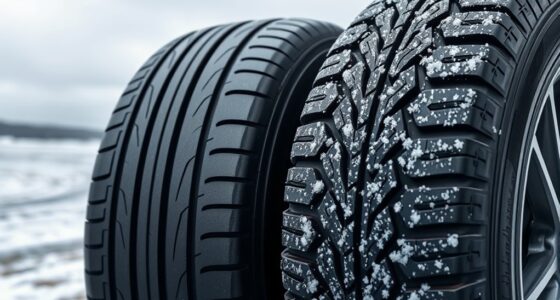
- Consider installing winter tires for better traction
Winterize Your Towing Vehicle’s Fluids and Battery
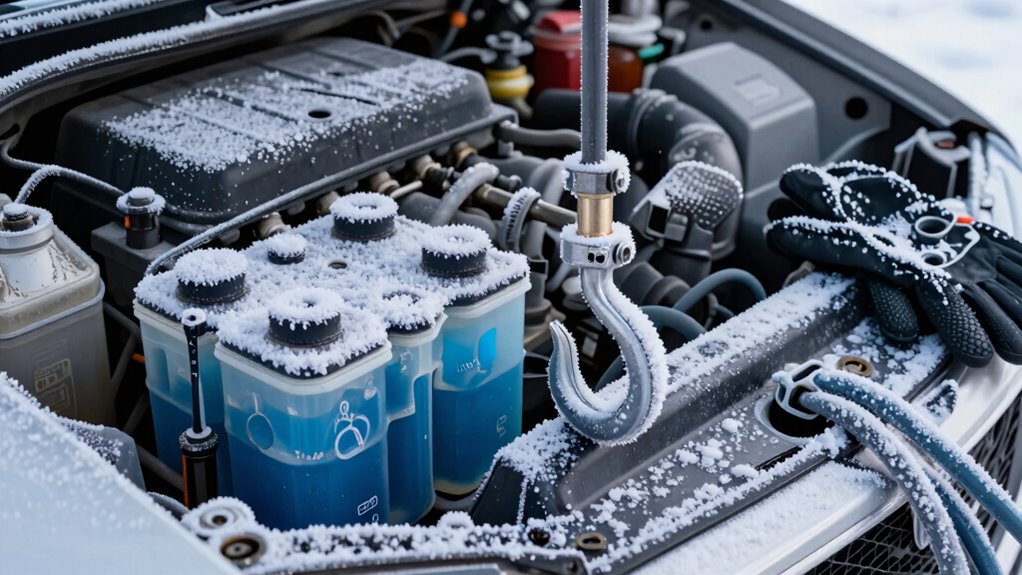
To guarantee your towing vehicle performs reliably in winter conditions, you need to winterize its fluids and battery. Start with fluid maintenance by checking and replacing engine oil, transmission fluid, and coolant with winter-grade versions that resist freezing. Make sure windshield washer fluid is rated for low temperatures to keep your visibility clear. Battery care is equally important; inspect the battery for corrosion, clean terminals, and ensure it’s properly charged. Cold weather strains batteries, so consider a battery tender or replacement if it’s weak. Regularly checking and maintaining these fluids and the battery reduces the risk of breakdowns and ensures your vehicle stays reliable during winter towing. Proper fluid maintenance and battery care are essential for safe, trouble-free operation in freezing conditions.
Tips for Safe Towing on Icy and Snowy Roads
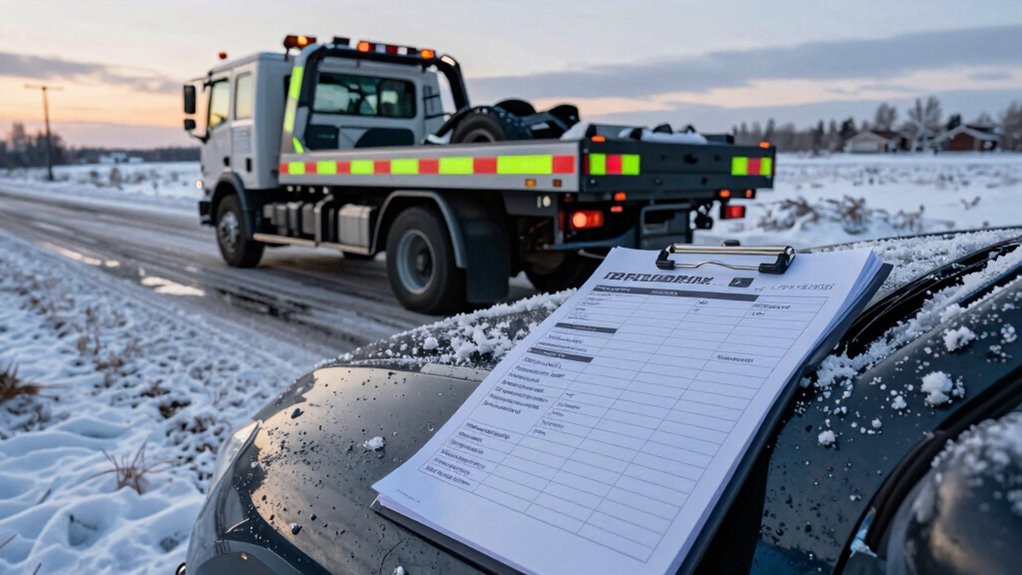
Driving on icy and snowy roads requires extra caution to guarantee your safety and that of your load. Cold weather can reduce tire traction and increase stopping distances, so stay alert and drive slowly. Keep a safe distance from vehicles ahead to allow for sudden stops. Use chains if necessary and ensure your tires are properly inflated for better grip. Always test your brakes and steering before starting your trip. To stay safe, avoid sudden maneuvers and accelerate or brake gently. Prepare your vehicle with safety precautions like an emergency kit, warm clothing, and a fully charged phone. Remember, icy conditions demand patience and attentiveness to prevent accidents and ensure a smooth, safe tow.
What to Do If Your Electrical or Hitch Connection Is Frozen
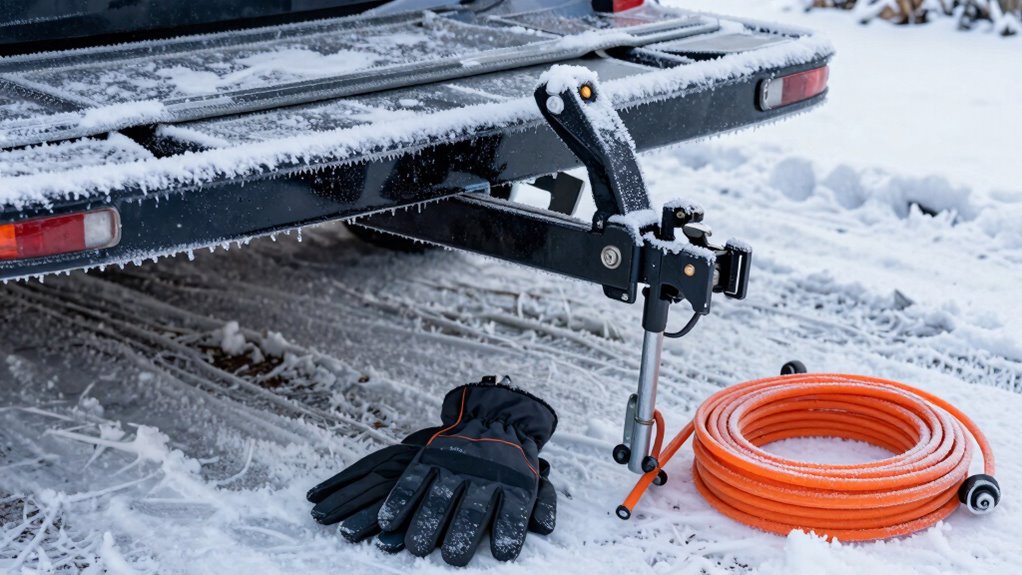
If your electrical or hitch connection is frozen, it can prevent your trailer from attaching securely or cause electrical issues during your trip. To fix this, start by gently warming the frozen hitch connection with a hairdryer or warm cloth—never use direct heat sources like a torch. For frozen electrical, spray a bit of de-icing solution or apply warm water, then dry thoroughly to prevent re-freezing. Avoid forcing parts apart, which could cause damage. Use this quick reference:
| Problem | Solution |
|---|---|
| Frozen hitch connection | Warm with a hairdryer or warm cloth before detaching |
| Frozen electrical | Apply de-icing spray or warm water, then dry thoroughly |
| Re-freezing risk | Keep connections covered or insulated to prevent re-freezing |
Final Winter Towing Checklist: Confirm Your Setup Is Ready
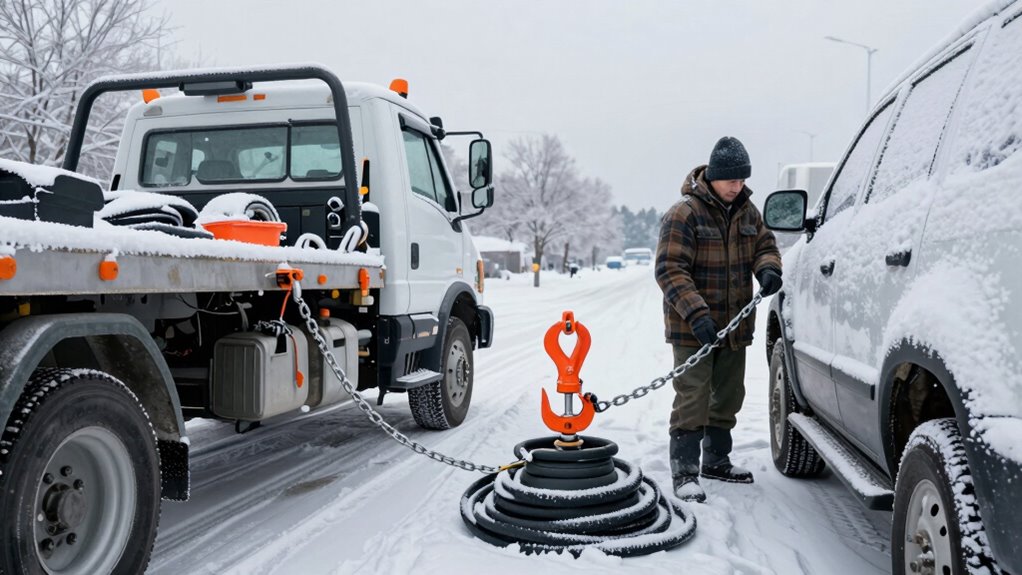
Before hitting the road, it’s essential to double-check that your towing setup is fully prepared for winter conditions. Ensuring your vehicle maintenance is up-to-date prevents unexpected breakdowns, while confirming your emergency preparedness keeps you ready for any issues.
- Verify all hitch connections and safety chains are secure and free of ice or corrosion.
- Check tire pressure and fluid levels, including antifreeze, to guarantee peak vehicle performance.
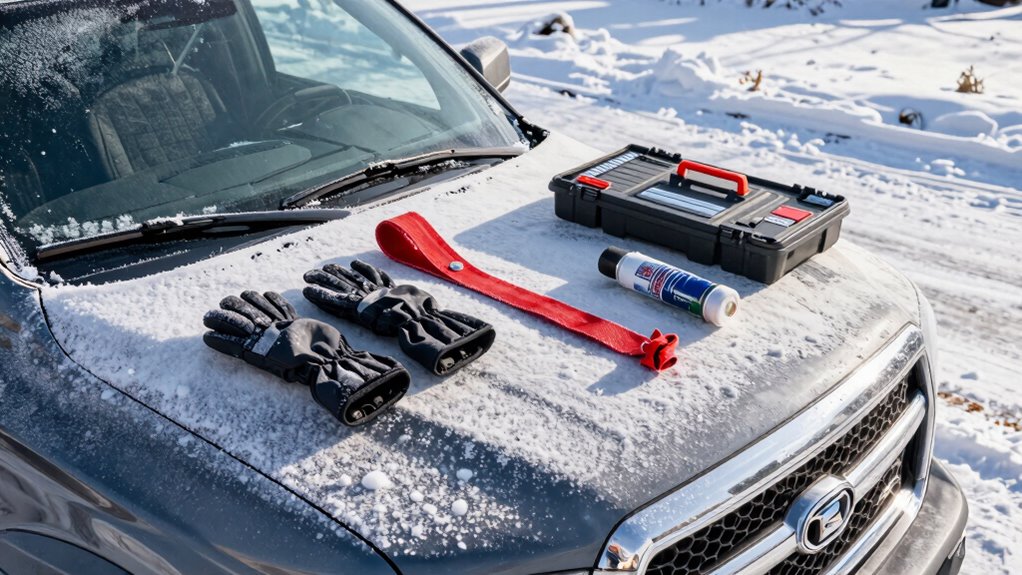
- Pack an emergency kit with essentials like blankets, a flashlight, and extra supplies in case of breakdowns or delays.
Taking these steps helps prevent frozen connections and keeps your setup ready for winter. A thorough final check reduces risks, making winter towing safer and smoother.
Frequently Asked Questions
How Can I Prevent Ice Buildup Around My Trailer’s Hitch Area?
To prevent ice buildup around your trailer’s hitch, apply anti-freeze solutions to the area before winter. Use heat wrap applications around the hitch and coupler to keep moisture from freezing. Regularly inspect and reapply these protections, especially before towing in freezing conditions. These steps create a barrier against ice, ensuring a secure connection and safe towing during winter weather.
What Are the Best Storage Practices for Winterizing Towing Equipment?
Think of winter storage as giving your equipment a cozy winter coat. Store your towing gear indoors or in a dry, sheltered area to safeguard it from harsh elements. Clean and inspect everything first, then apply a protective coat of lubricant to moving parts. Keep the equipment elevated to prevent moisture contact and avoid stacking heavy items on top. Proper winter storage ensures your towing equipment stays in top shape and ready when spring arrives.
How Often Should I Re-Inspect Trailer Connections During Winter Trips?
You should re-inspect your trailer connections at least every 100 miles or each time you stop during winter trips. Regular trailer maintenance is essential to guarantee connection safety, especially in cold conditions where ice and snow can cause issues. Check for frozen or corroded parts, secure hitch and wiring connections, and clear any debris. Staying vigilant helps prevent connection failures, keeping your tow safe and reliable throughout your winter journey.
What Signs Indicate My Trailer’s Electrical System Is Compromised in Cold Weather?
If your trailer’s electrical system is compromised in cold weather, watch for signs like battery corrosion, which causes poor connections and weak power flow. You might also notice brake malfunctions, such as delayed stopping or inconsistent braking. Keep an eye on these issues, especially during winter trips, and inspect connections regularly. Address corrosion promptly and confirm your brakes respond smoothly to avoid dangerous situations on the road.
Are There Specific Lubricants Recommended for Winter Towing Conditions?
For winter towing, you should use winter grease or a cold weather lubricant on your trailer’s moving parts. These lubricants are specially formulated to perform well in low temperatures, preventing stiffness and corrosion. Apply winter grease to the hitch, joints, and any metal-to-metal contact points. Regularly check and reapply as needed, ensuring smooth operation and avoiding frozen connections during cold weather towing.
Conclusion
By following this winter towing checklist, you’ll keep your connections as secure as a fortress against the cold. Think of it as your safety net on icy roads, giving you peace of mind and confidence. With careful inspection and prep, you’ll prevent frozen connections and ensure smooth towing all winter long. Stay vigilant, stay prepared, and enjoy the winter adventure ahead—like a seasoned captain steering through icy waters with ease.