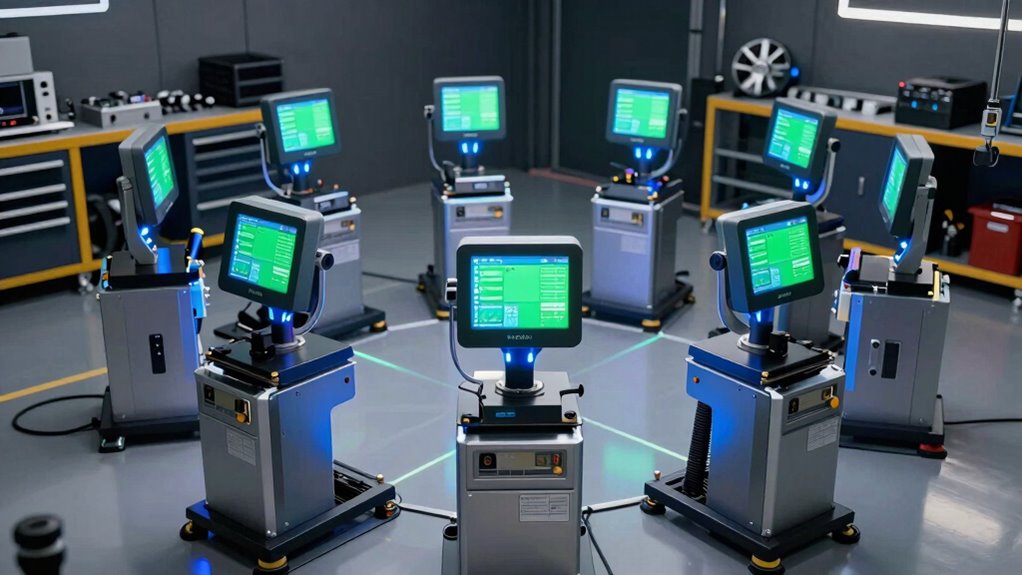

Choosing a wheel balancer equipped with laser guidance and an LED display can dramatically improve accuracy and efficiency in tire balancing. For professional auto shops and garages, models like the Premium Automatic Wheel Balancer, 10-28″ stand out with their wide rim range and heavy-duty features, but come at a higher price and complexity. The Atlas WB49-2 offers a user-friendly interface with automatic 2D entry and supports large wheels, though it’s pricier for small shops. Meanwhile, the Premium Automatic Wheel Balancer with 24-inch LCD combines a large display and advanced features ideal for busy tire shops. In this guide, I compare these options’ core strengths and tradeoffs, helping you find the best match for your workflow and budget.

Get business pricing on garage and car supplies
- Business-only prices and quantity discounts
- Tax-exempt purchasing
- Multiple users, one account, clear invoices
Complete the kit


Key Takeaways
- Professional-grade models with automatic measurement and laser guidance improve workflow speed and accuracy.
- Larger LCD displays and advanced features tend to come with higher price tags and complexity.
- Heavy-duty spindles and construction ensure compatibility with wider and larger rims, suitable for commercial use.
- Simpler, manual input models may suit small shops or hobbyists with limited budgets.
- High-end features like self-calibration and fault diagnosis reduce maintenance time but increase initial investment.


| wheel balancer with laser and led display | Motor Power | Voltage | Features | Rim Range |
|---|---|---|---|---|
| Premium Automatic Wheel Balanc | 0.55KW | 110V | Auto A/D measurement, laser guide, LED light, electronic brake, smart modes | 10-28 inches |
| Premium Automatic Wheel Balanc | 0.25KW | 110V | Auto A/D measurement, laser guide, LED light, electronic brake, smart modes | — |
| Premium Automatic Wheel Balanc | 0.25KW | 110V | — | 10-26 inches |
| Wheel Balancer with Laser Indi | 0.25KW | 110V | Laser indicator, LED work light, self-calibration, fault diagnosis, modes for different wheel types | 10-24 inches |
| Atlas WB49-2 Wheel Balancer | — | — | Automatic 2D entry, LED display, split-weight, self-diagnosing | — |
More Details on Our Top Picks
Premium Automatic Wheel Balancer, 10-28″ Rim, Auto A/D Measurement, Laser Guide & LED Light, Electronic Brake, 40mm Spindle, 0.55KW Pure Copper Motor, 110V for Professional Use
This model stands out for its fully automatic rim measurement, making it ideal for busy auto shops handling diverse vehicle types. Its laser guidance and bright LED light boost precision, especially in low-light conditions. The heavy-duty spindle supports rims up to 28 inches wide, and the intelligent modes adapt to different rim materials, enhancing accuracy. Compared with smaller models, its larger motor and robust construction make it more suitable for large-scale operations, but the complexity and size can be overwhelming for beginners or small workshops. It’s a high-cost investment that offers speed and precision for high-volume environments.
Pros:- Fully automatic rim measurement accelerates workflow
- Laser guide and LED light improve accuracy in any lighting
- Heavy-duty spindle supports wide rims up to 28 inches
- Smart modes adapt to various rim types
Cons:- Complex setup may require training
- High price point limits accessibility for small shops
- Large and heavy, needing ample space
Best for: Large auto shops and professional tire centers needing high-speed, reliable balancing
Not ideal for: Hobbyists, small garages, or users seeking a simple, budget-friendly option
- Rim Range:10-28 inches
- Spindle Diameter:40mm
- Motor Power:0.55KW
- Voltage:110V
- Features:Auto A/D measurement, laser guide, LED light, electronic brake, smart modes
Our verdict“A top-tier choice for professional environments demanding speed, precision, and durability.”
Premium Automatic Wheel Balancer, 10-26″ Rim, Auto A/D Measurement, Laser Guide & LED Light, Electronic Brake, 40mm Spindle, 0.25KW Copper Motor, 110V
This model offers a balanced mix of automation and affordability, with fully automatic rim measurement, laser guidance, and LED illumination. Its rim size range (10-26 inches) covers most standard vehicles, and the heavy-duty spindle ensures stability across different rim types. Compared to larger, more complex units, its slightly lower motor power (0.25KW) may result in longer measurement times but contributes to a more manageable form factor. It’s best suited for busy garages that want efficiency without the complexity of higher-end models. The price is not specified, but it generally offers good value for the features offered.
Pros:- Automatic measurement speeds up balancing process
- Laser guidance and LED lighting enhance accuracy
- Supports a wide range of rims with a sturdy spindle
- Smart modes for different rim materials
Cons:- Designed for professional use, may be complex initially
- Requires 110V power supply
- Price not clear, potentially high for smaller shops
Best for: Medium-sized garages and auto shops with a focus on efficiency and versatility
Not ideal for: Small workshops or hobbyists seeking minimal automation
- Rim Size Range:10-26 inches
- Spindle Diameter:40mm
- Motor Power:0.25KW
- Voltage:110V
- Features:Auto A/D measurement, laser guide, LED light, electronic brake, smart modes
Our verdict“A reliable, efficient balancer suited for busy auto garages that need versatility and automation in a compact form.”
Premium Automatic Wheel Balancer with 24-inch Color LCD, Auto A/D Measurement, Laser Guide & Electronic Brake for Professional Tire Shop
This wheel balancer combines a large 24-inch color LCD with fully automatic measurement and laser guidance, making it excellent for busy tire shops. Its vibrant display offers clear visualization of balancing data, reducing the chance of errors. The unit supports rim sizes from 10-26 inches and features advanced sensors, ultrasonic, and incline technology for accurate readings. Its robust steel cabinet construction promises durability under heavy daily use. Compared to smaller display units, this model emphasizes ease of operation and clarity, but the high price and complex features may require training for new users. It’s a solid choice for high-volume shops prioritizing speed and accuracy.
Pros:- Large, vibrant LCD for easy data interpretation
- Automatic measurement reduces manual input
- Laser guidance and electromagnetic brake for precision
- Robust construction supports demanding workloads
Cons:- High price may be a barrier
- Complex features might need operator training
- Size and weight require ample space
Best for: High-volume tire shops and professional centers seeking advanced visualization
Not ideal for: Small shops or hobbyists with limited budgets
- Display:24-inch color LCD
- Rim Range:10-26 inches
- Motor Power:0.25KW
- Voltage:110V
- Measurement Tech:Auto A/D, optical, ultrasonic, incline sensors
Our verdict“A premium, user-friendly choice for busy tire shops demanding large displays and advanced features for higher throughput.”
Wheel Balancer with Laser Indicator & LED Work Light, 10-24″ Rim, Manual Input, Dynamic/Static/ALU Modes, 0.25KW Pure Copper Motor, 110V for Professional Tire Shop & Garage
This unit is designed for professionals who prefer manual input but still want laser-guided accuracy. Its laser indicator and bright LED work light make it suitable for various wheel types, including aluminum and motorcycles. The durable steel cabinet and pure copper motor ensure long-term reliability, while features like self-calibration and fault diagnosis streamline maintenance. The rim size range (10-24 inches) covers most common vehicles, but the manual input and mode selection may slow workflow compared to fully automatic models. It’s well-suited for garages that value flexibility and precision over automation.
Pros:- Laser guidance delivers precise weight placement
- Bright LED work light enhances visibility
- Supports various wheel types with multiple modes
- Durable construction with a reliable motor
Cons:- Requires professional setup and calibration
- Manual input may slow the process
- Higher cost for advanced features
Best for: Experienced technicians requiring manual control and versatile modes
Not ideal for: Beginners or shops prioritizing fully automated solutions
- Rim Range:10-24 inches
- Motor Power:0.25KW
- Voltage:110V
- Features:Laser indicator, LED work light, self-calibration, fault diagnosis, modes for different wheel types
Our verdict“A solid choice for skilled technicians needing manual control with laser-guided accuracy and versatility.”
Atlas WB49-2 Wheel Balancer, Automatic 2D Entry, LED Display, Split-Weight, Self-Diagnosing, Handles 32-Inch Wheels, 150 lbs., Static/Dynamic
The Atlas WB49-2 offers a highly automated experience with its 2D data entry and split-weight function, making it suitable for large wheels up to 32 inches. Its LED display facilitates quick interpretation of balancing data, while the self-diagnosing system minimizes downtime. This model is especially useful for shops handling oversized wheels and demanding workloads, with features that support continuous batching. Compared to smaller, manual units, its automation and capacity come with a higher price and complexity, but they deliver unmatched efficiency for large-scale operations.
Pros:- Automatic 2D data entry speeds setup
- Supports up to 32-inch wheels
- LED display simplifies data reading
- Self-diagnosing reduces maintenance time
Cons:- Price may be prohibitive for small shops
- Complex features require operator training
- Size and weight demand ample space
Best for: Large shops and tire centers with high-volume, large wheel requirements
Not ideal for: Small workshops or hobbyists seeking simple, manual solutions
- Wheel Size Capacity:32 inches
- Weight Capacity:150 lbs.
- Features:Automatic 2D entry, LED display, split-weight, self-diagnosing
Our verdict“A highly capable, automation-focused balancer ideal for large-scale shops managing oversized wheels efficiently.”

How We Picked
Our selection process focused on professional-grade wheel balancers that feature laser guidance and LED displays, prioritizing accuracy, ease of use, and durability. We evaluated models based on rim size range, motor power, display quality, automation features, and build quality. Cost and user-friendliness were also key factors, ensuring options cater to both busy shops and more budget-conscious users. Tradeoffs like price, complexity, and compatibility were considered to recommend products that balance performance and practicality.
| wheel balancer with laser and led display | Features |
|---|---|
| Premium Automatic Wheel Balanc | Auto A/D measurement, laser guide, LED light, electronic brake, smart modes |
| Premium Automatic Wheel Balanc | Auto A/D measurement, laser guide, LED light, electronic brake, smart modes |
| Premium Automatic Wheel Balanc | — |
| Wheel Balancer with Laser Indi | Laser indicator, LED work light, self-calibration, fault diagnosis, modes for different wheel types |
| Atlas WB49-2 Wheel Balancer | Automatic 2D entry, LED display, split-weight, self-diagnosing |
Factors to Consider When Choosing Wheel Balancer With Laser And Led Display
When selecting a wheel balancer with laser and LED display, consider your shop’s size, wheel range, automation needs, and budget. Full automation and larger displays benefit busy, high-volume centers, while manual or semi-automatic models suit smaller operations or those new to balancing. Durability and ease of maintenance also matter, especially in demanding environments. The right choice balances precision, speed, and cost-effectiveness to match your specific workflow.
Understanding Key Features
Laser guidance enhances accuracy by providing a precise visual indicator for weight placement, reducing guesswork and rework. LED displays facilitate quick data interpretation, especially in busy or poorly lit environments. Fully automatic measurement speeds up workflow but often comes at a higher price and complexity. Manual input models might require more time but offer flexibility and simplicity for smaller shops or technicians comfortable with traditional methods.
Matching Features to Your Needs
If your shop handles a wide variety of rims and large wheels daily, investing in a high-capacity, fully automatic model like the Premium Automatic Wheel Balancer, 10-28″ is advisable. For shops focusing on efficiency with mid-sized rims, models like the Atlas WB49-2 provide a good balance of automation and capacity. Hobbyists or small garages might prefer simpler, manual input models with laser guidance for precision without the hefty price tag.
Considering Price and Complexity
High-end models with advanced features and large displays tend to come with higher costs and require some training to operate effectively. Conversely, more straightforward models might lack automation but are easier to use and maintain, making them suitable for smaller or less busy environments. Always weigh the benefits of automation against your shop’s operational scale and technician expertise.
Frequently Asked Questions
What is the main benefit of laser guidance in a wheel balancer?
Laser guidance provides a visual indicator that helps technicians place weights more precisely, reducing errors and rework. It enhances accuracy, especially in low-light conditions or when working with complex wheel designs, ultimately improving balancing quality and speed.
Are LED displays necessary for effective wheel balancing?
While not strictly necessary, LED displays significantly improve visibility and data clarity, especially in busy or poorly lit environments. They allow technicians to quickly interpret balancing results, speeding up the process and reducing mistakes.
Should I prioritize fully automatic models or manual input units?
Fully automatic models are ideal for high-volume shops that need speed and efficiency, as they reduce manual input and human error. Manual input units may appeal more to experienced technicians who prefer direct control and lower initial costs, especially in smaller shops.
How important is the rim size range in choosing a wheel balancer?
The rim size range determines the types of wheels the balancer can handle. Larger ranges offer greater versatility for different vehicle types, from small cars to trucks. Selecting a model that covers your typical wheel sizes ensures compatibility and reduces the need for additional equipment.
What maintenance considerations come with laser and LED-equipped wheel balancers?
Most modern models with laser and LED features are designed for durability, but they require regular calibration and cleaning to maintain accuracy. Self-diagnosing systems can alert you to issues early, minimizing downtime, but initial setup and occasional calibration are necessary to keep the system precise.
Conclusion
For high-volume professional shops handling diverse and large wheels, models like the Premium Automatic Wheel Balancer, 10-28″ provide unmatched automation and capacity. Smaller garages or those just starting out may find the Atlas WB49-2 or the 24-inch LCD balancer more suitable, combining ease of use with advanced features. Hobbyists and part-time mechanics should consider simpler, manual input options with laser guidance for precision without overextending their budget. Ultimately, your shop’s size, wheel range, and workflow speed will guide the best choice.
Halloween Picks
halloween
As an affiliate, we earn on qualifying purchases.