To remove and replace a fuel filter, first locate it along the fuel line or near the fuel tank, following your vehicle’s manual. Work in a well-ventilated area, disconnect the negative battery terminal, and relieve fuel pressure. Carefully disconnect the fuel lines, remove the old filter, and install the new one securely. After reconnecting everything, turn the ignition to pressurize the system and check for leaks—continue to learn the detailed steps to do it safely and effectively.
Key Takeaways
- Locate the fuel filter using the vehicle’s manual, typically along the fuel line or near the tank.
- Disconnect the negative battery terminal and relieve fuel system pressure before removal.
- Carefully disconnect fuel lines, noting their positions, and remove the old filter from its mounting.
- Install the new filter securely, ensuring all connections are tight and free of dirt or corrosion.
- Repressurize the system, check for leaks, and start the engine to verify proper operation.
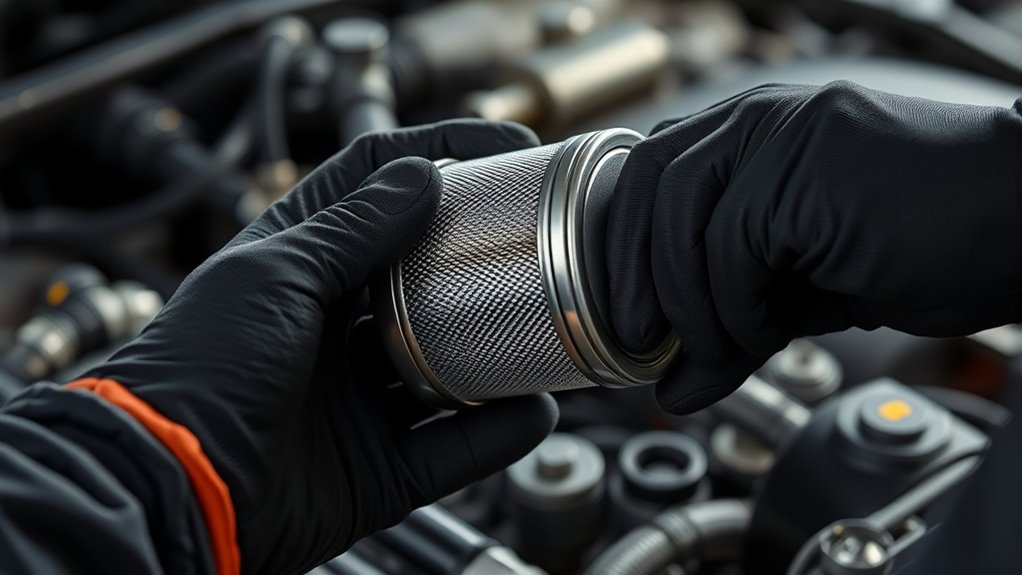
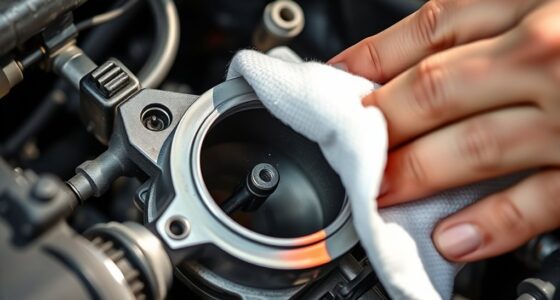
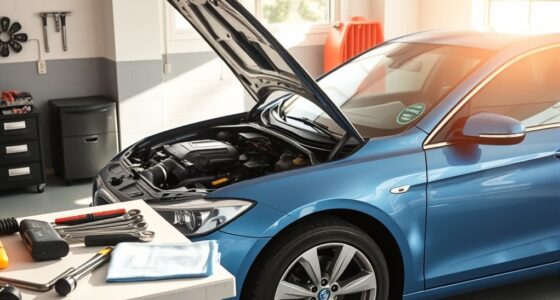
Replacing a fuel filter is a straightforward maintenance task that can improve your vehicle’s performance and prevent engine problems. The first step is locating the fuel filter, which varies depending on your vehicle’s make and model. Typically, the fuel filter is found either along the fuel line underneath the vehicle, near the fuel tank, or mounted on the engine itself. Checking your vehicle’s owner’s manual can help you identify the exact location, saving you time and effort. Once you’ve pinpointed the fuel filter location, it’s essential to prioritize safety precautions. Fuel is highly flammable, so working in a well-ventilated area away from open flames or sparks is vital. Wearing gloves and safety glasses protects you from fuel spills and fumes, which can irritate your skin and eyes. Before starting, disconnect the negative terminal of your battery to prevent any electrical sparks. Additionally, relieve the fuel system pressure by removing the fuel pump fuse or relay, then starting the engine and letting it run until it stalls. This reduces fuel pressure, decreasing the risk of fuel spray when removing the filter.
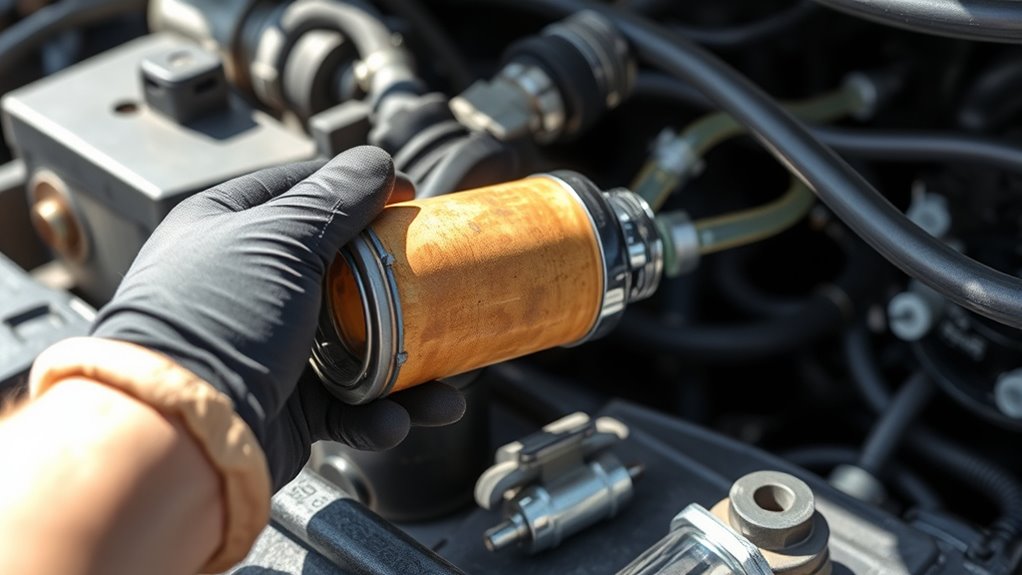
When you’re ready to remove the old fuel filter, confirm the vehicle is securely supported on jack stands if necessary, and keep a container or rags handy to catch any residual fuel. Carefully disconnect the fuel lines from the filter, making sure to note their positions for correct reinstallation. Some fuel lines might require a special tool or quick-release clips; be gentle to avoid damaging fittings. Once the lines are disconnected, remove the fuel filter from its mounting bracket or housing. Inspect the old filter for debris and ensure the new filter matches the specifications of your vehicle. Before installing the new filter, double-check that all connections are clean and free of dirt or corrosion. Attach the new filter securely, reconnect the fuel lines, and ensure all fittings are tight to prevent leaks.
It’s also helpful to understand the importance of digital literacy in modern vehicle maintenance, as many troubleshooting steps and resources are now available online. After installation, double-check all connections and reattach the fuel pump fuse or relay. Turn the ignition to the “On” position for a few seconds to allow the fuel pump to pressurize the system, then check for leaks around the filter. Start your engine and observe its operation; if it runs smoothly without leaks or hesitation, you’ve successfully replaced your fuel filter. Regularly replacing your fuel filter not only maintains ideal fuel flow but also extends the life of your engine. Always follow safety precautions during this process, and if you’re unsure about any step, consulting a professional mechanic is a wise choice.

RARAYC 6.7L Cummins Fuel Filter Kit | Replacement for 2013-2018 Dodge Ram 2500 3500 4500 5500 6.7L | Replaces# 68197867AA 68157291AA 5083285AA Air Filter 53034051AB Cabin Air Filter 68406048AA
Crafted from high-grade filter medium that provide maximum filtration and minimal flow restriction. Deliver increased flow and efficiency…
As an affiliate, we earn on qualifying purchases.
As an affiliate, we earn on qualifying purchases.
Frequently Asked Questions
Can I Replace a Fuel Filter Myself Without Professional Help?
Yes, you can replace a fuel filter yourself if you’re comfortable with DIY maintenance and understand your vehicle’s fuel system. Just guarantee you have the right tools, safety gear, and follow proper procedures to avoid spills or damage. Turn off the engine, relieve pressure in the fuel system, and work carefully. If you’re unsure, consulting a repair manual or professional can help ensure safe and effective replacement.
How Often Should I Replace My Vehicle’s Fuel Filter?
You should replace your fuel filter every 20,000 to 30,000 miles, or as recommended by your vehicle’s manufacturer. Doing this helps maintain fuel efficiency and guarantees peak engine performance. Regular replacement prevents clogs that can cause poor acceleration and increased emissions. Keep an eye on your owner’s manual for specific intervals, and consider replacing it sooner if you notice symptoms like engine misfires or difficulty starting.
What Tools Are Necessary for Removing and Replacing a Fuel Filter?
Think of your tools as the keys to revealing your car’s hidden energy. You’ll need a wrench to disconnect the fuel line, safety gloves to protect your skin from fuel spills, and possibly a screwdriver. These tools help you safely detach the old filter and install the new one. With these in hand, you’re ready to clear the path for your vehicle’s fuel flow, ensuring smooth performance and safety.
Are There Risks of Damaging the Fuel System During Replacement?
Yes, there are risks of damaging the fuel system during replacement. If you don’t disconnect the fuel lines properly or use incorrect tools, you could cause fuel leaks or damage to the fuel pump or injectors. Always handle components gently, follow manufacturer instructions, and wear safety gear. Taking these precautions minimizes replacement risks and protects your fuel system from damage, ensuring a safe and effective process.
How Can I Tell if My Fuel Filter Needs Replacing?
Did you know that a clogged fuel filter can decrease your vehicle’s fuel efficiency by up to 15%? You’ll notice engine misfires, difficulty starting, or sluggish acceleration, signaling it’s time to replace the filter. Regular checks help maintain peak engine performance. If your vehicle’s running rough or your fuel consumption has increased, it’s a clear sign that your fuel filter needs replacing to keep things running smoothly.

6" & 8" Collar/Vent Cap Fuel Filter Wrench Set for Davco Fuel Water Separator 380134 382 482 483 782, Removal Tools Compatible with Detroit Diesel Truck DD13 DD15 DD16 & Navistar Engines
【6 Inch Fuel Filter Wrench】Diesel fuel filter wrench with inner diameter of 6 inch, for Davco 380134 382…
As an affiliate, we earn on qualifying purchases.
As an affiliate, we earn on qualifying purchases.
Conclusion
Replacing your fuel filter isn’t just straightforward; it guarantees your engine runs smoothly and efficiently. Some might worry about the complexity, but with the right tools and patience, you can do it yourself. Remember, neglecting this step can lead to costly repairs down the line. Taking a little time now saves you money and hassle later. So, why not tackle it yourself? You’ll gain confidence and keep your vehicle performing at its best.

Janhemei Master Quick Disconnect Tool Set, 22pcs Premium Fuel Line Disconnect Tool Set for AC Fuel & Transmission Systems, Fuel Line Removal Tools Kit Apply to Most Vehicles
COMPLETE REPAIR KIT: Fuel line disconnect tools set includes 4 quick AC fuel line disconnectors, 6 transmission oil…
As an affiliate, we earn on qualifying purchases.
As an affiliate, we earn on qualifying purchases.
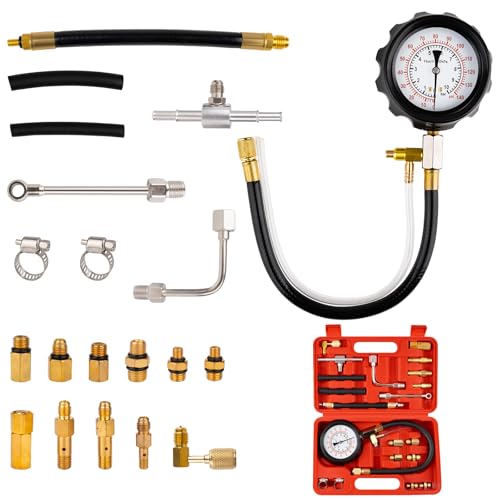
0-140PSI Fuel Pressure Tester Kit, Fuel Injector Injection Pump Pressure Gauge, Fuel Pump Pressure Tester Diagnostic Tool for Gasoline Cars, Trucks, Motorcycles and RVs
Compatibility Note: For further confirmation of specific model compatibility, refer to the vehicle owner's manual or contact a…
As an affiliate, we earn on qualifying purchases.
As an affiliate, we earn on qualifying purchases.