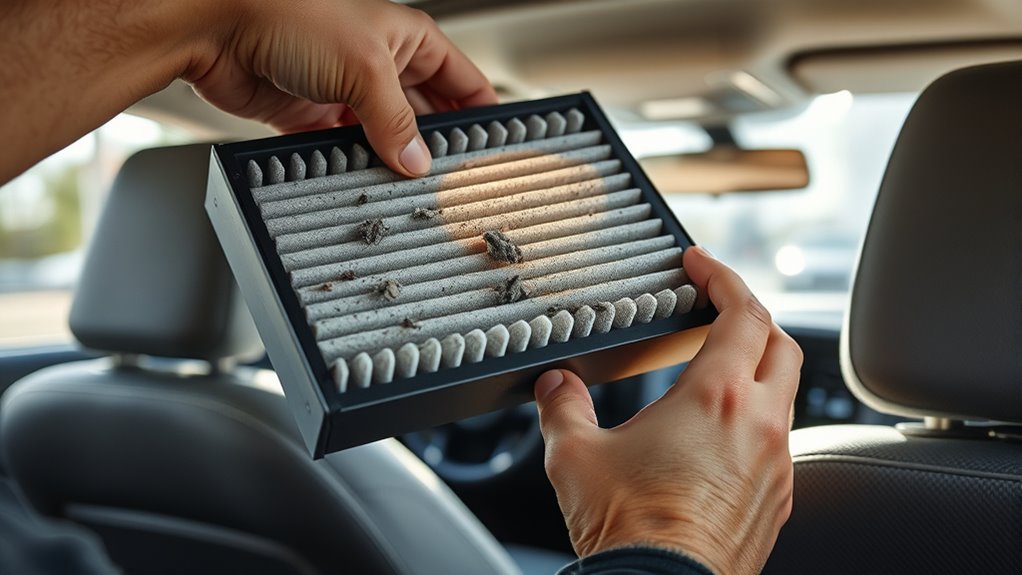

Maintaining a clean cabin air filter is crucial for your health because it keeps dust, pollen, and pollutants from entering your vehicle’s interior. A dirty filter restricts airflow, allowing harmful particles to bypass filtration and worsen allergies or respiratory issues. Regular replacement ensures fresh, clean air, improving comfort and protecting your lungs. Paying attention to signs like bad odors or reduced airflow helps keep your cabin air healthy—discover more tips for keeping your air clean here.
Key Takeaways
- A clean cabin air filter improves indoor air quality by removing dust, pollen, and pollutants, promoting better respiratory health.
- Regular maintenance prevents filter clogging, ensuring proper airflow and reducing allergens that can cause allergies or respiratory issues.
- Replacing the filter regularly minimizes the risk of mold and bacteria buildup, which can impact health and cause odors.
- A well-maintained filter supports HVAC system efficiency, reducing strain and potential health-related system malfunctions.
- Inspections and timely replacements help prevent health risks associated with contaminated or dirty cabin air filters.
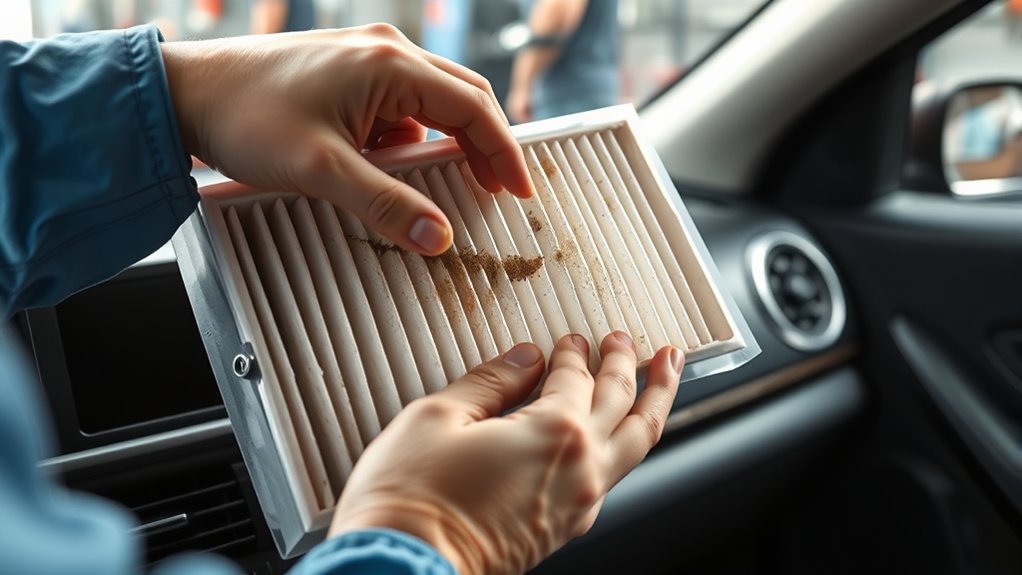
Your cabin air filter plays a essential role in keeping the air inside your vehicle clean and fresh, but it can quickly become clogged with dust, pollen, and pollutants if not maintained regularly. When the filter is dirty, it can’t effectively trap airborne particles, which means the air quality inside your car deteriorates. Breathing in polluted air can lead to allergies, respiratory issues, and general discomfort during your drives. That’s why understanding the importance of filter replacement is critical for maintaining a healthy environment inside your vehicle. Regularly swapping out your cabin air filter ensures that fresh air circulates freely, reducing the presence of irritants and pollutants. It’s a simple step that can markedly improve your driving experience and protect your health.
Many drivers overlook the importance of air quality inside their cars, assuming that the vehicle’s ventilation system is enough to keep the air clean. But over time, dust, pollen, mold spores, and other debris accumulate in the filter, restricting airflow and allowing contaminants to bypass filtration. This not only impacts comfort but can also exacerbate allergies or respiratory problems, especially for those with sensitivities. By staying proactive with filter replacement, you’re ensuring that your vehicle’s air intake system remains efficient. This not only promotes better air quality but also helps your HVAC system work more effectively, potentially extending its lifespan and saving you money on repairs.
The frequency of filter replacement depends on your driving habits and environment. If you often drive in urban areas with high pollution or during allergy seasons, you might need to change your filter more frequently—perhaps every 12,000 to 15,000 miles or once a year. Conversely, if you mostly drive on open highways with less pollution, you might get away with longer intervals. Checking your owner’s manual can give you a good guideline, but it’s also wise to inspect the filter periodically. A visibly dirty or clogged filter indicates it’s time for a replacement. Don’t wait until you notice bad odors or reduced airflow—being proactive keeps your vehicle’s cabin air clean and your health protected.

Cabin Air Filter Kit Fits for 2007-2014 GMC Chevy Silverado Sierra Tahoe Yukon Avalanche Suburban Cadilac Escalade,Replaces# 22759208 259-200 22759203 103948 Cabin Air Filter Retrofit Kit
【Replaces Number】22759208,259-200,22759203,103948
As an affiliate, we earn on qualifying purchases.
As an affiliate, we earn on qualifying purchases.
Frequently Asked Questions
How Often Should I Replace My Cabin Air Filter?
You should replace your cabin air filter every 15,000 to 30,000 miles, depending on your filter’s lifespan and driving conditions. If you notice reduced airflow, musty odors, or increased allergies, it’s time for a replacement. Regularly checking your filter guarantees ideal air quality and system performance. Keep an eye on the replacement timing, especially if you drive in dusty or polluted environments, to maintain a healthy, comfortable ride.
Can a Dirty Filter Affect My Vehicle’s HVAC Performance?
Don’t let a dirty filter throw a wrench in your vehicle’s HVAC system. When your filter gets clogged, airflow restriction kicks in, making it harder to heat or cool your car efficiently. Plus, mold growth can develop, causing unpleasant odors and health issues. Regularly replacing your cabin air filter keeps airflow smooth and prevents mold, ensuring your vehicle’s climate control works as it should—keeping you comfortable and healthy on the road.
Are There Specific Signs Indicating a Needed Filter Change?
You’ll know it’s time to change your cabin air filter if you notice a foul odor or detect unusual smells while driving. Visible debris or dirt on the filter also signals it’s overdue for a replacement. Additionally, if your HVAC system’s airflow weakens or allergens seem to circulate more, these are signs that the filter needs attention. Regular checks help maintain clean air and peak HVAC performance in your vehicle.
What Types of Cabin Air Filters Are Best for Allergy Sufferers?
If you suffer from allergies, you’ll want the best cabin air filters to keep irritants out. HEPA filters are top-tier, trapping tiny particles like pollen and dust effectively. Activated charcoal filters absorb odors and pollutants, providing cleaner air. Combining these two offers ideal relief for allergy sufferers, ensuring your cabin stays fresh and allergen-free. Don’t settle for less—choose filters that actively protect your health every time you drive.
Does a New Filter Improve Air Quality Inside the Vehicle?
Yes, a new filter improves air quality inside your vehicle by enhancing air circulation and eliminating odors. When you replace your cabin air filter, you allow fresh air to flow more freely, reducing musty smells and airborne pollutants. This leads to a cleaner, healthier environment for you and your passengers. Regularly installing a fresh filter guarantees ideal air quality, making every drive more comfortable and safer for your respiratory health.
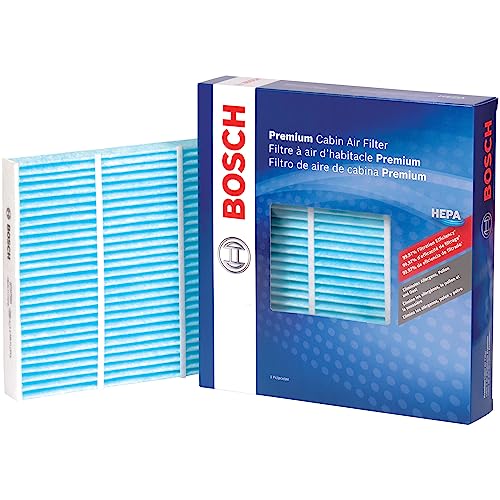
BOSCH 6091C HEPA Cabin Air Filter – Compatible with Select Buick Enclave, Encore GX; Cadillac XT4, XT5; Chevrolet Camaro, Cruze, Impala, Malibu, Silverado, Traverse; GMC Sierra, Terrain, Yukon + More
Bosch HEPA Premium Cabin Air Filters are designed and tested to meet High Efficiency Particulate Air (HEPA) standards…
As an affiliate, we earn on qualifying purchases.
As an affiliate, we earn on qualifying purchases.
Conclusion
Don’t delay your dashboard duty—diligently replace your cabin air filter to protect your health and happiness. Regular maintenance minimizes mold, dust, and pollutants that can cause coughing, congestion, or allergies. By staying proactive, you guarantee a fresher, safer, and more satisfying ride. Keep your car’s core clean and clear, and enjoy the journey with confidence. Remember, proper upkeep isn’t just a task—it’s a vital key to comfort, clarity, and your well-being.
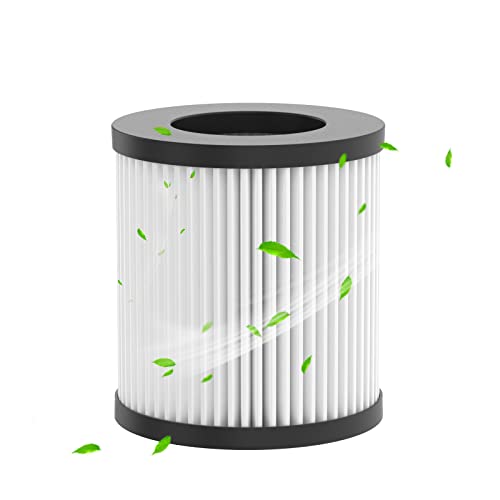
AIRFEEL H13 TRUE HEPA Filter F011 Car Air Purifier Replacement, Outdoor car air purifier for travel, discovery and journey
Replacement filter is specially crafted and only compatible for F011 car air purifier with AIRFEEL brand, please do…
As an affiliate, we earn on qualifying purchases.
As an affiliate, we earn on qualifying purchases.
BOSCH 6091C HEPA Cabin Air Filter – Compatible with Select Buick Enclave, Encore GX; Cadillac XT4, XT5; Chevrolet Camaro, Cruze, Impala, Malibu, Silverado, Traverse; GMC Sierra, Terrain, Yukon + More
Bosch HEPA Premium Cabin Air Filters are designed and tested to meet High Efficiency Particulate Air (HEPA) standards…
As an affiliate, we earn on qualifying purchases.
As an affiliate, we earn on qualifying purchases.