To check and top off your car’s fluids, start by locating each reservoir under the hood—like engine oil, coolant, brake fluid, and windshield washer fluid. Use a clean rag to wipe the tops, then check the levels against the marked indicators. Add the correct type of fluid if levels are low, being careful not to overfill. Staying on top of this helps keep your vehicle running smoothly—keep going for detailed tips on each step.

Get business pricing on garage and car supplies
- Business-only prices and quantity discounts
- Tax-exempt purchasing
- Multiple users, one account, clear invoices
Key Takeaways
- Locate each fluid reservoir (engine oil, coolant, brake fluid, windshield washer) in the engine bay or designated areas.
- Check fluid levels against the marked minimum and maximum lines using the appropriate dipstick or transparent reservoir.
- Add the correct type of fluid carefully to avoid spills, ensuring the level stays between the minimum and maximum marks.
- Use a clean funnel if needed to prevent messes and make topping off easier.
- Regularly inspect all fluid levels monthly or before long trips to maintain vehicle safety and efficiency.
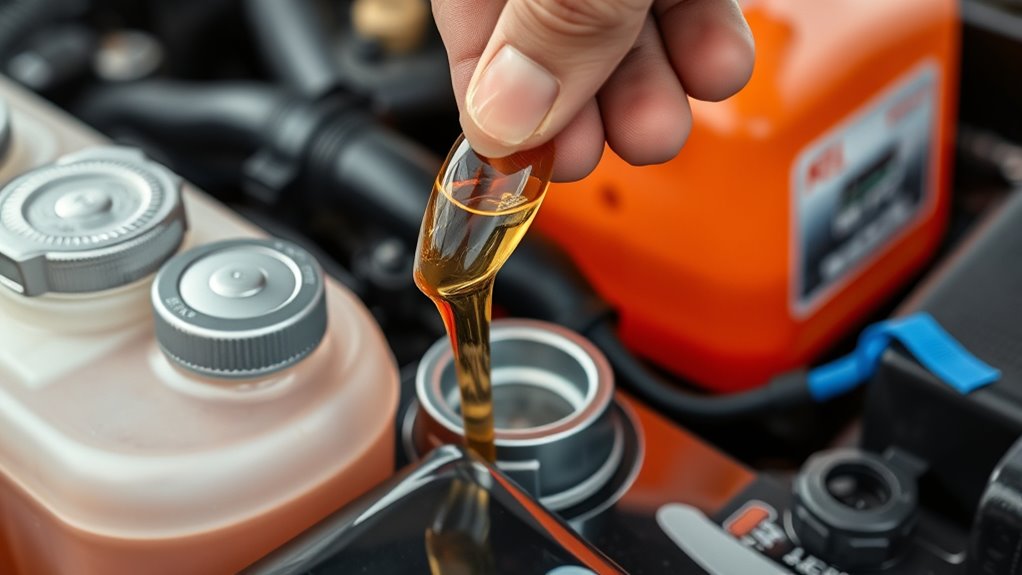
Keeping your car’s fluids topped off is crucial for maintaining peak performance and preventing costly repairs. When it comes to fluids, two critical areas to focus on are tire pressure and brake fluid. Proper tire pressure isn’t just about safety—it also affects fuel efficiency and tire longevity. Regularly checking your tire pressure helps you catch under-inflated or over-inflated tires before they cause uneven wear or blowouts. To do this, find a reliable tire pressure gauge, usually located in your glove box or trunk. Remove the valve cap from each tire, press the gauge onto the valve stem, and note the reading. Compare it to the recommended pressure listed in your owner’s manual or on a sticker inside the driver’s door. If the pressure’s too low, add air with an air compressor, which you can find at most service stations. If it’s too high, release some air until it matches the recommended level.
When it comes to brake fluid, it’s equally crucial to keep it at the right level for safety and braking performance. Most cars have a transparent brake fluid reservoir, often found near the back of the engine bay, close to the windshield. Check the fluid level against the ‘MIN’ and ‘MAX’ markings on the container. If it’s below the minimum line, top it off with the correct brake fluid type, which you can find in your owner’s manual. Be cautious not to spill brake fluid on painted surfaces, as it can damage the paint. If you notice the brake fluid is dark or dirty, it’s a good idea to have your brakes inspected by a mechanic. Regularly checking your brake fluid level and quality can help you avoid brake failure or reduced stopping power. Additionally, understanding the importance of contrast ratio can help you better assess your vehicle’s lighting and visibility, especially during night driving or adverse weather conditions.
In addition to tire pressure and brake fluid, other fluids like engine oil, coolant, and windshield washer fluid also need regular monitoring. Incorporate a routine where you check these fluids once a month or before long trips. Keeping your fluids at suitable levels ensures your vehicle runs smoothly, handles safely, and lasts longer. Your proactive approach to checking and topping off these fluids doesn’t take much time but can save you money and stress in the long run. By staying vigilant and maintaining proper tire pressure and brake fluid levels, you’re taking essential steps to keep your car in top shape and on the road safely.
As an affiliate, we earn on qualifying purchases.
Frequently Asked Questions
How Often Should I Check My Car’S Fluids?
You should check your car’s fluids at least once a month to keep everything running smoothly. Regular checks help you catch low levels or leaks early, supporting proper fluid exchange and preventing costly repairs. Doing this as part of DIY maintenance keeps your vehicle in top shape and saves you money. Make it a habit to review your oil, coolant, brake, and transmission fluids regularly, especially before long trips or extreme weather.
Can I Top off Fluids Myself or Need a Mechanic?
You can definitely handle this yourself—it’s a classic case of “know-how” over “know-who.” For routine fluid top-offs, DIY maintenance is simple, and you don’t need to visit a mechanic unless it’s more complicated or you’re unsure. Just follow your vehicle’s manual and use the right fluids. If you’re uncomfortable or unsure, a professional service guarantees everything’s done correctly without risking damage.
What Are Signs of Low or Contaminated Fluids?
If your car shows signs of fluid contamination or leak detection, you might notice warning lights, strange smells, or unusual noises. Low or contaminated fluids can cause overheating, poor handling, or engine damage. Pay attention to dark, murky, or frothy fluids during checks. Regularly inspecting fluid levels and quality helps you catch issues early, preventing costly repairs down the line. If in doubt, consult a mechanic to verify everything’s in top shape.
Which Fluids Are Most Critical for Vehicle Safety?
Imagine your car’s safety relies on a delicate dance of crucial fluids. You must prioritize engine oil, brake fluid, coolant, and transmission fluid—they’re the heartbeat of your vehicle. Fluid contamination or missed fluid replacement intervals can jeopardize safety. Regular checks help you catch issues early, ensuring these essential fluids stay clean and topped off. Stay vigilant to keep your ride smooth, safe, and reliable on every journey.
How Do Climate Changes Affect Fluid Levels and Maintenance?
Climate impact influences your vehicle’s fluid levels, making seasonal maintenance essential. In extreme cold, you might see thickened oils and reduced coolant efficiency, while hot weather can cause fluid evaporation and overheating risks. Regularly check and top off fluids like oil, coolant, and windshield washer fluid to keep your car running smoothly. Staying aware of seasonal changes helps prevent breakdowns and prolongs your vehicle’s lifespan, ensuring safe driving year-round.
Conclusion
Keeping your car’s fluids topped off is like tending to a living garden; it keeps everything running smoothly and ensures your journey stays seamless. Regular checks are your car’s heartbeat, preventing small issues from blossoming into big problems. So, stay attentive and care for your vehicle like a trusted friend. With just a little attention, you’ll keep your ride humming like a well-tuned symphony, ready to take on any road adventure that comes your way.
Fall Picks
fall essentials
As an affiliate, we earn on qualifying purchases.